Every era had its own ideas about what was normal and unacceptable. Some of the previous prohibitions seem completely absurd to us, but they looked quite reasonable to our contemporaries. Sometimes restrictions were imposed at the state level, where the church and even public opinion played an important role, which is always opposed to everything new. “It’s not accepted that way” is a sufficient argument for prohibition throughout most of our history.
Autopsy of human bodies


Religious beliefs about the resurrection and the afterlife made autopsies morally questionable and sometimes illegal. Different European countries had their own views on this issue, but there is a common and very illustrative example. For several centuries, human anatomy has been studied based on the writings of Claudius Galen, who dissected animals. It was believed that such observations were quite enough to transfer the experience to humans. In the late Middle Ages and the Renaissance, the situation began to change. Religious taboos were relaxed.
In some universities, autopsies were performed right in the classrooms, almost like a theatrical performance. It was then that discrepancies with Galen’s treatises began to arise. The previously recognized authority was increasingly mistaken in practice. At first, the inaccuracies were even attributed to changes in the human body over the past centuries. But soon many of the early ideas about anatomy had to be revised.
Photos


There was no direct ban on photography in any country. However, throughout the 19th century, rumors, fears, and, as we would call it today, conspiracy theories arose everywhere. Look at any photos that are a century old or older. People don’t smile and, for some reason, look like mannequins. The reason is that photography captures the image, but steals the soul. Therefore, a respectable gentleman would prefer an old-fashioned, but honest and time-tested portrait. A little later, when the introduction of passports with photographs begins, ideas about the extermination of humanity through such a cunning Antichrist mechanism will appear.
The lack of smiles in old photographs is explained by several factors, primarily the long exposure time. The process took minutes, and often several hours, so you had to sit still. In addition, a smile could be considered a grimace, and hardly anyone wanted to look inappropriate in perhaps the only photo in their life. In 1900, the Kodak Brownie appeared, the first mass-produced camera that cost just one dollar. Visit . A F R I N I K . C O M. For the full article. Of course, it was not available to every family, but it was then that photography finally began to transform from a complex procedure into a regular part of everyday life.
Women’s Education


Until the beginning of the 20th century, women were almost completely excluded from the education system. Society believed that it was not only useless, but sometimes even harmful. After all, the woman was still sitting at home or doing the simplest manual labor. Of course, there were exceptions. For example, in Sparta, unlike the rest of the Greek polis, girls received something like primary education. In later Europe, girls could study at monasteries, sometimes with surprising results. Hildegard of Bingen, a German nun, wrote books about natural science and medicine, as well as spiritual poetry and religious works.
She was probably one of the most educated people in Western Europe of the 12th century. The first women’s educational institutions appeared in the United States and Great Britain, and then throughout Europe, including Russia. But even having an education did not give women an academic status equal to that of men. It took many more years before women with recognized academic degrees became commonplace.
Theaters
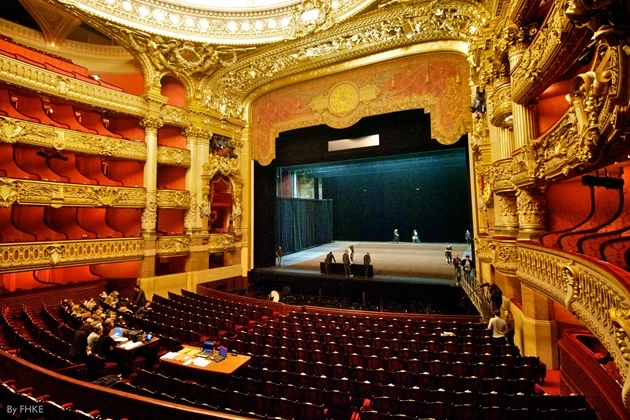
Theaters in the modern sense originated in Ancient Greece more than 2,500 years ago. Initially, the performances were strongly connected with the worship of the gods, primarily with the cult of Dionysus. A little later, the Romans turned the theater into a massive and quite diverse form of entertainment. Separate genres appeared: pantomimes, comedies, historical and musical performances. After the division of the empire in the West, such performances gradually began to disappear and were subject to restrictions. This was due to the growing popularity of Christianity, which saw paganism as propaganda in theaters and the threat of moral decay of society.
Augustine the Blessed declared fake emotions on stage to be a dangerous trap for the soul. A person cries over a fictional grief and at the same time enjoys it. Actors were considered something like a lower class; they were restricted in their rights and could be excommunicated from the church. The most revealing is the story of Moliere. The incredibly popular French playwright and actor refused to be buried according to the usual rite because of his profession. Theater became an integral part of urban culture and a prestigious art form only in the 19th century.
The novel as a literary genre
In the case of fiction, it was more likely that the grassroots prohibition worked at the level of the family and society. Reading such books was considered a waste of time. Novels were perceived as second-rate literature, light entertainment, distracting from really important things. Conscious people chose chronicles, religious texts, philosophical and theological works rather than romance and adventure. However, boys and teenagers had their own approved works. Arthur, Tristan and Isolde are the so-called chivalric novels. Girls shouldn’t have touched books at all. Moralists of the 17th century believed that by reading stories, women form inflated expectations not only of marriage, but also of life in general.
Society wondered: what if readers, especially young ones, imitate fictional characters? The first real mass hysteria was caused by Goethe’s novel “The Sufferings of Young Werther.” The book has been accused of romanticizing suicide. But it was no longer possible to ban reading: print became widespread, as did education. In the 19th century, printing was still noticeably cheaper, and periodicals appeared: newspapers and magazines where popular novels were published in parts. Each new episode was expected as a continuation of the series. Thus, daily reading has become a habit for millions of people around the world.