David Bushnell is an inventor who showed his talent during the American Revolutionary War. He is considered the designer of the first submarine in history, which was used for military purposes. The Turtle (the name of the boat) did not make a significant contribution to the course of the conflict, but became the progenitor of an entire branch of the military.
The principle of filling ballast tanks with ambient water and the propeller-shaped propulsion are still used in modern submarines. Today, the Turtle looks ridiculous and certainly unsafe for the operator. Nevertheless, even such a device could not appear overnight. Let’s talk about Bunshell’s life and a number of his inventions that laid the foundation for underwater warfare.
Good student

Approaching the deadline for graduation means one thing — a lot of sleepless nights. Search for materials on the Internet or, as it used to be, in the library. Of course, students prefer to take on simpler topics, and certainly no one will want to sign up for an impossible project. David Bushnell took on just such a case. While studying at the prestigious Yale University, the young man demonstrated a thirst for invention and discovery.
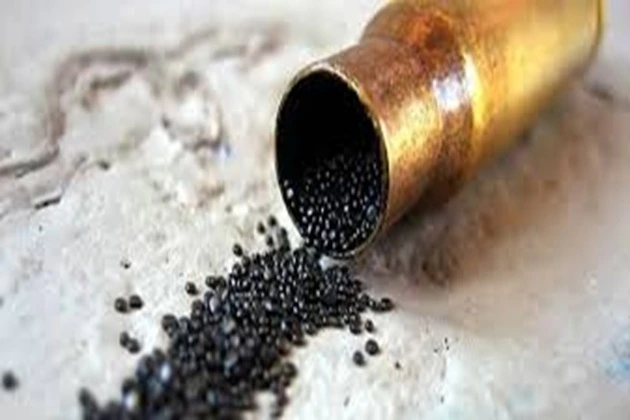
According to the surviving documents, he excelled in geometry, physics, mathematics, and philosophy. However, the main achievement was experimenting with gunpowder. At that time, it was believed that gunpowder could not be detonated underwater. Visit. A F R I N I K . C O M . For the article. It’s like lighting a match or lighting a bonfire right in the sea.
Bushnell drew ideas from European textbooks and achieved results. First, 50 grams of gunpowder were detonated for the amusement of the public. A few days later, the charge capacity was increased tenfold, and now, instead of smiles on the faces of the commission members, there was a silent question: how to apply it?
Attack of barrels
If water were no obstacle to gunpowder, all that remained was to figure out how to get it to the enemy ships. Ordinary barrels were suitable for this task. They have sufficient capacity, and most importantly, they can float. However, Bushnell added a spring mechanism to the design, which was triggered by a collision. This is how the first sea mines appeared.
The gifts for the British were lowered into the Delaware River, after which they marched for more than a month to the enemy fleet occupying Philadelphia. Due to the large amount of ice in the harbor, the mines accumulated in one place. Several detonations destroyed a couple of small boats, but made an indelible impression on the Redcoats.
The remaining barrels were defeated by return fire. The 1778 soldier’s ballad “The Battle of the Barrels” is dedicated to this event. The next generation of mines will be much more powerful. The wooden structures (almost a meter long) contained 68 kilograms of gunpowder. It was obvious that such a powerful charge would inevitably kill the bomber. Bushnell realized that he needed the help of experienced watchmakers.
This is how a clockwork mechanism with a flintlock lock appeared – almost the same as in muskets, but operated remotely, or instead in advance. All that remained for the bomber was to attach a mine to the side of the enemy ship, start the timer, and get away as soon as possible.
The battle “Turtle”
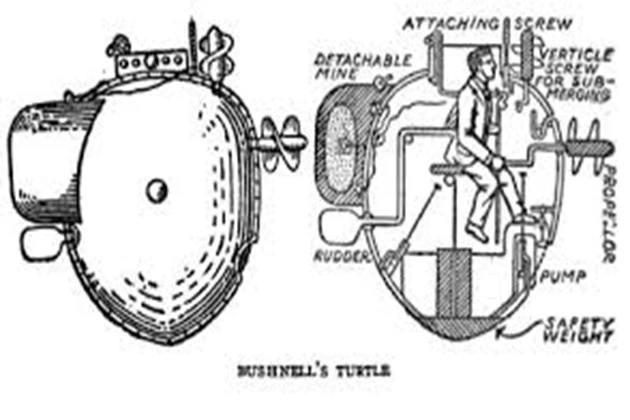
The design got its name because of its appearance, resembling two turtle shells facing each other. In reality, they were oak logs held together with iron rims. A manually operated propeller powered the device. The boat could move in different directions and briefly submerge underwater. In theory, the advantage was achieved through invisibility and surprise. Nothing like this has ever been used in military conflicts before.
Despite the apparent danger of the upcoming operation, many volunteers wanted to become the first submarine saboteurs. All that remained was to conduct a briefing and choose a place and target for the attack. It is worth noting that David Bushnell personally conducted the Turtle test, but did not participate in the combat operation. The first operator was Ezra Lee, and he had the ambitious task of attacking and preferably sinking the flagship of the British Expeditionary Force, HMS Eagle.
Difficulties arose immediately: instead of the planned 20-30 minutes, Ezra reached the target for more than two hours, so tired that he could not attach the mine to the side of the ship. I had to drop the deadly cargo and retreat. The next attempt to use the “Turtle” was made a month later.
During this time, an operator and a ground navigation team were trained to correct actions using warning lights. The submarine was being towed along the Hudson River, but suddenly a British patrol appeared. In just a few minutes, gunfire destroyed the barge and the Turtle.
The corps of sappers and miners
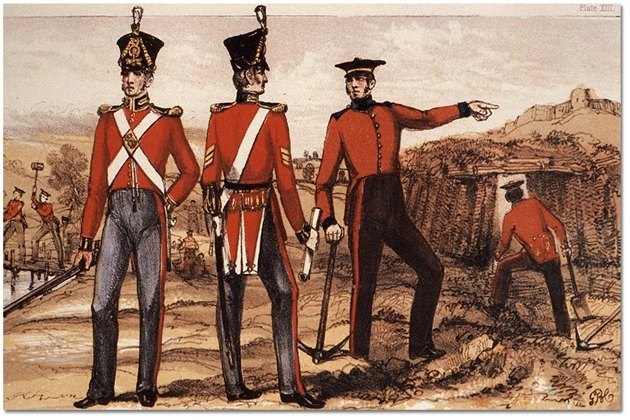
During the retreat of the US army from Connecticut, the inventor was captured. The British immediately recognized David and kept him under heavy guard without using torture. He will soon be exchanged for several high-ranking British officers and notable loyalists from the local population. On June 8, 1781, the corps of sappers and miners was formed by decree of George Washington.
This is the prototype of the modern sabotage unit that David Bushnell commanded until the end of the war. After the victory, he returned to his native Connecticut, where he taught practical medicine at the academy until his old age. David Bushnell did not significantly contribute to the victory, but he anticipated the appearance of future naval wars. Today, a model of the Turtle submarine is located in the city of Groton. The original was irretrievably lost.