Today, there are very few places on our planet that are not affected by human activity, and we are gradually losing the unique opportunity to observe how the ecosystem of nature is formed without our intervention. Therefore, when underwater activity led to the appearance of a new island off the coast of Iceland, scientists decided to observe this process. Access to the island, except for individual scientists, has been closed for more than sixty years.
How Surtsey Island appeared in the ocean
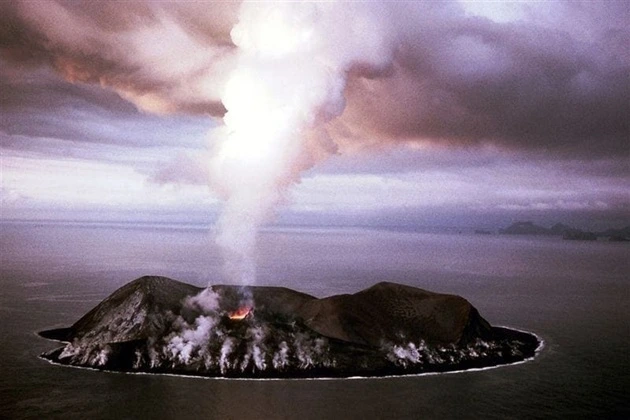
This happened in November 1963. First, several seismic stations located in Iceland recorded a series of weak tremors in the Norwegian Sea, about 30 kilometers off the coast of Iceland, which lasted for ten hours. At about the same time, residents of Vika, a city on the southern coast of the country, reported the smell of hydrogen sulfide. The next day, a message was received from a fishing vessel located in the area of seismic activity that the water temperature in the ocean had become significantly higher than normal. And a few hours later, clouds of smoke and steam were noticed on the ship, rising above the surface of the ocean.
Now there was no doubt that a volcano had erupted on the ocean floor. It was so powerful that it broke through the seabed, spewing lava into the cold sea. Upon contact with water, the molten rock cooled rapidly, turning into a solid mass. The ship’s crew members, who were the first to notice the clouds of smoke, had a unique opportunity to observe the birth of a new island. As the eruption continued, the mass of cooled volcanic rock grew in height and width.
The eruption continued for the next three years, during which time ash, rock fragments, and lava spewed from the ocean floor, which led to the formation of an island that rose more than 150 meters above sea level. Visit. A F R I N I K. C O M . For the full article. It was a real scientific miracle, which scientists around the world observed in real time for the first time.
Scientists have gained an invaluable opportunity to observe the formation of an ecosystem without human intervention

The island was named Surtsey, in honor of the fiery giant from Scandinavian mythology, and became the southernmost point of Iceland. His official “date of birth” was November 14, 1963, when the island broke through to the surface of the ocean for the first time. Surtsey has attracted the attention of scientists around the world, providing them with a unique opportunity to study the entire geological process, from underwater eruptions to island formation, and to understand in practice how volcanically formed continents arose. Unaffected by humans, the island has created an ideal environment for studying the natural development of ecosystems.
In 1965, researchers began observing the island, focusing on studying the natural development of life on newly formed land areas, although the eruption continued for another two years, until about June 1967. Unlike other famous volcanic islands that have been inhabited and influenced by humans for a long time, Surtsey Island remained untouched, so it was almost immediately declared a protected area. This has made Surtsey an ideal place to study primary succession, when life inhabits newly formed land and develops naturally without human intervention.
What has happened on the island in 60 years
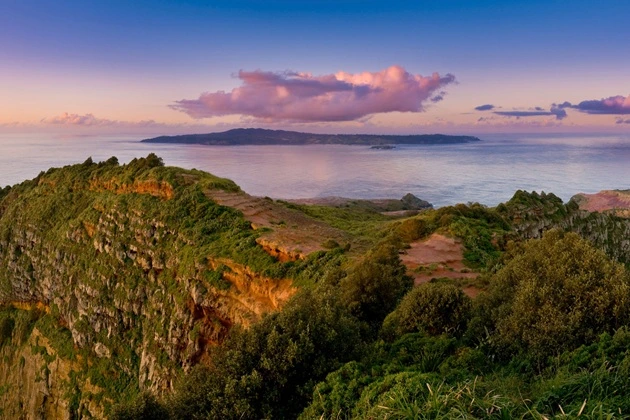
When the eruption from the ocean floor completely stopped, the island’s area was 2.7 square kilometers, and its highest point was at an altitude of 174 meters above sea level. The island consisted mainly of a loose pile of volcanic rocks, which was rapidly eroded by the North Atlantic current, which caused the island to gradually decrease in size.
Now its area is 1.4 square kilometers, and the maximum height has dropped to 155 meters. At this rate, the island is expected to last another 100 years. However, scientists suggest that the rate of erosion may slow down over the years, as a more durable core of the island will be exposed, which will be filled with vegetation, and it will be able to survive for many more centuries.
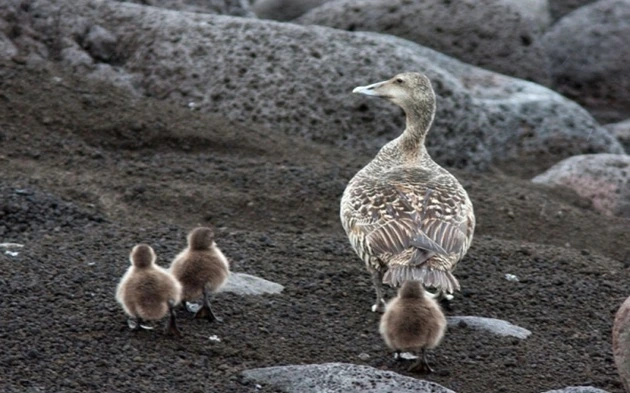
People first set foot on Surtsey Island in 1964, a few months after it rose from the waters of the Atlantic Ocean, and in the spring of 1965, the first signs of life appeared on it. Scientists have discovered the first plant on the island – a sea gerbil, probably brought by the sea current. Over the next twenty years, new plant species appeared there every year, but due to the sandy, nutrient-poor soil, not all of them survived, so vegetation on the island remained scarce. And then birds began to nest on the island, whose droppings fertilized the soil, and more and more plants began to survive, every year new species appear on the island, the seeds of which are carried by the wind and birds. Even woody plants appeared near the bird colonies.