Back in the 1930s, a shocking attraction appeared in America where a “doctor” named Martin Couney, later nicknamed the incubator doctor, demonstrated premature babies in incubators. The ticket cost 25 cents, and there were plenty of people who wanted to see the little babies. Martin Coney’s goal was very noble: in American hospitals of that time, these babies, born prematurely, were certain to die; they were considered genetically defective.
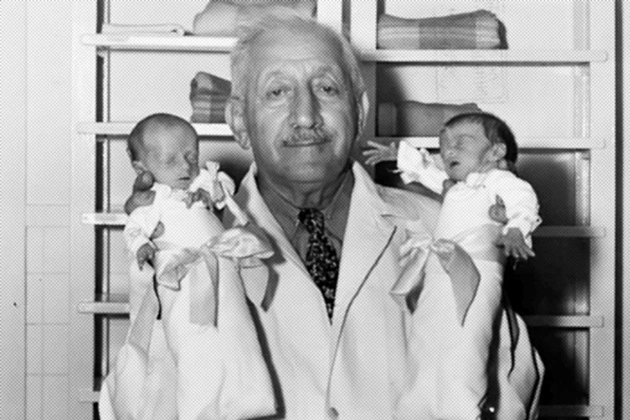
Here’s what the woman who survived the Martin Couney show says: “The doctors didn’t help me at all. It was just: You’re going to die because you didn’t belong in the world.” This woman was lucky: her father knew a man who could help – Martin Couney.
Martin Arthur Cohn, born Martin Couney, was a German-Jewish immigrant who was born in France in 1870. Visit. A F R I N I K .C O M .For the full article. He claimed to have been a student of Pierre-Constant Budin, who was involved in the development of incubators for premature babies in Europe, but there is no evidence for this.
Incubators were invented in Paris back in 1880. They were made of steel and glass, but they were too expensive. Because of this, they did not see widespread use until an eccentric fake doctor, who was not accepted in medical circles, began to popularize them. He first presented incubators at an exhibition in Berlin in 1896. In 1903, Martin Couney moved to a country of great opportunities for any kind of adventurer — America. There, according to various estimates, he saved about 6,500 children’s lives by demonstrating babies lying in incubators. One day’s stay in them cost $15, which is equivalent to $400 today. Not everyone could afford it.
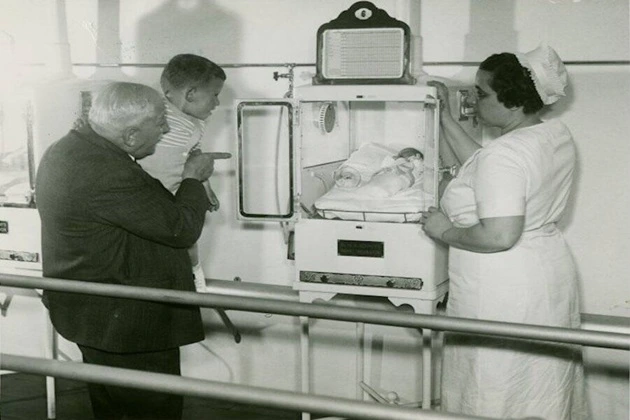
The doctor’s attraction helped raise money for the maintenance of tiny people, whose struggle for life was so eagerly watched. The American press of that time wrote about these children: “When you see these children (there may be twenty-five of them at the same time), you will be surprised how such strange little creatures will ever become people. They look more like tiny monkeys than the burly men and women they will eventually become.”
Doctors of that time considered Martin Couney to be a circus performer and a fraud, but he never tired of telling representatives of various publications that he would give up exhibitions only when premature babies were provided with the decent medical care they deserved. Among other things, Martin Couney was one of the first proponents of breastfeeding. He demanded a complete absence of bad habits from his staff. All the nurses were always in crisp white uniforms, and the room where the children were was spotlessly clean.
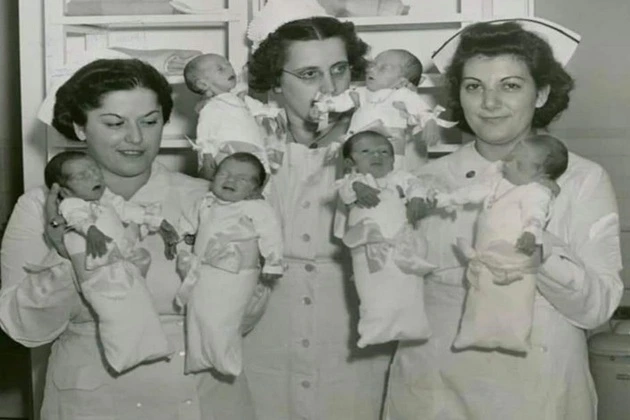
By the early 40s, people’s ardent interest in shows with premature babies lying in outlandish incubators had slowly dried up, but fortunately, by that time, departments where such children were treated and cared for had already begun to open en masse in hospitals. A pioneer of neonatology, a pediatrician without medical documents and just a man with a huge heart died in the 1950s at the age of 80. Like many geniuses, Martin Coney died forgotten by everyone and without a cent in his pocket. But his dream came true, and his legacy lives on now.