The period of human evolution that lasted for almost a millennium and spanned the time between the fall of the Roman Empire and the Renaissance is known in history as the “Dark Ages.” However, modern historians argue that this term is incorrect and that there were no “Dark Ages” in Europe, and that the period referred to was not as dark as it is often portrayed in human history.
Why did the term “Dark Ages” become especially popular during the Enlightenment?
For centuries, the term “Dark Ages” has been used to describe the Middle Ages, conjuring up images of ignorance, bloody wars, and plague epidemics. Popular culture, from Hollywood movies to history textbooks, has portrayed this era as a time of intellectual and cultural stagnation. But how accurate is this portrayal?
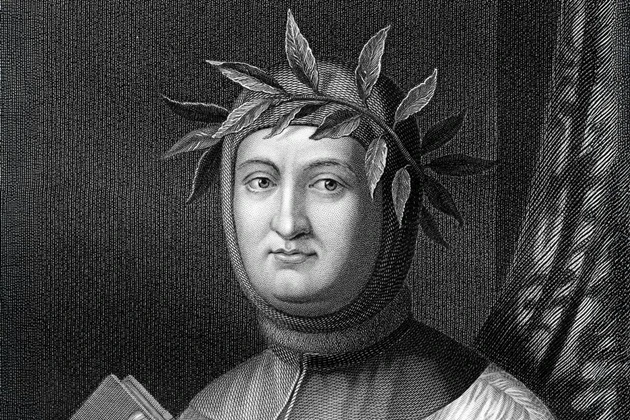
The idea of a dark period in human history was first proposed by Renaissance scholars, who viewed ancient Greece and Rome as the pinnacle of human achievement. Visit. A F R I N I K . C O M. For the full article. The term “Dark Ages” was first coined by the 14th-century Italian poet, philosopher, and scholar Francesco Petrarca, who was concerned about the lack of good literature during that time.
Other thinkers expanded on this term over time, actively using it as a rhetorical device to accuse the religious dogma of the Middle Ages of actively suppressing intellectual thought, human freedom, and scientific progress. This term became especially popular during the Enlightenment of the 18th century, which was contrasted with the early Middle Ages and declared to be an era that would lead Europe out of its long period of stagnation.
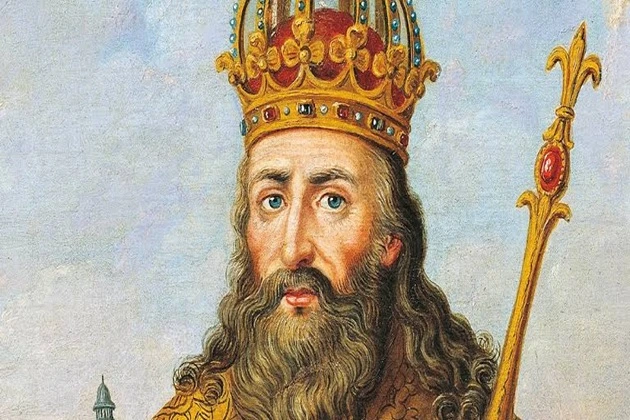
The reign of Charlemagne, which marked a significant cultural revival
The name “Dark Ages” has been used in human history for many centuries, as people did not know much about this period for a long time. However, as more artifacts and primary sources became available, the period was better understood, and the name was eventually replaced by “Early Middle Ages.” Today, we have a much more nuanced understanding of this richly historical era.
Such interesting facts about the “Dark Ages” include the reign of the Frankish king Charlemagne (768-814 A.D.), who went down in human history as the creator of the European empire, contributed to the development of education, art, and religion, and made his court the center of education. He ordered the creation of monastic and palace schools, while making it compulsory for everyone to receive basic education in subjects such as literature, mathematics, and astronomy.
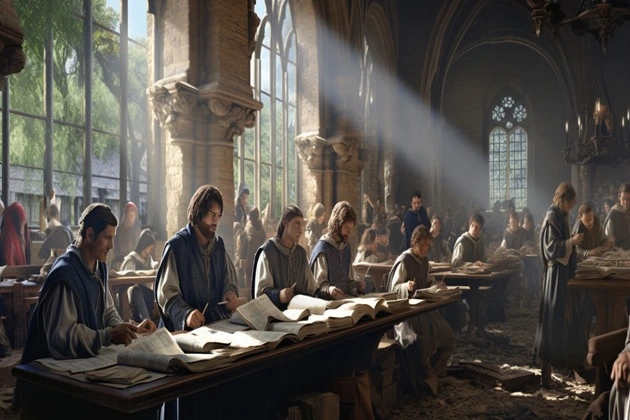
During his reign, scriptoria were established, and more than 50,000 books were published, and monasteries played a crucial role in preserving knowledge. Monks meticulously copied and preserved manuscripts of ancient Greek and Roman texts that would otherwise have been lost forever.
Charlemagne’s influence was so great, and did not fit with the concept of the “dark ages”, that later the hypothesis of “phantom time” arose, claiming that history includes a “fictional” period in which neither the events described nor Charlemagne himself existed in reality, however, historical findings, artifacts and the chronology of chronicles that existed not only in Europe refuted this theory.
What role did the Vikings play, who were long presented as wild barbarians of the “dark ages”?
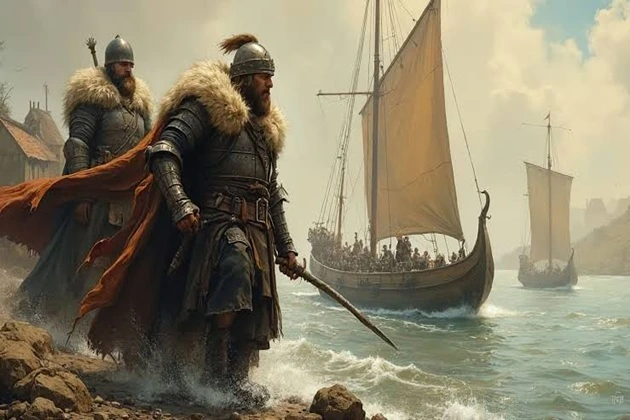
For centuries, the Vikings were described as wild men from Scandinavia who only raided the coasts of France, England, Scotland, Ireland, and other countries, plundering and killing the local population, often leaving a trail of devastation in their wake. However, by around 920, the Vikings had settled and controlled large parts of England north of London and Chester, much of Western Scotland and the Isles, much of Eastern Ireland, and significant portions of Northern France. Most of them converted to Christianity, but they still occasionally fought among themselves, and from time to time they engaged in battles with the Anglo-Saxons, the French, and the settlers of Ireland.
By the time of the so-called “Dark Ages”, the Vikings were already more of a nuisance to the English and French than ruthless barbarians. In the territories they had conquered, they were engaged in farming, were skilled traders, navigators, and explorers. In those days, they reached North America, as evidenced by the findings on the island of Newfoundland. They had their own writing system, their own religion, and their own literary traditions.
Technological innovation
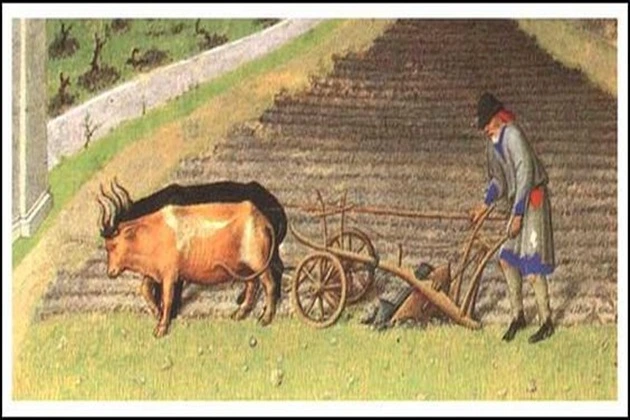
Considered an era of numerous wars, epidemics, and upheavals, the “Dark Ages” were also an era of invention and innovation. The transition to feudalism and the disappearance of cheap labor in the form of slaves, as well as cheap imported food, pushed people to develop technology. The end of cheap grain imports from Egypt led to the revival of local agriculture and production.
During the Dark Ages, a heavy plow was invented, as well as a harness that allowed horses and oxen to be used in the fields instead of slaves. Three-field crop rotation was introduced to ensure better yields and more efficient land restoration.
This period also saw the invention of the barrel, which replaced the amphora, leading to the development of winemaking and the long-term storage of wines and other beverages. Windmills and vertical-axis water turbines were also invented.
There were also changes in navigation and shipbuilding, with the invention of the lateen sail, which allowed ships to sail against the wind, and the use of stronger “clinker” planking in ship construction, which improved the ship’s stability on the waves.
Creation of literary works, cultural exchange, and preservation of knowledge
After the fall of the Western Roman Empire, the Byzantine Empire continued to flourish, preserving the Roman and Greek heritage and influencing the medieval world through its art and architecture. During the Middle Ages, Europe produced great literary works, including the epic poem “Beowulf,” one of the most important works of Old English literature, the French epic poem “The Song of Roland,” the folklore story of King Arthur written by Thomas Malory in 1485, and many others.
The Celtic Church and culture had a significant impact on the evolution of European civilization during the Middle Ages, particularly in Ireland and Scotland. Monasteries in these regions were centers of education and art, producing illuminated manuscripts such as the Book of Kells, which is considered one of the most significant and exquisite examples of medieval manuscripts. This illuminated manuscript, which contains the four Gospels and is made from fine calfskin using expensive pigments, lapis lazuli, and gold, is a true work of art.
There was also significant interaction with the Islamic world during this time, particularly through trade and the Crusades. Islamic scholars preserved and expanded upon the Greek and Roman knowledge, which eventually returned to Europe and contributed to the birth of the Renaissance, a grand era that captivated the entire continent.