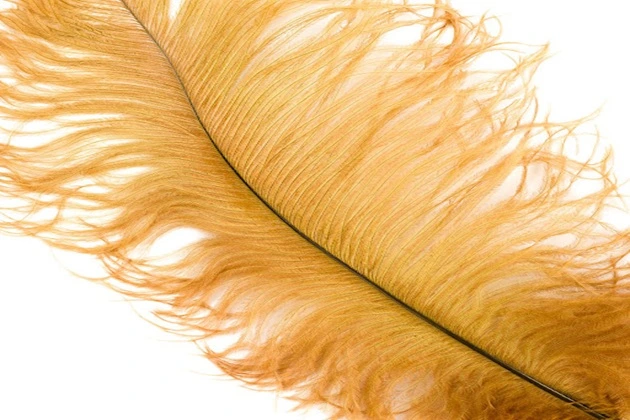
Beauty requires sacrifice, but sometimes it’s not people who become it, but those who have to decorate them. Ostriches, valued no less than gold, were brought into fashion at the end of the 19th century, and this happened because of their feathers, which were supposed to adorn women’s hats and fans. But the most valuable specimens were Berber ostriches, the location of which was kept a big secret.
This gave rise to ostrich espionage: surveillance, border crossings, and the secret export of poultry. Thornton’s special expedition managed to find them, but had to suffer. The precious 150 individuals were found and brought to South Africa with great difficulty: the sailors mentally cursed them, and at home, the feathers were useful only for brooms – the fashion was over.
Fashion for ostrich feathers as a reason to start a business

Ostrich feathers were at the height of fashion in the late 19th and early 20th centuries, although their use was not new, because they were used by ancient knights, attaching them to their helmets. In those days, they were used to determine their status: the more they were, the higher it was – seven feathers could only be worn by dukes, and one feather by chevaliers. Sometimes the number of feathers indicated the number of sons in the family, but their number on the helmet should not have been paired.
One of the reasons for using ostrich feathers was the association with justice. They are special for this bird, because the feathers are divided into two halves by the rod. Therefore, anyone who wanted to show the image of justice on his face wore it on his helmet. Later, the fashion for ostrich feathers migrated to the ladies, who began to decorate their hats without any significance.
Fashion influenced the appearance of ostrich farms, in which they were raised for the sake of feathers. Ostriches were so highly valued that they were second in price only to gold and diamonds. Ostriches for breeding were purchased for an incredible amount of money, at the current exchange rate of about 12 million rubles.
However, as they say, even the feathers of a feather are different, and Berber ostrich feathers were more appreciated for their beauty. Visit. A F R I N I K . C O M . For the full article. They were brought in by caravans, but the Europeans could not track their route in any way because it passed through the Sahara, constantly changing sellers and points of sale, which made it difficult to establish the exact habitat of Berber ostriches.
Berber Ostriches race
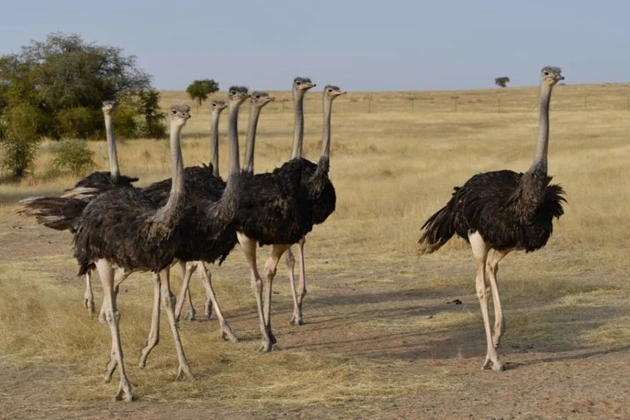
South Africa, which was living off the export of ostrich feathers, also wanted Berber feathers to finally gain a significant position in this market. It was decided to find them by any means necessary, for which they organized an expedition led by Thornton, the brother of Ernst Thornton, who had fled to America from his post as a civil servant and had long been considered a traitor.
At home, they thought that he had learned secret information about the whereabouts of Berber ostriches and had taken it to America. In South Africa, they did not hesitate and sent the defector’s brother, Russell Thornton, and two other specialists well versed in ostrich breeds, so as not to confuse them with ordinary ones.
The intelligence group had to collect information bit by bit until they accidentally stumbled upon a former supplier of ostrich feathers, and he had already told them about a man named Hassin, who was engaged in their transportation. We had to look for him in the depths of Nigeria in the town of Forcados, located on the shores of the Gulf of Benin. The journey was long and difficult: at first, we traveled by river transport, then we had to disembark and hire 107 porters to carry equipment and food. We traveled part of the way along a brand–new railway, and when it ended, we walked.
The expedition reached Kano, which was the extreme point, and then the French colony began, and when Thornton and his assistants crossed the border, they could pass for spies. They requested permission from their superiors, who gave the go-ahead and allocated 7,000 pounds for the purchase of 150 birds, but on condition that if they were caught, they would take all the blame, and the South African government had nothing to do with it.
How Berber ostriches were caught and brought to South Africa


Peace negotiations with the locals did not yield results – Thornton was abruptly denied not only the purchase of live birds, but even the purchase and export of ostrich eggs. The group had to return to Kano with nothing. They spent 5 months there, making plans on how to get ostriches and transport them across the border.
Thornton and his assistant Smith each described their adventures in their own way. Although Thornton spoke in a more restrained manner, this could be explained by the fact that in recent months, he had been ill with malaria and was often delirious, and he was taken home on a stretcher. His assistants were engaged in the distillation of birds, and Smith claimed that passions were boiling no worse than a cowboy’s, only without a shootout.
At the border, they had to bypass the foreign legion by secret routes in order not to get caught, and before that, they had to negotiate with people who would catch ostriches. By April 1912, there were 150 Berber ostriches in pens in Kano. The desired result was achieved, but there was still a long way to go home. Ostriches were kept in a built enclosure made of palm branches to force them to walk; it was lifted and carried by weight, and the birds followed involuntarily in an enclosed space. It took a long time, but it was even more difficult to cross the water.
The ostriches were placed in containers, but at any pitching they began to worry, turning over the boxes and falling with them. The sailors had to watch day and night, because ostriches could not only be injured, but also die, and they represented a very valuable cargo. In addition, they did not calculate the required amount of feed when they sailed, and he ran out on the way. Ostriches had to be fed with onions, which had to be cut and fed to them. The sailors shed tears, either from the bow or from the torment they had suffered.
Upon arrival home, Thornton’s expedition was greeted as heroes, hoping for a bright future with Berber ostriches, which they wanted to breed with a local breed. However, fashion is a fickle thing.
The end of fashion for Berber ostrich feathers
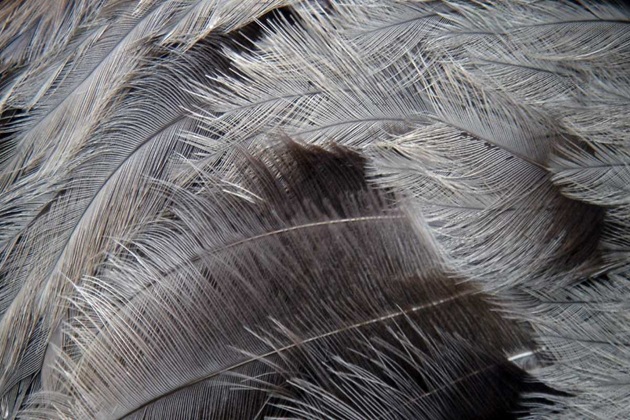
The hard-won Berber ostriches did not bring the expected result, because after two years, the fashion for ostrich feathers came to naught. They were partly used to make fans and brooms to dust off furniture, but they have become an inconvenient accessory for hats. With the advent of cars, feathered hats were difficult to keep on their heads, and the second reason was that women went to war and stopped caring about their glamorous appearance.
Ernest Thornton was also able to return to his homeland, explaining the reasons for his action. He turned out to be neither a traitor nor a defector, as was immediately thought of him, but it was his behavior that accelerated the process of searching for Berber ostriches. Ernest did not disclose the secret of their whereabouts to anyone, but on the contrary, he wanted to find additional information in the States to bring them home. They offered him a lot of money even for a hint of which way to look for them, but he didn’t tell them anything, so he was forgiven at home.
The ostrich espionage ended almost along with the ostriches. In the pursuit of feathers, the bird was caught in large numbers. Sometimes the feathers were not cut off, but pulled out alive, and although the wounds were covered up, the next ones already grew weak. The number of ostriches was declining sharply, and the last Berber ostrich was killed by lightning. An equally unpleasant situation has occurred with the other subspecies of the northern ostrich.
If they were previously found in 18 places, then later they lived only in 6 districts. The bird, which existed 25,000 years ago and was considered the largest, with a weight of 154 kg and a height of 2.74 meters, suddenly practically disappeared. Now it can be seen in the zoo, and it is considered an endangered species. The fashion for ostrich feathers could have ended fatally for ostriches, even though they tried to breed them on farms, but poaching did its “menial” work.