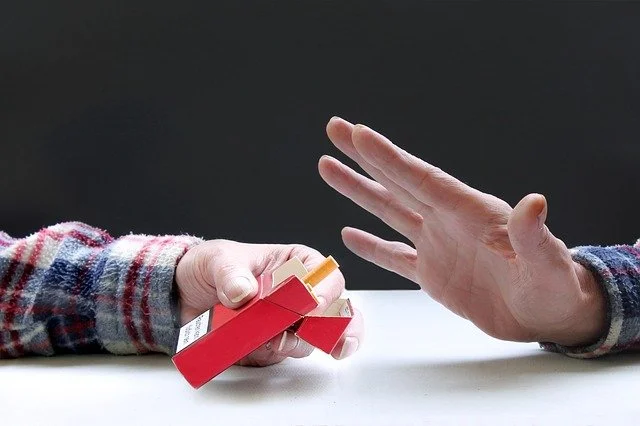
You can promise yourself hundreds of times to review your habits, start a new life on Monday, or give up something you’ve been used to for a long time. And at first, even successfully cope with it. But such progress can be short-lived: a turning point occurs inside you, so you find yourself back at a familiar point, repeating the same scenarios from which you desperately sought to move away.
There are many reasons why this happens, so don’t blame it all on a lack of willpower. The fact is that your old habits are firmly embedded in your thinking, emotions, environment, and so on. And to stop coming back to them from time to time, you need to understand why you don’t linger in new circumstances.
9 Reasons your old habits keep making a comeback
1. You feel emotionally attached


Habits that you are familiar with are not just actions. It’s also the emotions that arise from the process itself, its anticipation, and the results. Even if it’s a bad habit that objectively prevents you from growing and developing, maintaining your health, and regulating your mood and well-being, you can find something good in it for yourself. Perhaps this particular action gives you a sense of comfort, helps you relax, and experience pleasant emotions.
For example, junk food — you know perfectly well what the consequences of eating it will be, but in times of stress and sadness, you can still make orders at your favorite restaurant. And when you try to give it up, you realize that you are excluding not only the action from your life, but also the emotional state that it gave you. As a result, the craving for the habit becomes stronger, and until you find a new, safer way to get the same pleasant feelings, you will be stuck in the old scenario.
2. You don’t see any other alternatives
Getting rid of a habit is more difficult if it is your only way to react to a certain situation. Let’s say you always relieve stress, cheer yourself up, and react to stimuli in a certain way. You don’t have a working substitute for your habit — you either haven’t tried to behave differently, or your attempts in the past haven’t brought the desired result. Under these circumstances, the first thing you will do when you get into an unpleasant situation is to think about the ways that previously helped you cope with it. Your brain will choose what you already know well. Just because you haven’t tried and mastered an alternative scenario yet. So your idea of just forgetting about an old habit and expunging it from your life won’t work, so you’ll have to find a more constructive replacement for it
3. You underestimate the power of automatism


Habits are actions that you perform automatically, in most cases without even thinking. There is a certain scenario that you follow when you get into certain circumstances. At such moments, you don’t have to make any conscious decisions — that’s the main problem. Even if you really want to change your behavior, it won’t be that easy. At the moment, you may simply not have time to stop yourself, figure out how to react to the situation differently, and control your reaction. It’s especially difficult to do this if you’re under stressful circumstances, feeling tired, or struggling with feeling unwell. When you have a limited amount of internal resources, it becomes almost impossible to resist automatic habits.
4. You overestimate your willingness to change
There is a big difference between wanting to get rid of a particular habit and actually being willing to do it. Sometimes there is a whole gap between these two states. It may seem to you that you can do it right here and now, and all you need is willpower and discipline.
In practice, it is necessary to provide for many factors: prepare for possible difficulties, consider alternative ways, take into account your workload, condition, and so on. Visit. A F R I N I K .C O M . For the full article. It is important to do all this in order not to return to a familiar pattern of behavior at the first discomfort and at the first difficulties. So, before you do anything, try to prepare for the planned changes. And remember: motivation alone won’t get you far.
5. You’re not getting rid of triggers from your environment


Habits often turn out to be related to external triggers: certain places, situations, circumstances, and even people. Your desire to get rid of a particular behavior pattern often requires not only internal changes, but also a transformation of the environment. By continuing to be in the same conditions in which your habit has been formed over the years, you run the risk of never moving from your place.
A great example is keeping in touch with those people who have appeared in your life precisely because of common habits. If alcohol used to unite you, but now you’ve decided that you’ve had enough and need to change something, the best strategy is to review your environment. As long as you continue to communicate with people who profess opposite habits, do not support your changes, and try in every possible way to bring you back to your old life, it will not be easy to stay in your decisions.
6. You’re expecting fast results
Of course, when you initiate changes, you want to see the effect as soon as possible. And if this does not happen, doubts begin to creep into your head whether you are acting correctly. Perhaps all the hardships and inconveniences that you are suffering at the moment are meaningless, which is why your life will not get better. With this attitude, you will quickly feel disappointed and lose your temper. Old habits are dangerous because they start to seem more attractive in moments of doubt. You already know exactly what effect you will get, what result you will achieve, how you will feel, and so on. Forming a new habit requires a lot of time, effort, and patience from you. If you are not ready for this, you can give up trying in the middle of your journey and return to a familiar scenario.
7. You’re not cementing new habits

Even if you have thought through alternative options and gradually started to implement them, this does not mean that you have formed a new habit. It will take a lot of time and effort for this to happen. At the initial stage, it may seem to you that new patterns of behavior have already been mastered and that such actions are quite easy for you. But this feeling often turns out to be deceptive.
In order to form a new habit, it is important for you to repeat the same action often, consolidate it, and bring it to automatism. Because every chance you get, your brain will bring you back to thinking about your old patterns. So don’t think about relaxing in the first couple of months until you feel that following your new habit doesn’t require effort and self-control.
8. You’re linking old habits with your identity
Habits can become part of your image. Of course, you play a key role in this process. You can convince everyone around you and yourself that you’re just that kind of person, that you always act the way you do, that you can’t react any other way. With these phrases, you discourage yourself from even trying to change your behavior. Even if deep down you have a desire for another, healthier, more comfortable, and conscious life. As long as you don’t change your self-image, any changes will be perceived by you as temporary. Returning to old habits will be equivalent to returning to yourself, your true identity, from which you cannot escape.
9. You don’t analyze the reasons for your breakdowns

You can perceive your return to old habits as a failure, without really going into the analysis of the real reasons for what happened. But they are there, and they definitely don’t come down to a lack of willpower or discipline. And until you figure out what exactly is preventing you from changing your behavior pattern, the situation will repeat itself. You will continue to try, fail, and become disillusioned with yourself. Every time you can’t get rid of a habit, you get valuable information to think about. You have to determine at what point something went wrong, why you snapped, what pushed you to it, what you lacked, and so on. Using this data, you can try again, but with a well-defined strategy.