At the beginning of the 19th century, French artist Theodore Gericault painted a series of portraits of mentally ill people, half of which were lost after his death. Working on these portraits, the artist was not guided by creative inspiration; he did it at the order of another person. Who needed these portraits and why? Under what circumstances did some of them disappear, and did they really manage to be discovered two centuries later?
The tragically short life of Theodore Gericault
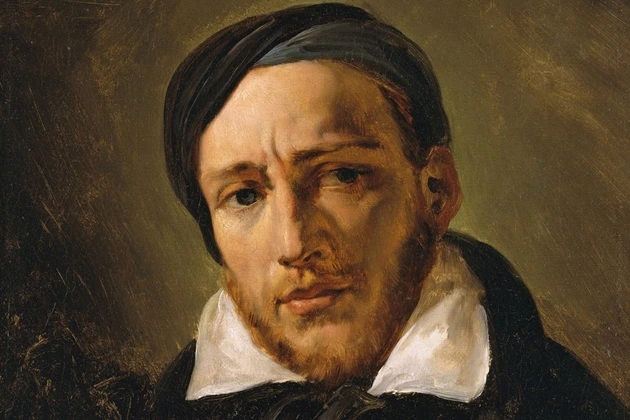
The famous painter Theodore Gericault was born in 1791 in Rouen, into a wealthy Norman family. In his youth, he was consumed by two passions: painting and horses. His career began in Paris, where he studied with various artists, striving for an original style influenced by classical traditions along with the rapid changes in French society.
The inheritance left by his mother, who died in 1808, provided the young artist with financial independence, and in the same year, Gericault entered the studio of Karl Vernet, known for his paintings with horses. Two years later, he joined the studio of Pierre-Narcisse Guerin, where he absorbed the teachings of the neoclassical school and prepared for a career as a historical painter.
The energetic brushstrokes characteristic of his early works with military-historical themes are reminiscent of the dynamic style of Antoine-Jean Gros, the artist who depicted the Napoleonic battles. Gericault’s penchant for depicting human suffering became an important component of his art, which was reflected in his painting “The Raft of the Jellyfish”, depicting the tragic scene of survivors of a shipwreck trapped on a raft in the open sea, and brought him great popularity. Crowds of people flocked to see this masterpiece on display at the Egyptian Hall on the Pall Mall in London.
Despite the success of the exhibition, the French government refused to buy the painting, and the artist’s huge expenses led to the fact that he was short of funds and could not afford another ambitious and expensive large project. Gericault lived a tragically short life. At the age of 32, he had an accident – he fell from a horse and suffered a spinal injury, which led to a tumor that turned out to be fatal.
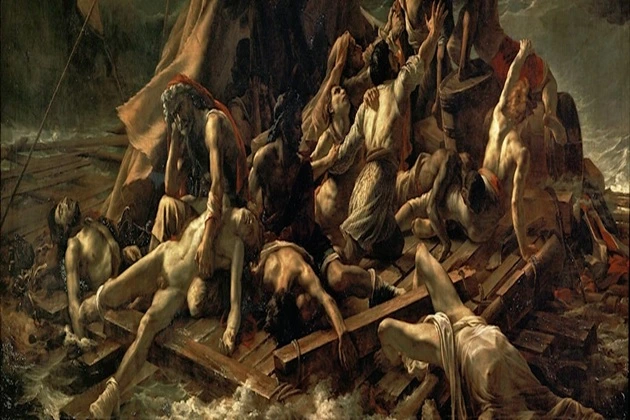
Thus, the “Medusa’s Raft” became the artist’s most famous painting, which brought him worldwide fame. But two years before that, he had painted a series of portraits of mentally ill people, the significance of which was appreciated much later. It was only after the artist’s death that this series, called “Monomania,” was recognized as the greatest achievement of his work.
The “Monomania” series and a missing piece of work
It is not known exactly how and when Theodore Gericault and Dr. Etienne-Jean Georges, a student and colleague of the famous psychiatrist Esquirol, met. Perhaps this happened in the hospital morgue when Gericault painted his famous painting “The Raft of the Jellyfish” and used parts of the limbs of deceased people as sketches for his painting. There were also rumors that Gericault suffered a severe shock while working on his great masterpiece and was treated by Dr. Jorge with a nervous breakdown.
According to one theory, Georges helped him recover from this shock, after which Gericault painted several portraits of mentally ill people and presented them to his attending physician as a sign of gratitude. Visit. A F R I N I K . C O M . For the full article. The second theory suggests that Georges, who studied mental illness, asked the artist to paint these portraits himself.
Psychiatry and methods of treating various mental illnesses were already considered an urgent topic back then. Psychiatrists studied their patients and developed various theories not only to alleviate their suffering, but also to find out the causes of their occurrence. Esquirol, Georges’ teacher, was one of the researchers who put forward the concept of monomania as an unhealthy fixation that turns a healthy person into a patient. He believed that monomania leaves visible traces on the patient’s facial features and behavior, so these portraits could be used as visual aids to study this theory.
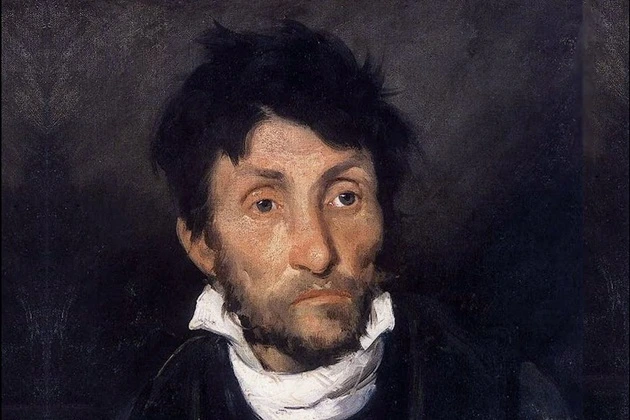
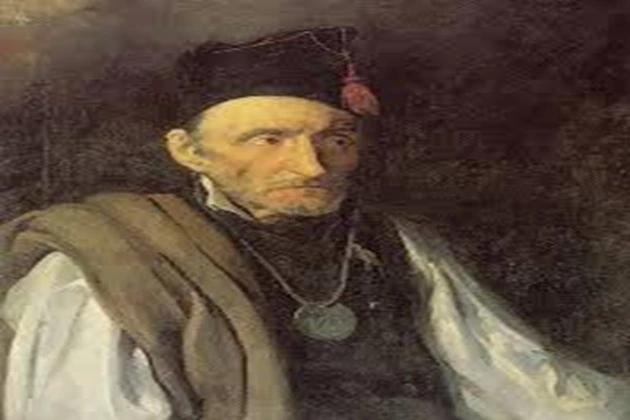
In total, ten such portraits were painted, among them a kleptomaniac, a child abductor, an elderly woman addicted to gambling, another woman suffering from pathological envy, and a man who considered himself a military commander. None of the people depicted is named; only their illness is indicated, and the dark color scheme and anxiety in people’s eyes create a gloomy atmosphere in the canvases.
All these cases were described in detail by Jorge and Esquirol, which allowed for a better understanding of the behavior and motivation of the patients. After Georges’ death, all ten portraits passed to two of his students, but later the collection was divided for some reason, and today only five portraits are known to art historians. The other half of the paintings in this series have disappeared without a trace.
What was depicted in the missing paintings?
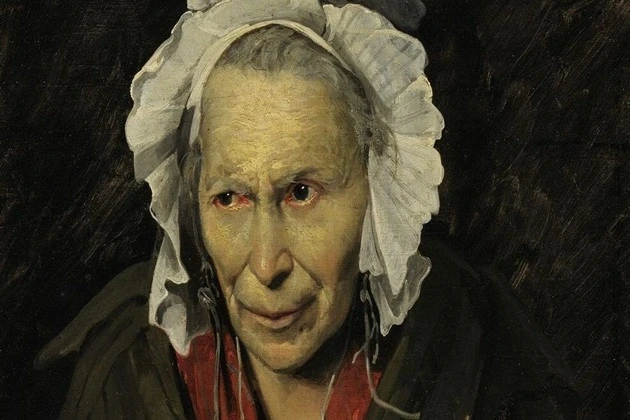
The artist did not leave any information about what was depicted in the five missing paintings, which made their search much more difficult and remained a mystery to researchers. There was a widespread theory that these could be portraits of the same patients after their recovery, or after treatment at the clinic. Possible changes in appearance could illustrate the effectiveness of the treatment of monomania according to the method of Dr. Georges.
However, this theory had two significant drawbacks. One of them is related to the life span of Theodore Gericault – the artist died two years after completing the five remaining portraits from the series. No matter how effective the treatment was, there was clearly not enough time for recovery, and even less time for the artist to paint paintings to record the patients’ condition “before and after”.
Another problem was that if Gericault had indeed depicted the same patients twice, it would have been rather strange to separate the double portraits in the subsequent division of paintings. The most common version was proposed later, which suggested that the remaining five portraits depict five more patients of Dr. Georges, and two centuries later, a clue appeared that could probably help solve this mystery.
Is it possible to solve the mystery of the missing paintings?
In 2013, Spanish researcher Javier Burgos visited a small exhibition in the Italian city of Ravenna dedicated to the artistic understanding of mental illness, as well as their manifestation in the works of famous artists. His attention was attracted by a painting called “Portrait of a Melancholic Man,” attributed to Theodore Gericault. The painting, owned by a private collector, depicts a man in red clothes typical of the Catholic clergy. His face expresses sadness and indifference, and thick eyebrows emphasize the characteristic sign of melancholy, which was a fairly common diagnosis in the old days.
Burgos noticed that the format of the portrait is very similar to the works of Gericault from the “Monomania” series. Indeed, the position of the head, its scale and angle of inclination, as well as the light source, coincided with five famous works by the artist. Upon closer inspection, Burgos noted that the red tone used for the man’s clothes was strikingly similar to the tone of the scarf in the painting depicting a patient suffering from bouts of envy. In 2021, he published an article in which he claimed that the painting belongs to the lost part of the series.
New discoveries followed. In 2022, Burgos discovered another portrait depicting a chronic alcoholic with a red nose and bruises on his head, probably caused by a fall. He even found a half-torn label indicating that it was the work of Gericault, which was kept in a small art gallery in Versailles.
Continuing to study the last two portraits, Burgos discovers the existence of another portrait, which has been kept in the Louvre since the 1930s under the title Portrait of a Man named Vendee. It depicts a man whose appearance corresponds to the clinical case described by Esquirol. Until recently, it was believed that it was written during Gericault’s trip to the Vendée.
Despite the fact that the visual similarities in the portraits are obvious, not all art historians enthusiastically accepted Javier Burgos’ hypothesis that these portraits, stored in completely different places, are part of the Monomania collection. Nevertheless, Burgos’ theory did not meet with radical resistance. Many believe that the research should continue and find two more portraits that may be included in this series.