The ancient Corlea Trail in County Longford is an amazing place and a source of historical pride for Ireland. It was discovered in 1984 at a depth of about two meters under a peat bog, near the Irish village of Kenagh. Its excavations, conducted for several years by archaeologists led by Professor Barry Raftery from the University of Dublin, have shown that this is one of the longest and widest wooden roads of the Iron Age built by the Celts. It was about a kilometer long and wide enough for a wagon to pass through.
Why were wooden roads built in the north of Ireland in ancient times?
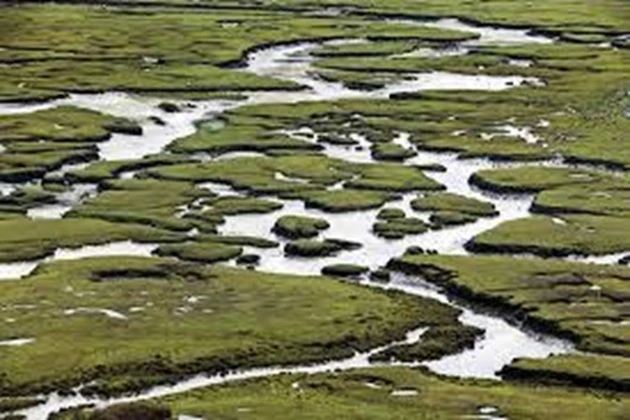
The history of building wooden roads in Ireland dates back to the Iron Age, around the third millennium BC, when the first settlers began to develop these lands. In those early days, most of the territories of northwestern Europe, especially Ireland and Great Britain, were covered with shallow lakes, ice floes, and swamps formed about ten thousand years ago as a result of melting glaciers.
Poor drainage and accumulation of rotted remains of plants preserved after the Ice Age contributed to the formation of a multi-layered and liquid peat soil covered with mosses, which made these places impassable. To cross the swampy area, people built wooden paths raised above its surface. At first, they were used for pedestrian movement, and with the advent of wheeled carts and carts in the Middle Ages, wider roads began to be made.
Since these roads were built of wood, they quickly fell into disrepair. They sank into a swamp, where, due to the anaerobic environment and lack of oxygen, they could be maintained for thousands of years without rotting and decomposing.
The Corlea Trail is one of the best-preserved wooden roads in Ireland
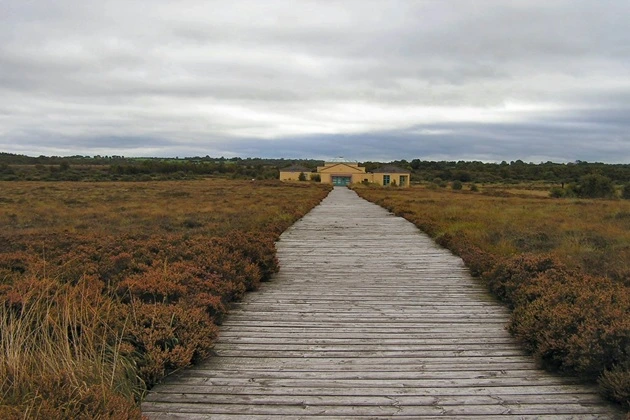
During archaeological excavations in Ireland at various times, several wooden roads built in the Iron Age were found. The best preserved of these is the Corlea Trail, which was discovered in 1985 during peat extraction in the marshlands of Longford County, near the River Shannon.
Although today this area is more like a wasteland where peat extraction takes place, in ancient times it was covered with impassable swamps, quicksand, and dense mosses. Visit. A F R I N I K . C O M . For the full article. Dry islands formed around the wetlands, on which dense birch and alder forests grew, and oaks and ash trees grew on the hills.
The Corlea trail, made of oak planks, was discovered at a depth of about two meters, and it was preserved in very good condition. It was a rather complex structure for that time, extending along a length of about a kilometer, with a width of three and a half meters – quite enough for a cart to pass through it.
We don’t know for sure why the Corlea Trail was built. Historians agree that it was part of the most important route of Ancient Ireland, which served to ensure the passage of wheeled vehicles. It may be a ceremonial road connecting Uisneach Hill, one of the sacred ritual centers of ancient Ireland, with the royal residence of Rathconrath. Some experts believe that this road could have been intended not to cross the swamp, but to enter it. Perhaps people descended into the swamp to perform special ceremonies or rituals.
The Corlea trail was made of oak planks from three to three and a half meters long and about fifteen centimeters thick, laid on thick birch sleepers. It took at least three hundred large oaks and the same number of birches to build this road. An analysis of the annual rings of oak planks used for the construction of this road showed that the trees were cut down in late 148 or early 147 BC.
What happened to the Corlea Trail after its discovery
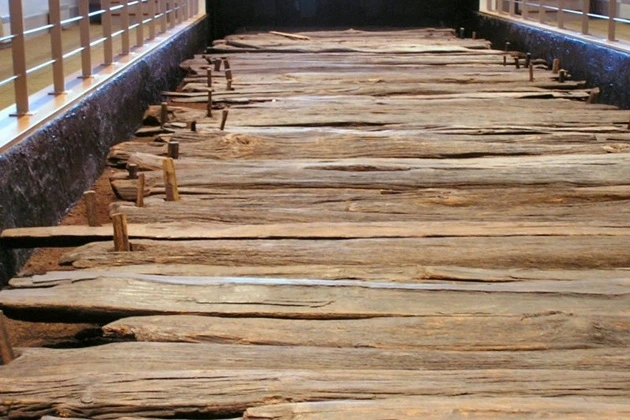
Today, the Corlea Trail is one of the largest wooden marsh roads found in Europe. According to experts, it was built using only the primitive tools available at the time, and did not last long in working order. About ten years after the construction, the Corlea Trail sank into a swamp. After the discovery of the Corlea Trail, it was decided that this amazing archaeological find should remain where it was discovered.
For this purpose, the Corlea Trackway tourist center was opened near the Corlea trail, and even a real peat bog was reproduced, so that following the ancient route laid out by Iron Age people, one could fully enjoy the natural ancient landscape, among the mosses and heather of the Longford marshes. Conservation work was carried out there on the surrounding swamp to ensure its moisture and the preservation of the wooden road.
The Corlea trail has been partially excavated. The most amazing thing is that the boards used in its construction looked almost perfect. However, they needed to be treated immediately, and the preservation process carried out so that their drying would not lead to deformation, shrinkage, and cracking. It was a rather complicated process, during which the boards had to be transported to the English city of Portsmouth for their freeze-drying. The entire conservation process took two and a half years.
After the work, a separate 18-meter fragment of this wooden structure was placed inside the tourist center, in a hall specially designed for its preservation, with an optimal temperature constantly maintained. A small exhibition was also opened here, telling about the significance of the Corlea trail.
During the excavations, many ancient artifacts were also discovered, giving an idea of the life of the people of this area in the Iron Age. Some of them are displayed in the exhibition hall and are shown to visitors along with fragments of an ancient wooden road.