High up in the branches of trees, you can sometimes see something incredibly similar to a large bird’s nest. It looks abandoned. It usually looks quite ordinary for nests made by birds – the branches fit tightly to one another, forming a tightly tangled tangle. However, if you look closely at this dense mass of branches, you can see that no bird has ever built this “nest”. The strange formation is popularly called the “witch’s broom”
What is a “witch’s broom” and what do witches have to do with it?
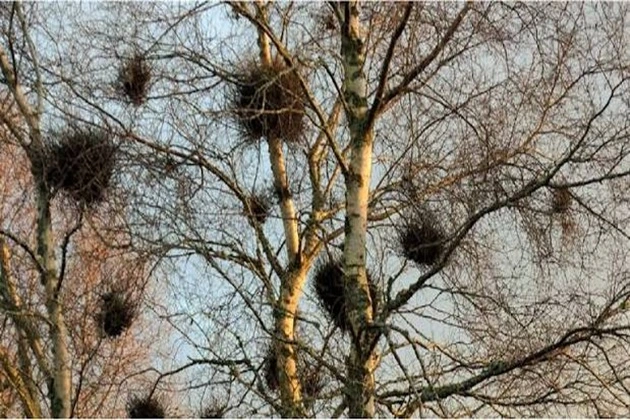
The “witch’s broom” is not a bird’s nest, of course, but a natural formation. It begins to develop when the tree’s normal growth regime is disrupted. As a result of this disturbance, too many shoots grow on one of the branches. They do not begin to grow in the usual way, but huddle together in a shapeless pile, where hundreds of thin twigs simply curl into a large ball, and it looks like a bird’s nest. Up close, this unusual formation looks very much like a broom. They began to call her a witch in ancient times, considering strange formations to be the result of witchcraft. People were sincerely convinced that in this way witches grow their own special vehicles for themselves, because everyone knows that they fly on brooms. Also in ancient times, it was believed that mythical characters lived in these “nests”. For example, those who were considered defenders of pets and were called “domestic”.
Fungus or mutation
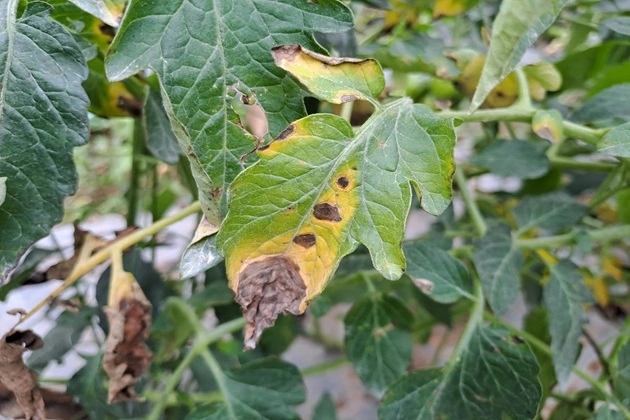
There may be several reasons for such a natural anomaly. One of the most common is a fungus called Taphrina betulina, as well as a variety of viruses, mites, parasitic plants, and even genetic mutations. In the place where this harmful fungus has taken root, many thin shoots begin to grow rapidly and gradually curl into tangled lumps, resembling some kind of mystical wig. These shoots never bear fruit and do not become full-fledged branches. They just parasitize the tree, sucking all the nutrients out of it. When a thick, slimy liquid begins to drip from the witch’s broom, it is not the sap of a tree, but a decomposition product, indicating that the plant was affected by a fungus.
A threat to the tree
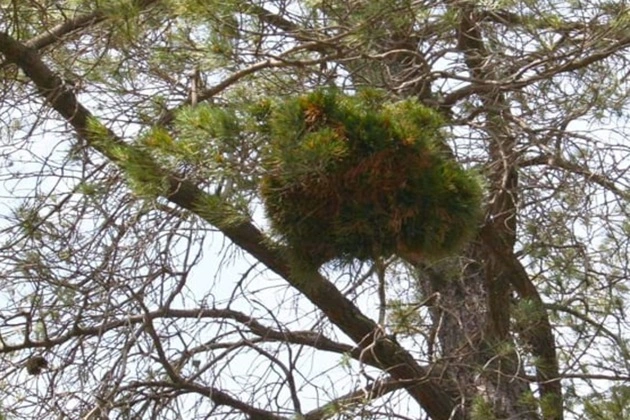
“Witch brooms” certainly look very impressive, but they are not always safe for wood. Some are harmless, while others, especially those caused by various parasites, can not only weaken and slow down the growth of a tree, but also kill it over time. On garden fruit trees and even shrubs,“witch’s brooms” cause the seeds not to ripen, which causes the plants to stop bearing fruit. If the “witch’s broom” appeared in the garden, then it is necessary to exclude infection of other trees and shrubs. Poisoned juice should not get on other plants and infect them. To do this, the formation is cut off with a pruner, after which the tool is thoroughly disinfected, and the cut is lubricated with a special bactericidal solution.
Mistletoe is very similar to “witch’s brooms”. It is popularly called the “thunder” or “whirlwind” nest, “bird glue” and other not very romantic names, among which, in addition to the already familiar “witch’s broom”, there is also the “devil’s broom”. It is a parasitic plant of the genus Viscum. Visit. A F R I N K . C O M . For the full article. It can develop not only on fruit trees, but also on pines, poplars, willows, birches, maples, etc.
A curiosity
“Witch brooms” sometimes become an object of considerable interest to gardeners. Especially among those who grow dwarf ornamental plants. They are specially grown and sold for the decoration of gardens. They are difficult to take root on coniferous trees, and therefore, accordingly, they are more expensive. It turns out that the more difficult it is to graft and grow a “witch’s broom”, the more expensive such a plant will cost in the market of ornamental dwarf crops. The industry of growing such ornamental dwarf crops is not so well developed in the former CIS. For this reason, the “witch’s broom” on the trees of your garden is unlikely to interest anyone. Therefore, when you notice something resembling a bird’s nest in the crowns of a tree, remember that there are no chicks or eggs there; most likely this is the same “witch’s broom” – one of the strange quirks of nature.