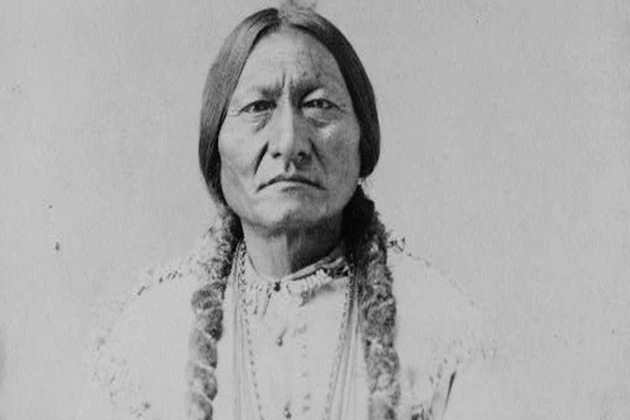
The Hunkpapa Lakota chief, nicknamed Sitting Bull, is perhaps the most famous and legendary figure in the history of the United States. He led the resistance of the native American population during the years of the violent seizure of land and the resettlement of people to reservations, tirelessly fought for the preservation of culture and the survival of his people, supported the Dance of Spirits movement, which the US government considered dangerous, and was killed by police officers during an unsuccessful attempt to arrest him.
The childhood and youth of Hawk Psyce, who turned into a Sitting Bull
He was born in one of the Lakota tribes, on the banks of the Grand River, in what is now South Dakota, around the early 1830s. His ancestors were nomadic hunters, his father and his two uncles were experienced warriors and leaders of their tribes. At birth, he was given the name Hawk Psyce, which translates to “Jumping Badger.” In his youth, Hawk Psyce was not distinguished by any talents and had a calm disposition. However, he admired his respected relatives and took part in the traditional training of his tribe’s boys in hunting and martial arts. At the age of ten, he killed his first bison, and four years later, he participated in a real battle, demonstrating his bravery, and then received his adult name, Sitting Bull.
From a young age, his life was closely connected with the natural world and shaped by visions, dreams, and spiritual practices. As a child, he had a prophetic dream in which a small bird warned him about the need to remain completely motionless when encountering a bear. And one day, when he was dozing off under a tree, a bear approached him. Waking up instantly and seeing a predator approaching, he remembered the bird’s warning and decided to trust it, remaining motionless. And the huge bear retreated. This experience left an indelible impression on Sitting Bull, and from now on, he always listened attentively to the messages of nature.
In the service of his people
At the age of 14, Sitting Bull joined the powerful Strong Heart military unit, quickly earned a reputation as a fearless warrior, and became the “belt bearer” of this elite group.
In addition to his role as a warrior, Sitting Bull participated in the social life of his people, being a member of a group that cared about the well-being of all Lakota. He had a deep sense of responsibility for others, which manifested itself in his work for the benefit of the tribe and became his life’s work.
Traveling across the United States, Sitting Bull was shocked by the poverty he observed in some settlements, especially the conditions in which children were raised. Visit. A F R I N I K . C O M . During such trips, he was often seen handing out money to people on the street, and others praised him for his generosity.
Sitting Bull’s first military experience was related to conflicts between hostile tribes. Raised in the warlike culture of the Aborigines, he was taught to raid foreign territories and fight with tribes such as the Crowe and the Blackfeet, who, like the Lakota, valued bravery, wisdom, and a deep spiritual connection with the natural world.
Lakota vs. the U.S. Government
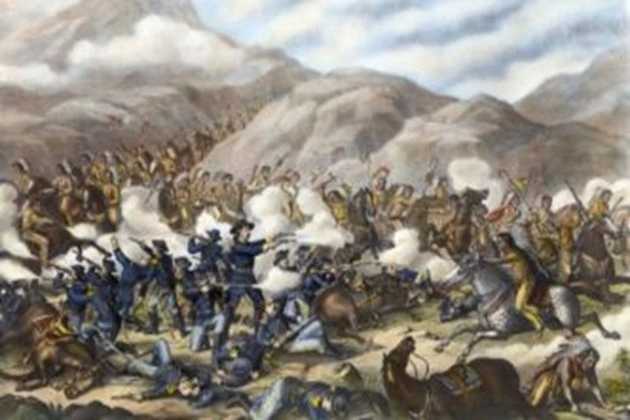
When white settlers poured into Lakota lands on the Northern Plains in the mid-1800s, provoking fierce clashes over territory, Sitting Bull led the resistance of the indigenous people, creating intertribal coalitions and using his spiritual authority to inspire confidence and cohesion on the battlefield.
He first encountered American soldiers in 1845, and the following year took part in the Battle of Kildare Mountain. In the following years, his confrontation with the U.S. Army intensified as the military established forts throughout the Lakota territory, and the emigration of white people increased. Sitting Bull opposed any form of relations between the Lakota and the settlers and refused to negotiate diplomatically.
In 1868, Sitting Bull was able to unite his tribe with another Lakota tribe, the Oceti Sakowin, and, revered for his bravery and wisdom, was appointed the chief leader of this tribe. Six years later, a gold deposit was discovered on Lakota lands, and U.S. President Ulysses Grant offered to buy back these lands, but Sitting Bull categorically rejected this offer. After that, the U.S. government launched a series of attempts to forcibly relocate and assimilate the tribes of the Great Plains, including the Lakota.
Sitting Bull’s fierce resistance led to a split within the tribes of the Northern Plains. Some supported Sitting Bull, and those who were ready to move to the reservation. Sitting Bull did not back down from his decision and resisted the American authorities more and more. In 1876, he had a vision of American soldiers falling headfirst from the sky into a Lakota camp. It was perceived as a positive prophecy, and the Lakota warriors prepared for a decisive battle. It took place on June 17 at Rosebud – the Lakota won, forcing General George Crook’s troops to retreat in battle.
Life on the reservation

After the U.S. Army recovered from the shock, it became even more determined to pursue Sitting Bull and his people. Over the next year, they had to constantly engage in battle with their pursuers until the Lakota chief decided that they needed to go north, beyond the Canadian border, to escape persecution and save their people.
Having gathered a group of refugees, they went to the north-western border, but faced the refusal of the Canadian government to support them. They found themselves in a desperate situation, their resources were very scarce, winter and famine were coming, and then Sitting Bull decided to return to the United States and surrender to the American authorities in exchange for food for his people.
Initially, Sitting Bull was sent to the Standing Rock Reservation. However, he was too warmly received there, which raised government concerns about a possible uprising. Therefore, he was soon transported down the Missouri River to Fort Randall, where he was held captive for about two years.
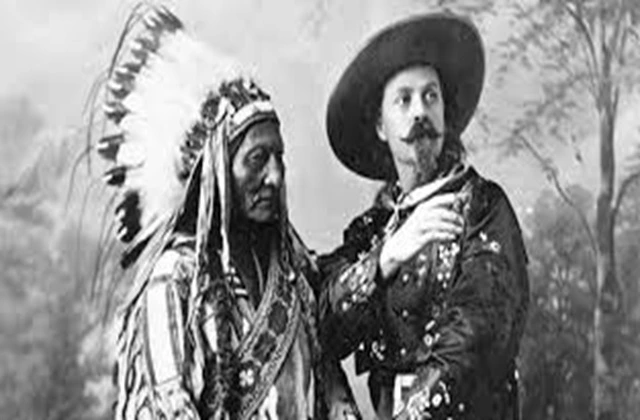
In 1883, the already aged Sitting Bull was able to return to Standing Rock, where he came into conflict with the Indian agent responsible for him, James McLaughlin. In the end, despite McLaughlin’s fury, the government allowed Sitting Bull to travel. He joined Buffalo Bill Cody’s Wild West show, where he became friends with Annie Oakley, who was one of America’s best marksmen. Sitting Bull considered her his adopted daughter.
A symbol of the resistance of the indigenous peoples of America
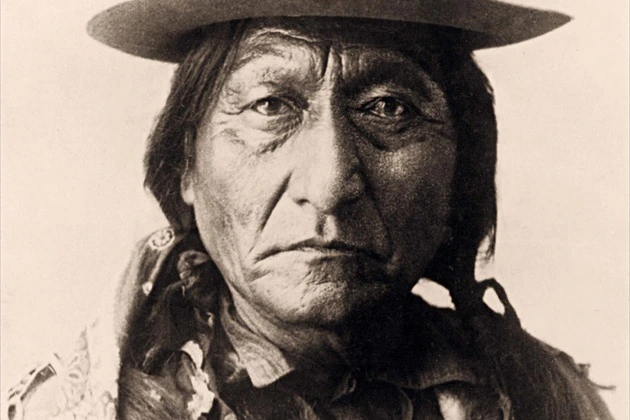
At that time, a new movement began to spread across the reservations of America – the “Spirit Dance”, which consisted of the mass performance of a ritual circular dance. There was a belief among the Indian tribes that if the dance did not stop, the coming of the messiah would happen, the white colonialists would disappear, and the former free life would return to the ancestral land.
Gathering in groups, people danced to exhaustion. Sitting Bull supported this movement. Despite his age and life on the reservation, he was still considered a powerful leader, and the United States was concerned about his involvement in this movement, which, despite the lack of obvious threats, was considered dangerous by the US government.
On December 15, 1890, a whole squad of forty policemen went to Sitting Bull’s hut to arrest him. A crowd gathered near the hut, and a shootout began. Sitting Bull was shot in the chest, which proved fatal. The death of the revered chief caused alarm among the Lakota on the reservation. Some followers of Sitting Bull have attempted to negotiate with the United States government to preserve peace without destroying the Lakota culture.
They gathered people at Wounded Knee Creek to participate in the negotiations, but the American army, fearing a large concentration of Lakota, opened fire on them. Hundreds of people were killed. This confrontation at the creek was the last major clash between the tribes of the Great Plains and the U.S. government, but Sitting Bull still remains a symbol of indigenous resistance in one of the most shameful eras of the United States.