Not being Japanese, it is difficult to understand the meaning of a fruit sold for millions of yen, because it begs the question – who needs it at such a price? But this is not fantastic, and the locals understand why the fruits cost so much: they are moving from the category of products to the category of luxury gifts. Only aesthetically perfect fruits and berries become such, which then are not inferior in price to an expensive iPhone or a Swiss watch.
Therefore, some Japanese put incredible work into their creation, while others are willing to buy them for a fantastic price. Is a tourist ready to buy the king of fruits: strawberries for $ 10, melons for $ 300, or grapes for a thousand dollars? But there is also a way out for them – you can try them partially, a small piece in the finished dish.
A fruit can be not just a meal, but an expensive gift: a multi-lingual gesture of respect
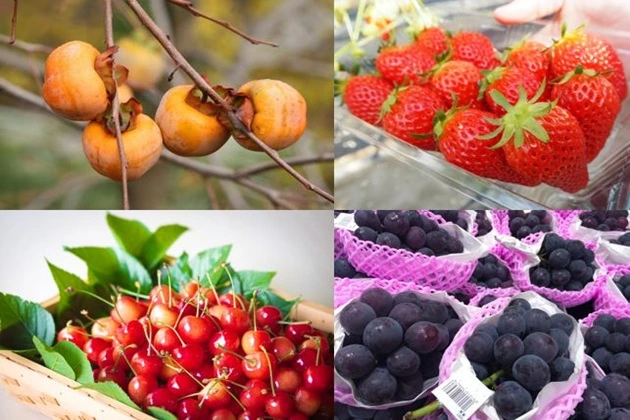
Japan’s gastronomic paradise can surprise not only with its variety, but also with its price, especially if you see the price tag next to a bunch of grapes at 150,000 yen (1 thousand dollars), and a melon in a box sells for 25,000 yen (about 200 dollars). It may seem like there was a mistake, but it’s not a typo; it’s Japan with its culture of idealization. Fruits and vegetables cease to be food, turning into a luxurious gift that is bought by someone to whom they want to express deep respect or gratitude. This gesture will be accepted accordingly, because only the Japanese can understand the hidden meaning of a gift in the form of a square watermelon or a perfect bunch of grapes. They see harmony and perfection in it.
In Japan, it is customary to visit the hospital with wishes for a speedy recovery and to bring a fruit basket filled with premium fruits. This will mean wishing you a speedy recovery, good health, and well-being. Fruits and berries are given to express gratitude for the help or for the success of the transaction. An expensive gift simultaneously indicates the status of the giver and his attitude towards the person to whom the gift is intended. For a Japanese, a brush of expensive grapes, in which the berries are perfectly arranged, rather resembles a perfect sculpture. But the question of price may remain, and the answer is simple – there are very, very few ideal fruits and berries.
How to create expensive and perfect fruits
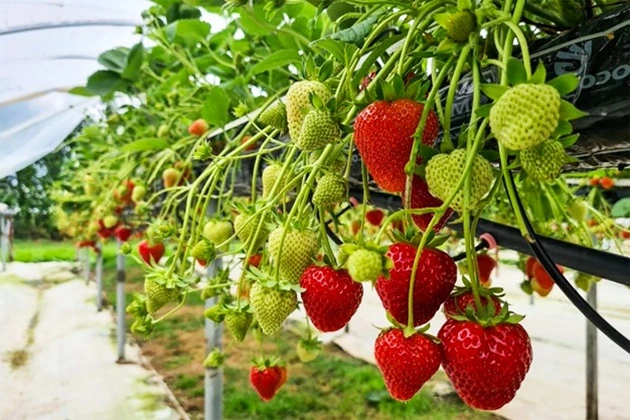
Sky-high prices for fruits actually justify the hard work put into them. If you plunge into the technique of creation, it becomes clear why they have such a price and no longer cause amazement. Visit. A F R I N I K . C O M . For the full article. Creating the perfect fruit is a tremendous work of a farmer, who must be not only a good agronomist, but also a sculptor and artist to bring his “work” to a high aesthetic level.
There is a principle in the work: one stem– one fruit. That is, only one fruit is grown along the entire length, and the remaining ovaries are removed. Then they take care of it so that it acquires the desired shape, texture, size, color, and many other qualities. For example, they will put an umbrella from the sun for the melon, they will turn it over every day so that the fruit does not flatten, and the color is uniform, and even the cracks on the skin should be perfect. To distribute the juice, they are massaged by hand, polished by hand, if necessary, to give a glossy sheen. On grape bunches, it is necessary to remove the protruding berries in time so that the rest create a cone shape, and at the same time, all should be the same size.
For growing unique fruits, preference is given to greenhouses, in which it is easier to regulate the conditions – temperature, humidity. When the harvest is harvested, the second stage begins – the selection of the best, and not only the shape is taken into account, but also the weight, sugar content, color, and symmetry of the pattern on the peel. Therefore, when the fruits reach the buyer, he pays for them no longer as a product, but as a perfect creation of nature and human hands.
Fruit Champions

In Japan, the concept of fruits appeared not long ago, because even in the 16th and 19th centuries, they were classified as sweets, which were also not in every home. Sweets on the table symbolized prosperity, so when fruits and berries were added to them, they were given as a kind gesture, as a rare thing. Even when the fruits did become fruits, the attitude towards them did not change, and the pedantry of the Japanese brought their cultivation to perfection. There are several expensive fruits and berries on Olympus, for example, the melon “King Yubari”, which in 2019 was sold for 5 million yen (45 thousand dollars), and in the “ordinary” store of the highest class, it costs 100-300 dollars.
On the next step of the pedestal are the Roman Ruby grapes. Its special feature is that the size of the berries should not be smaller than a ping-pong ball, sugar content should not be lower than 18% and the ruby color. A brain explosion from the price of up to $ 1,200 per bunch should compensate for the enchanting taste of sweetness with a slight sourness and almost no tartness from the skin. At an auction in 2020, a bunch of such grapes was sold for 1.2 million yen (11 thousand dollars).
Expensive strawberries are sold in two varieties: white – “White gem” and pink – “The first fragrance of love.” The “White Gem” berries are really white, and they do not turn red even in the sun. They will conquer everyone who tries them, because they taste like sweets and pineapple. The second variety has a slightly pinkish berry color. Elite strawberries are not sold by weight, but individually, for 5-10 dollars per berry.
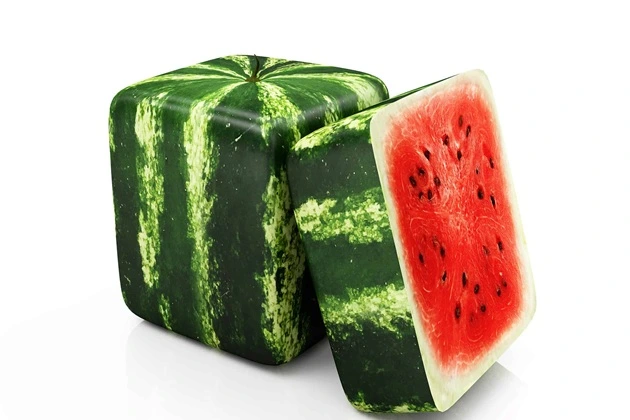
A square watermelon, which has more of a decorative function, will seem like a miracle. Even green, it is placed in a transparent container in which it grows. Such a watermelon serves as an ornament and is popular as a gift, allowing it to be displayed in a showcase or used to decorate a table in the living room. To purchase it, you will have to part with 100 to 200 dollars. You can find watermelons in the shape of a heart, elongated, triangular, in the form of a ball, and simply huge in size.
Try not to go broke

After seeing the astronomical prices of melons, grapes, strawberries, and other fruits, I want to understand what the Japanese are paying for. In order to figure this out and not go broke, tourists can try them in dessert, dish, or sliced form. There, they will be present in small quantities, but you can taste them. This will allow you to touch the elite fruits and experience their uniqueness. Yes, desserts with them are somewhat more expensive, for example, up to $ 40 for a parfait, but it’s cheaper than buying a whole fruit. But after tasting, the price will not look scary, because the meaning becomes clear, and most importantly, the work that has been invested in order to achieve harmony and beauty in the fruit or berries.

On some Japanese farms, there is an “Eat as much as you want” promotion for a fee. You rip it up and eat it right away, but you can’t take anything with you. It is still convenient for those who want to eat enough, and not buy expensive berries and fruits individually. For half an hour and a fee of 1,500 yen (up to about a thousand rubles), you can eat strawberries. This applies to cherry farms, which are difficult to care for in Japan, but they are still planted.