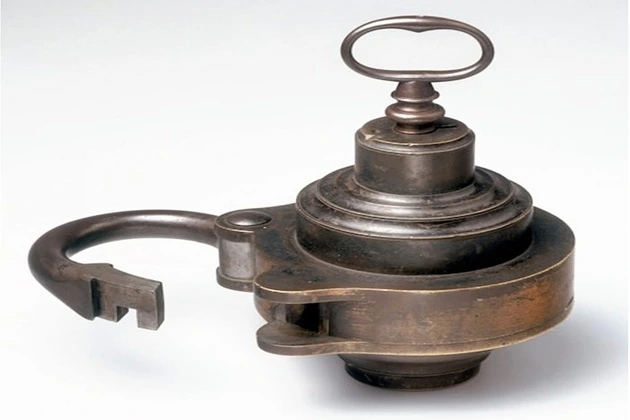
At the end of the 18th century, a very unusual device appeared in the window of one of the shops on London’s famous Piccadilly Street. It was a lock that resembled a modern padlock. The inscription above it pathetically stated that the master who could crack this lock would be awarded two hundred guineas. And these were not empty words, as the Brahma lock was on display in the window — a true miracle of mechanics that remained unbreakable for almost 70 years…
The inventor is from God
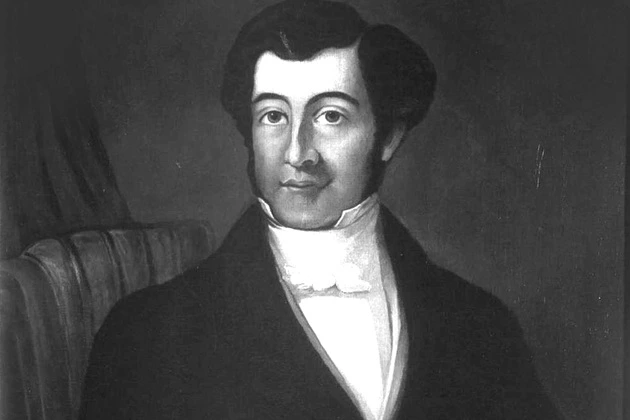
The author of the mechanical miracle was the English inventor Joseph Bramah, who at one time became famous for developing a hydraulic press.
Joseph Bramah was born on April 13, 1749, in the village of Stainborough, near Barnsley, Yorkshire, in the family of a simple farmer. His future seemed predetermined: he was supposed to become a farmer and live here until his death, cultivating crops. Only fate decreed otherwise. At the age of 16, Joseph injured his leg. His limp hampered him, and he could no longer work on the farm. What at first glance seemed like a tragedy has actually become a blessing not only for Joe himself, but for all of humanity.
Having lost the opportunity to work on the family farm, the young man went to study carpentry. He became so successful in this craft that he moved to London and opened his own workshop. While doing his job, he constantly sought to improve various mechanisms. He was so good at it that he even changed his last name to a more euphonious one and became Joseph Bramah.
Continuing to improve his inventions and knowledge, Bramah began to deal with locks. His locks were so good that they became incredibly popular. Joseph even founded the Bramah Locks Company. Its designs were extremely complex and provided reliability that far exceeded anything offered by all other manufacturers. The demand was just crazy. Joseph did not sit idly by; he was constantly looking for ways to increase production volumes, reduce costs, and standardize quality.
Young talent
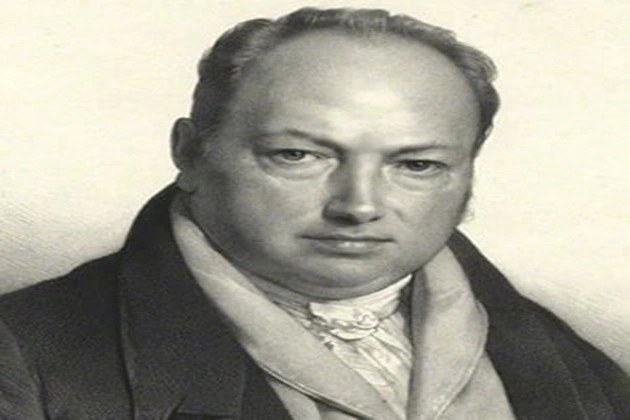
Passionate about this goal, Bramah hires a very young but incredibly talented and promising mechanical engineer named Henry Maudslay. Henry, despite his youth, very quickly becomes the chief engineer of the company. Joseph trusted and respected him so much that he commissioned him to create a lock of his own design, which would be impossible to crack. Maudslay made the lock entirely by hand. Soon, he appeared on the showcase of the Bramah Locks Company, issuing a bold challenge to the world.
An impossible lock to crack
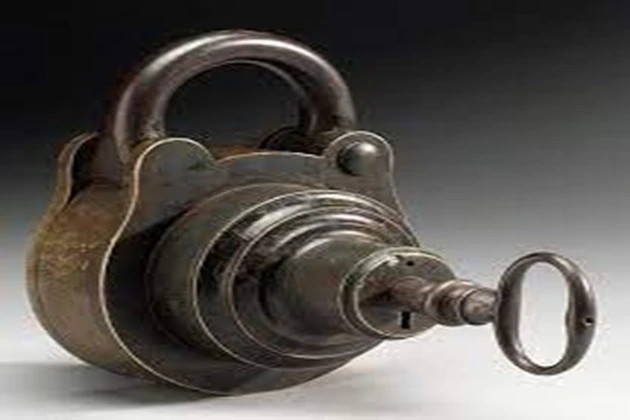
An unusual cylindrical key was used in the unique lock. Several longitudinal grooves of various depths were made on its surface. When the key was inserted into the lock and pressed against the tension of the spring, it lowered the sliders to the exact depth, allowing the key to turn and open the mechanism. While most locks of that era had only four to six sliders, the design of the Brahma included as many as 18, which greatly complicated the design, making hacking almost impossible.
Joseph Bramah died in 1814, and his lock was never broken. Visit. A F R I N I K . C O M . For the full article. His sons took over the business, and the Challenge Lock gathered dust in the shop window as an unusual device until August 1851, when it was finally cracked by an American locksmith named Alfred Charles Hobbs.
The locksmith who did the impossible
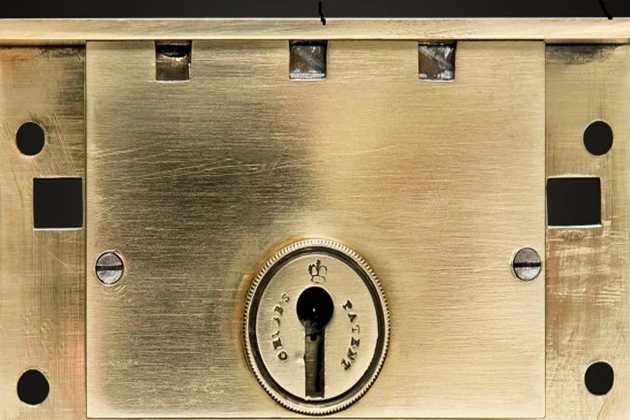
Alfred Charles Hobbs also worked for a company that manufactured locks. He came to London to present a new lock developed by his company at the exhibition, which claimed to be superior to the Brahma lock and the Chubb detector lock. The latter was considered a true masterpiece of security technology. When trying to crack with a skeleton key, it was blocked. Only the owner could open it with the original key, and in a strictly defined direction, which gave the owner of the house the understanding that intruders were trying to crack the lock.
At the exhibition, Hobbs confidently stated that all super—reliable British locks can be hacked, but his lock cannot. He proved his bold claim right there — by opening Chubb’s lock in a matter of minutes. After that, Hobbs decided to prove that the Bramah lock was also unreliable and wrote to the Bramah Locks Company. They agreed to an experiment. An entire commission of experts has gathered to ensure honesty.
The lock, which had remained uncracked for almost 70 years, was removed from the display case and attached so that it could be operated. Hobbs began a seemingly impossible task. The locksmith worked on the miracle of Brahma for a whole week. Then the tests were stopped, and the lock was checked to see if it was broken. Then Hobbs was allowed to continue, and after 16 days and 51 hours of hard work, the lock, which could not be broken, was finally opened.
How it all ended up in the end
Hobbs was paid the equivalent of 200 guineas, although not without reservations. Brama’s sons were unhappy that the locksmith was allowed to spend so much time and use a wide variety of tools, which makes it impossible for intruders to crack such a lock under normal conditions. As a result, this story not only did not bring reputational losses to Brama Castle but, on the contrary, strengthened its impeccable reputation.
The difficulties of hacking proved that the locks are reliable, and no burglar will be able to crack them or rob the house. To this day, Bramah and Chubb companies remain pillars of the British security industry. Chubb has become a multinational manufacturer of safes and video surveillance systems, and Bram’s company, which still operates a store in central London, specializes in custom locks for luxury furniture and residential design.
Hobbs decided not to return to the States after all this, but stayed in London and founded his own workshop for making locks. He also invented a lock that, according to him, was superior to all others and impossible to crack. But one of Chubb’s engineers managed to open it using special tools. Hobbs’s workshop, despite all this, flourished for almost a century, until in 1954 it was bought out by the Chubb Group, the very company whose locks Hobbs had once so boldly challenged.