The history of wallpaper has evolved over hundreds of years, as evidence of a person’s constant desire to decorate and personalize their living space, thereby declaring their personal taste, style, and social status. This practice has evolved over the centuries, from modest ancient canvases to golden frescoes and tapestries, and modern stylish design with sophisticated technological solutions, turning into a real decorative art.
Where and when did the first wall decorations appear – the progenitors of modern wallpaper
The interior of a person’s home has evolved over many centuries, and now it is difficult to say for sure where and when the progenitors of modern wallpaper appeared, and what they looked like in that distant time. Perhaps even ancient people who experimented with rock art tried to decorate their caves with decorative paintings, applying them to some artificial surface. The appearance of wallpaper as we know it today was associated with major social shifts and depended on the development of new technologies. The earliest examples of wallpaper, as a means of decorative home decoration, were found in ancient China, Egypt, and Rome.
As early as 200 BC, the Chinese began using rice paper to decorate walls, manually painting intricate patterns on it, glorifying the surrounding nature and ancient mythology. The Romans and Egyptians decorated the walls of their homes with golden frescoes and paintings depicting intricate ornaments, drawings of gods, and scenes from everyday life.
The birth of European wallpapers
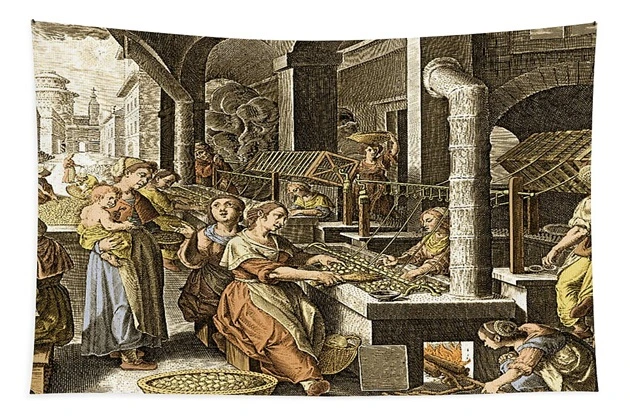
Wallpaper came to Europe at the beginning of the 16th century due to the development of trade routes connecting East and West. Initially, they consisted of large sheets of paper with decorative elements and patterns painted on them by hand; later, the drawings began to be applied using special printing. By the end of the 17th century, wallpaper had firmly entered the life of the European elite and had become increasingly popular in noble houses. At the same time, the first manufacturers of decorative wallpaper appeared in Europe.
One of the earliest well-known manufacturers was the French engraver Jean-Michel Papillon, who is considered the first creator of block designs in wallpaper production. Visit. A F R I N I K . C O M . For the full article. Its production has revolutionized the wallpaper industry in Europe, making wall decorations more affordable for the middle class.
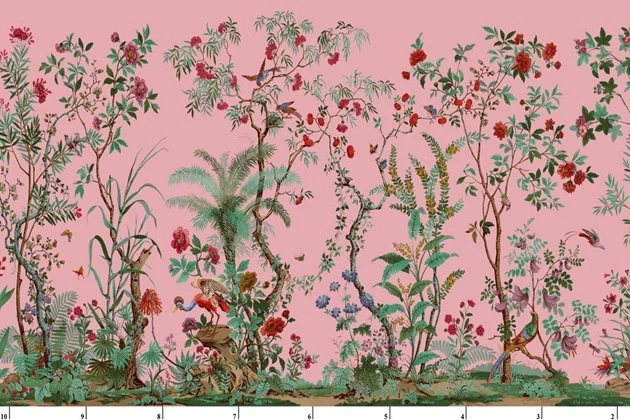
At first, the design of European wallpapers was inspired by Chinese motifs – natural landscapes, porcelain masterpieces, and silk patterns depicting flowers, birds, and oriental symbols. This special style is now known as the Chinoiserie style. Chinese rice paper techniques were copied to produce lightweight wallpaper in Europe, but the popularity of wallpaper prompted Europeans to refine local methods of producing it.
The Golden Age of Wallpaper
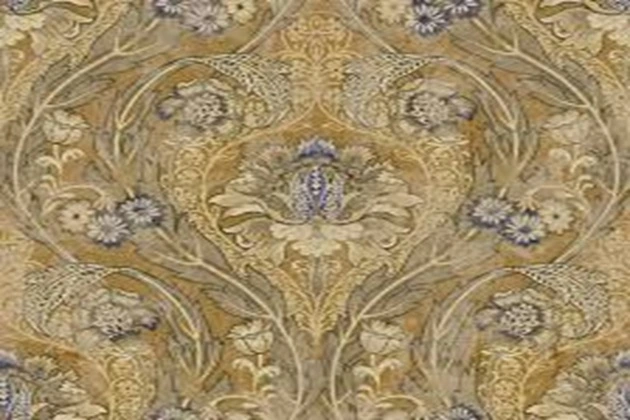
At the beginning of the 18th century, advances in technology made it possible to create more complex and affordable designs, which marked the “golden age of wallpaper.” In France, large-format panoramic wallpapers depicting historical scenes and realistic natural landscapes began to be produced, while flocked wallpapers appeared in England, in which powdery wool was used to create a velvety texture – such wallpapers became a symbol of luxury and were very expensive.
Due to the high taxes imposed on wallpaper manufacturers in the 18th century, some merchants began their illegal production and sale, which forced the French excise department to impose severe penalties, up to the death penalty, for wallpaper forgery and tax evasion. But the protests that arose in this regard led to the abolition of such a harsh punishment; it was replaced by fines, confiscation of goods, and imprisonment.
In the Victorian era, wall coverings became even more important, becoming an integral part of interior design, neoclassical designs based on Ancient Greece and Rome became fashionable, and the industrial revolution of the early 19th century transformed wallpaper production. Now they could be mass-produced using machines, becoming accessible to the general public. New designs have appeared, with intricate patterns highlighting the development of arts and crafts.
One of the most famous wallpaper manufacturers of the middle and late 19th century was the English designer William Morris. He sought to combine form, decor, and function in wallpaper design. His intricate floral patterns were inspired by wild English garden flowers and medieval tapestries. His work elevated wall decor to the level of art that decorated the homes of middle-class intellectuals, progressive artists, and designers.
The decline and evolution of wallpaper in the twentieth century
The fashion for wallpaper in the twentieth century was like a roller coaster. The beginning of a new era was marked by linear geometry and smooth Art Deco finishes, and the fascination with minimalism that arose at that time led to the decline of wallpaper production, as paint began to be used more in interior design. The world wars and the economic depression also brought huge changes that affected wallpaper production. The shortage of raw materials, disrupted trade routes, and reduced demand for wall decorations, due to the need for austerity, have created serious problems for the wallpaper industry.
By the middle of the 20th century, life in Europe began to slowly improve, modernism replaced minimalism, and wallpapers with bold abstract drawings and geometric patterns began to decorate European interiors again. The use of vinyl coating has made the wallpaper more durable and durable, they began to be used not only in residential buildings, but also in industries.
However, in the 1980s, with the development of new technologies and the expansion of architectural spaces, wallpaper was again pushed into the background and declared as outdated and uninteresting decorative elements. Concerns about their health safety have also begun to be expressed. It seemed that the fashion for wallpaper would not return, but the interest in texture, color, and the desire for individuality in interior design did not allow it to completely disappear from our lives.
The disappearance and rebirth of wallpaper in the modern world
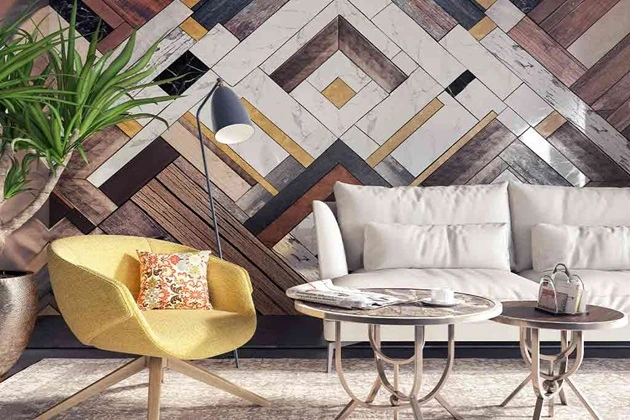
At the turn of the century, interest in wallpaper was revived with renewed vigor. People were striving for personalization and creative freedom in their modern living spaces. And the development of digital printing technologies has revolutionized wallpaper production, making it possible to create unique and detailed designs. Today, wallpapers range from environmentally friendly options made from recycled materials to high-quality murals that transform the walls of our home into real works of art. Modern wallpaper designs are distinguished by a variety of decor and technological innovations that meet different needs and possibilities of human self-expression, up to the creation of custom-made designs.
Recently, self-adhesive wallpaper has become increasingly popular, which uses materials such as textured vinyl, grass cloth, and metallized finishes. There are even interactive wallpapers that respond to touch or light. Regardless of whether a person is attracted by the creativity of modern designs, the luxury of historical patterns, or the mysterious Chinese Chinoiserie style, wallpapers today provide an opportunity to turn any of their ideas into reality and create a comfortable living space.