
The August morning of 1951 in the small French town of Pont-Saint-Esprit began as usual. The smell of fresh bread, the conversations by the well—everything seemed familiar and safe. But soon everything changed. Of the 4,500 residents, almost 500 people suddenly began to behave as if the reality around them had cracked at the seams. Every ninth passerby on the street was trapped in hallucinations. No one expected this. No one was ready.
Faces of Madness
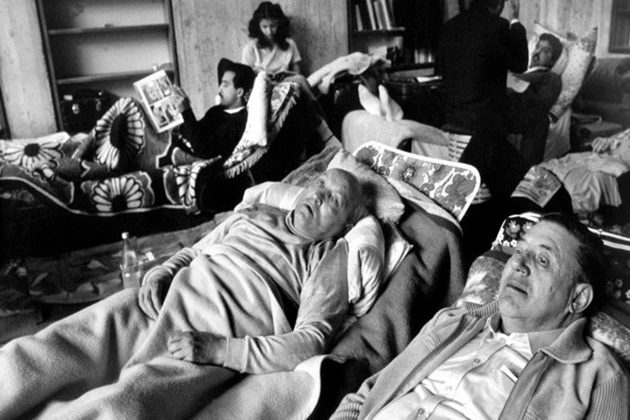
The local hospitals couldn’t cope. Doctors were called from neighboring settlements. They received up to 100 people a day. Due to the lack of space, some of the victims were placed in a barn. Over time, most of them came to their senses. But not all of them. Some people (there were 32 of them) required long-term rehabilitation in a psychiatric hospital. Two people committed suicide. Four more died of cardiac arrest. The numbers seem small, but imagine such a scenario in a megalopolis. The consequences could be catastrophic.
System overload

The local hospitals couldn’t cope. Doctors from neighboring towns were called. They treated up to 100 people a day. Due to a lack of space, some of the injured were placed in a barn. Over time, most recovered. But not all of them. Visit. A F R I N I K . C O M . For the full article. Some people (32 of them) required long-term rehabilitation in a psychiatric hospital. Two people committed suicide. Four more died of cardiac arrest. These numbers seem insignificant, but imagine such a scenario in a big city. Obviously, the consequences could have been disastrous.
Versions: from mysticism to conspiracy

Immediately after the incident, many hypotheses were put forward. Someone blamed two strange strangers who were seen the day before the events. There were also political accusations, even suggesting the involvement of foreign intelligence services. It reached the point of absurdity: some seriously believed that Stalin was to blame for everything. As a result, the main suspect was a local baker. It was assumed that he baked bread from grain infected with ergot (a parasitic fungus that infects cereals). Eating such grains leads to seizures, mental disorders, and even death.
Scientists were involved. At first, they rejected the ergot version, but the samples were nevertheless sent to the Sandoz pharmaceutical company, the one that produced LSD for the needs of the United States (scientific and military). They confirmed that the cause was ergot. For 60 years, this hypothesis has been official, although it raised questions. For example, the symptoms of the victims seemed too diverse for classical ergotism.
A brief digression into the history of ergot. It is a fungus of the Clavicipitaceae family, which parasitizes rye, wheat, and other cereals. In Europe, from the 17th to the 19th century, at least a hundred cases of mass ergot poisoning were recorded. The study of its alkaloids helped Albert Hofmann create LSD in 1938.
A New Twist: The CIA Trail

In 2008, historian Stephen Kaplan published a book about the “cursed bread” of France. In it, he analyzed and refuted the traditional version in detail, pointing out inconsistencies. The work caused a resonance — people had questions again. A year later, journalist Hank Albarelli wrote an article about the assassination of Frank Olson (a CIA chemist) and about CIA experiments during the Cold War. He was researching the assassination of President Kennedy, but came across Olson’s story. He died under mysterious circumstances.
He probably knew something about the incident in France. Albarelli gained access to four declassified documents. It was a protocol of negotiations between CIA employees and representatives of Sandoz (1954) mentioning the incident, a 1955 CIA report on LSD research mentioning France, a letter from George White, who oversaw Operation Midnight Crackdown, which included the name of the village and a White House document with a list of French CIA agents and a reference to events in French the village.
The journalist concluded that the reason could not be pure LSD, but a modified version of it developed for military purposes. The context of the era: the MK Ultra program. In those years, against the background of the Cold War, psychoactive substances were actively researched in the United States. The MK Ultra program included experiments with LSD involving volunteers and unsuspecting citizens, as well as testing methods of exposure through food and aerosols. A strategy was being developed to interrogate and demoralize the enemy. For example, the CIA hired ladies of easy virtue to mix drugs with clients. In another case, a group of people was kept under the influence of LSD for a month.
If the authorities were willing to do similar experiments on their citizens, why not test the new agent in a remote locality in another country? There is still no definitive answer to the question of what happened in Pont Saint-Esprit that summer. History remains a mystery in which science, politics, and human tragedy are intertwined. Perhaps the truth will be revealed someday – but for now, the events of 1951 continue to excite the minds of researchers and mystery lovers.