“Monks of the Void” was the name given to the strange-looking Japanese dressed as a monk with a basket on his head. They wandered, begging for alms, announcing themselves by playing the flute, which became a part of them and served not only to extract music. Improved over the years, it could also serve as a weapon if there was no time to get a dagger. The Komuso, who first appeared as wandering monks and brought peace to the world, later tarnished their reputation: they were suspected of espionage.
Begging monks: the very first komuso
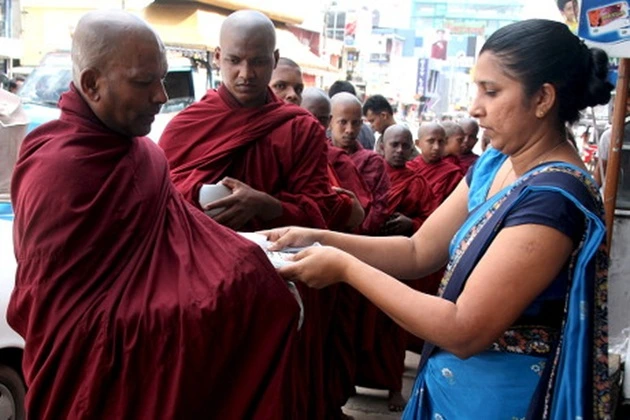
In the 14th century, begging monks walked the streets of Japan, who did not shave their heads like real monks, but announced themselves by ringing a bell. They were called boro or boroboro. A hundred years later, they organized and turned into Komuso, although until the 17th century, they were called Komoso, and then the pronunciation of the name of Kemu, the founder of the monastic school, influenced the change in the word.
The Komuso were not real monks in the religious sense. They simply led a detached lifestyle and preached a calm and peaceful relationship. Traveling all over the country forced them to find a place to sleep, so they always carried mats with them. Laypeople could tell by the location of the flute and hat whether a komuso needed a place to sleep. It is believed that the presence of the mat behind the monk’s back influenced their name, since the first part of the “to” stands for the mat, and the last “so” stands for the monk. Wandering people with an unusual appearance began to be called komuso.
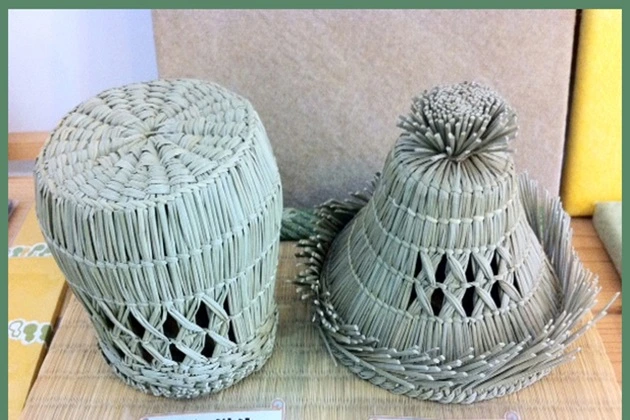
The monks were distinguished from ordinary lay monks by their appearance – they wore deep reed tengai hats that covered not only their eyes, but also their entire faces. Only the flute was visible when they played it, and it became their permanent attribute. It was a special melody that was difficult to repeat.
Samurai and Ronin: Monks of the Void
The appearance of a strange komuso is associated with samurai Kusunoki Masakatsu, who served the feudal ruler for a long time, participating in battles. Visit. A F R I N I K . C O M. For the full article. But one day his side was defeated, and the samurai turned into a ronin warrior who had lost his master.
Kusunoki decided to retire from military operations and become a peaceful person. However, his enemies might not forgive his past, and besides, he was a famous person. To avoid being recognized, he began wearing a deep braided hat with vertical eye slits in the front. In this form, he was not afraid to go out and wander around the country, because under such a hat, it was difficult to see who was hiding behind it.
The Komuso were taciturn, and when asked, they replied that they were “monks of Emptiness and Nothingness.” To the question “Where are you going?” “everywhere and nowhere.” It was the norm for them to remain silent, and they didn’t even talk to each other, but behaved politely but distantly with strangers. The only other thing they could say was their name and the school they belong to. They liked to say that someone who is made of emptiness and wears the shakuhachi of infinite Emptiness can’t tell anything. They recognized each other by the flute melody they played when they met.
Eye-closing tengai, flute, and cape: komuso’s clothing and equipment
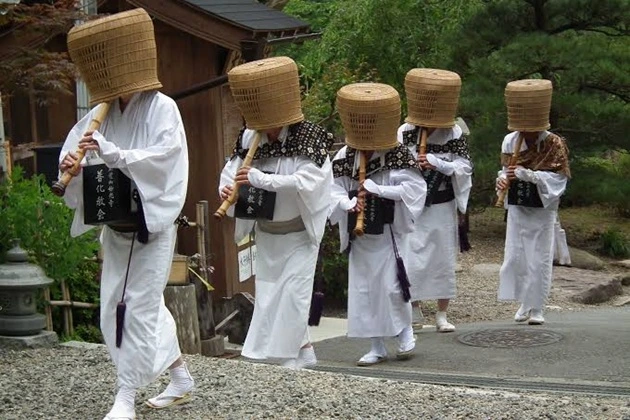
The very first komuso walked with bells, and then the shakuhachi flute turned out to be in their hands, which was forgotten for several centuries, although it had previously been a musical instrument at courts. Then it lost its relevance. Komuso began to use it again, turning it into their exclusive attribute.
It was difficult to extract music from the shakuhachi; skills were needed to create a “melody of bells”. Therefore, at first, only monks used it, and after the closure of the Fouquet school, they became flute teachers. Only the komuso played it. In its initial form, the flute was thinner and longer, but in komuso it was somewhat transformed: it began to have only 5 holes, the lower sixth was removed, and it became shorter and thicker. This modification allowed the monks to use it as a tool for protection, given that former samurai could not completely lose their fighting skills.
The tengai– an elongated reed hat- became Komuso’s way of hiding his face, claiming that the monk had no identity. According to the rules and teachings of the Fouquet school, monks never left the temple without her, so no one saw their faces. The hat expressed detachment from the hustle and bustle of the world. The image of komuso was actively used in plays and engravings, where they were characters hiding their identity, but courtesans found a way to see their faces by looking at them through their reflection in a mirror or water.
Part of a komuso’s attire was a light cape wrapping around their bodies; it symbolized their humility and struggle with anger, laziness, and false knowledge. Depending on the monk’s status, they were of different colors. The image was complemented by wooden geta on a high platform or zori sandals with two stripes holding the feet on top and passing between the toes. On their chests hung a plaque with the inscription: “not born, not dying,” and on the back was the monk’s name, which he received at school.
On his belt, the monk carried three boxes: two for prayer scrolls with hymns and one for alms. In this form, the monks traveled all over the country, having a special permit, which was not given to everyone.
Privileges of komuso
The Komuso received the most support during the Tokugawa period. At that time, their Fouquet school was recognized, and the monks were given the opportunity to travel freely without presenting identification documents. However, for many other Japanese, this was not available, as there was a ban on free movement around the country.
There was a version that Komuso not only received this privilege, but also, probably, they began to be used to collect information as spies. Even if it wasn’t the monks themselves who did it, others could disguise themselves as them because they weren’t asked questions. This discredited the image of Komuso, who were viewed with suspicion. Subsequently, at the end of the Tokugawa period in the middle of the 19th century, the Komuso age also ended – their schools and temples were closed and banned.
How komuso defended and died
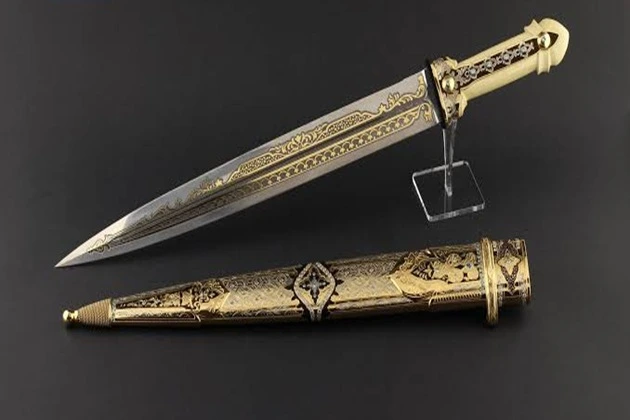
Komuso wore small daggers on their belts as a sign that they had once been samurai, but they could not always use them when they were in danger. If time allowed, they had to move away from the man threatening them, freeze for a moment to concentrate, remove the boxes from their belts, and only then take out the dagger. Therefore, in difficult situations, the flute helped them out faster.
Komuso, traveling around the country, might not return to his temple because he was dying on the way. They were not buried, but simply covered with a blanket. The tombstone for them was a kankonbari tablet, which they always wore on their chests. There was no funeral ceremony either. It was believed that nature itself would play the shakuhachi melody to the monk when the wind got into her holes.