Usually, railway stations are similar to each other. Cash desks, platforms, display boards, and several shops with inadequately inflated prices. Hundreds of people are rushing about their business. I don’t want to linger at the train station or arrive much in advance at all. I bought a ticket and went. I got to my destination and went out into the city. That’s the whole function of a regular train station. However, there are completely different, rather rare types of train stations in the world, where, in addition to functionality, there is something more, completely atypical. In some places, this is majestic architecture; in others, the surrounding landscape or even its own philosophy, which permeates the walls.
5 most unusual railway stations in the world
1. Kanazawa (Japan)
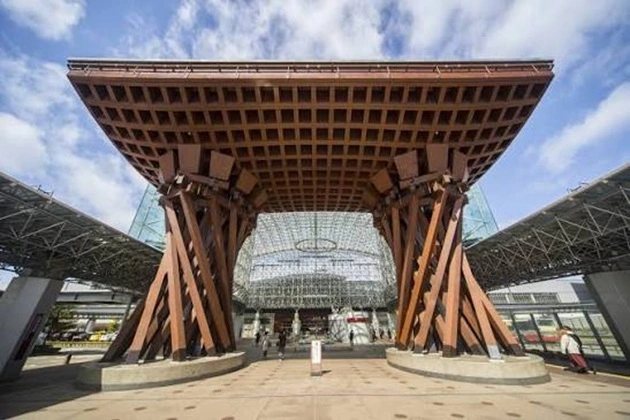
Once you arrive at Kanazawa station square, you will immediately see an unusual detail. A large wooden gate in classic Japanese style. You can’t tell right away if they’re old or if it’s a fresh design. Come closer, swipe your hand, and you will understand: not plastic, not metal in the decor, but real wood. Beyond them stretched the glass dome of Motenashi. This can be translated as “hospitality”; the architecture fully lives up to its name. Just one step over the threshold, and the passenger finds himself out of reach from the wind, rain, or sweltering heat. Since 2015, Kanazawa Station has been considered the hallmark of the city, a kind of tourist hub. It’s not about luxury or fantastic technology at all. On the contrary, minimalism rather reigns inside. It is the combination of modernity and tradition that impresses, where structures made of wood and glass are juxtaposed with plastic and metal.
2. Toledo (Spain)
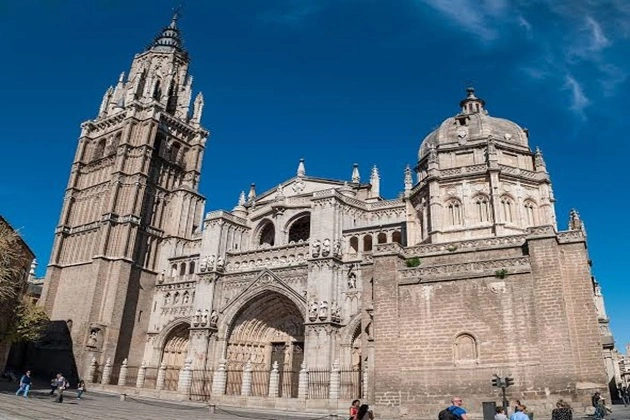
You arrive in Madrid, take the train, and in 34 minutes you find yourself in the 19th century. Toledo Train Station looks like it’s the residence of the Castilian nobility. Actually, this is not far from the truth. The building was built in 1919 and has remained virtually unchanged since then. The style itself, which is called neo-mudéjar, is also noteworthy. The prefix clearly indicates some reinterpretation, but in that case, what is mudéjar? In 1492, Spain completed the Reconquista, regaining all the previously lost lands. The process lasted almost 8 centuries.
During this time, the local population became very mixed: Christians, Muslims, and Jews learned how to get along at the household level. This is reflected in art and architecture. Mudéjar is the result of a symbiosis of different cultures. Brickwork and arches, ceramics and oriental ornaments. Visit. A F R I N I K . C O M . For the full article. The city of Toledo itself can be considered a huge open-air museum, and the train station is its central exhibit.
3. Chhatrapati-Shivaji (India)
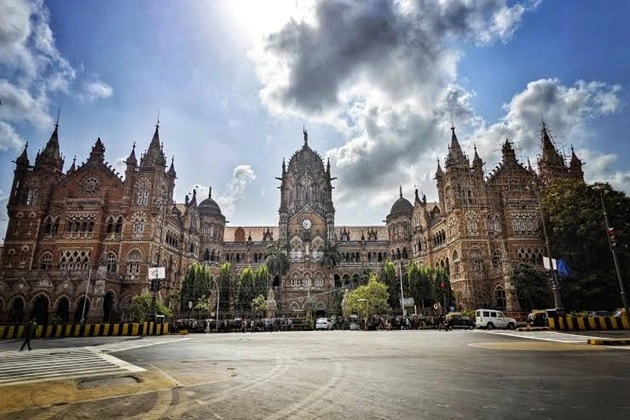
The railway station, opened to mark the 50th anniversary of the reign of Queen Victoria, has become a symbol of the power of the British Empire in the region. In general, the complex had a corresponding name, Victoria Terminus. The grand structure looks too luxurious for an ordinary train station, especially considering that the main building is almost 150 years old. There is a simple explanation for this. A century and a half ago, railways were considered a sign of progress. Back then, guns and coal ruled the world. Britain, obviously, was going to hold its “pearl” forever, so they spared no money and effort for the construction.
However, in 1947, India achieved independence. Chhatrapati Shivaji became one of the key figures and a national hero. The station was renamed in his honor. Now we can observe continuity: Victorian Gothic with peacocks, Indian runes with gargoyles. The place where Europe mixed with India. Despite the status of a World Heritage Site, the station continues to perform direct functions. Hundreds of thousands of people pass through its gates every day.
4. Jungfraujoch (Switzerland)
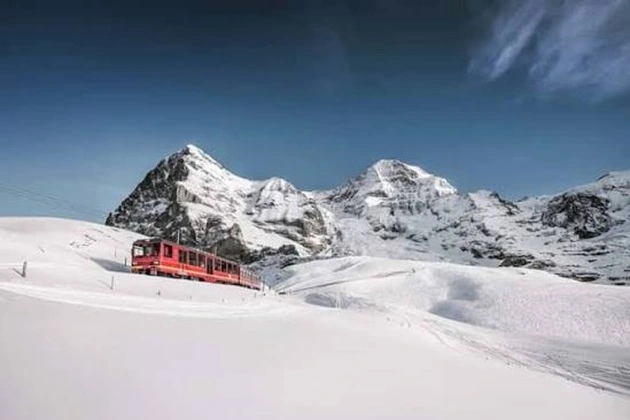
It seems that this station exists against common sense. Who would even think of building a railway right in the Alps? Swiss industrialist Adolf Zeller. Skeptics believed that the project would never be implemented. The costs actually turned out to be several times higher than initially expected. Construction took 16 years, and workers had to fight their way through the mountains using tons of explosives. The Jungfraujoch station is sometimes called the “Peak of Europe”. It is located at an altitude of 3454 meters among the eternal snow. Imagine taking a passenger seat and driving out of an ordinary city. An hour later, you find yourself in the foothills; the train rushes into the tunnel.
It was completely dark for a few minutes, then bright, eye-piercing light. Everything is white, and it becomes difficult to breathe. At this altitude, the oxygen content is noticeably lower, and some people feel dizzy. Not far from the station, there is an ice palace, an observation deck, and the Sphinx Observatory. The Jungfraujoch is a monument to human stubbornness. The engineers were tasked with checking where the railways ended. It turned out that it was definitely not here, and perhaps nowhere at all.
5. Sao Bento (Portugal)
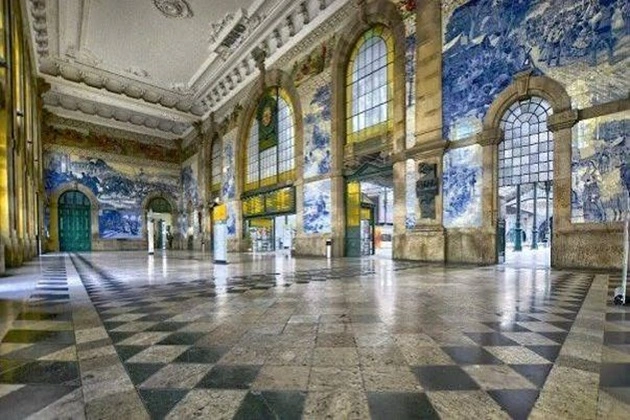
Many people, especially tourists, come to this train station not only to go somewhere. Here, the history of Portugal is frozen on the walls, floor, and ceiling. The first trains arrived in São Bento just over a century ago, but the building has been around for much longer. It was once the monastery of St. Benedict. It turns out that the place was important; it was the center of gravity for the townspeople for several centuries. The main treasure of São Bento is 20 thousand azulejo tiles. This is the name of the local traditional ceramic painting. Usually the blue color prevails in the patterns, but in this case we have a real chronicle.
One room depicts scenes from the most important battles, the other the coronation ceremony. In the more modern wing, one can observe the chronology of the development of the transport system, the life of peasants, and everyday life. While waiting for the train, a person involuntarily examines the walls, and with them plunges into Portugal’s past, as if opening a history textbook, where instead of boring paragraphs, names and dates, there are vivid images and memorable paintings.