From birth, a person lives in a world where it is impossible to do without numbers: from the date of birth to the house number, phone, car, floor, and other contacts with numbers in the store and at home. Among ordinary people, there are those who are characterized by arithmophobia – the fear of specific numbers or their combinations.
But there are countries in the world where individual numbers are terrifying to all people: in Taiwan, they are afraid of zero, in China, four, in Japan, nine, Italians – the number 17, and Afghans avoid the number 39. The number 13– the devil’s dozen, as well as the number of the beast, 666, are known all over the world.
Fear of numbers
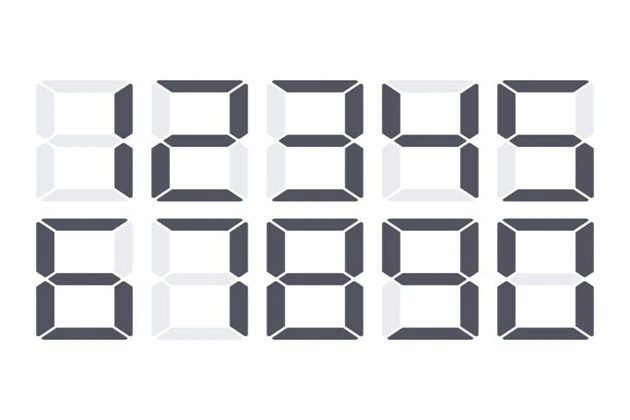
When a person begins to experience an indescribable fear of a certain number, this is called arithmophobia. At the sight of a certain number, a person almost goes crazy, and this is not a far-fetched condition, but a pathological fear. But there is also another thing – fear of a specific number: tetraphobia – fear of the 4, triskaidekaphobia – fear of the number 13, heptadekaphobia – fear of the number 17, eikositriophobia – fear of the number 23, fear of the curse of the number 39, and hexakosioihexekontahexaphobia – fear of the number 666.
The causes of fear may be related to something personal, such as negative experiences. Therefore, from a certain point on, a number or number becomes frightening, being associated with a past event and the expectation of bad or disaster. Phobias can be inherited, arise from personal characteristics, be superstition-related to numbers, or be mass-based due to the culture of their ancestors. For example, if for many the number 4 means nothing except that it is the fourth in a row, then in China and partly in Korea, they are afraid of it. This happens in other countries, but with different numbers.
The Chinese “4” is a sign of death
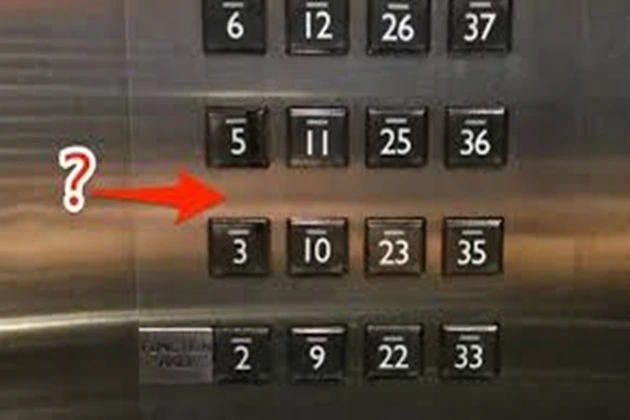
In Europe, fear of the number 4 is considered a prejudice, but for East Asia, especially China, Japan, and Korea, this is not an empty phrase. For them, it means death, because the two words are spelled the same and differ only in tone. Visit. A F R I N I K . C O M . For the full article. The similarity of words is explained by the peculiarity of the Chinese language, in which words that are the same in spelling may differ in meaning depending on pronunciation.
The superstition about the four is so deeply ingrained that most people try to avoid pronouncing it and coming into contact with this number. But if it is easier to do this in everyday life, then it is difficult to avoid it on the street, in a public place. However, the Chinese, knowing the nationwide fear, create a safe and comfortable life for their customers by removing this number from all everyday use: they often do not have a fourth floor, and others that are associated with the four, and in high-rise buildings there may be no floors from 40 to 49, so there is no number four in the elevator. The fourth floor is either technical or it is marked with a different value, for example, 3A, and so on, with the rest of the floors.
They avoid attaching the Four on houses and do not like phone numbers with its presence. For this reason, the Finnish company Nokia did not specifically use the number 4 for phone models intended for sale in Asian countries. For the Chinese, the numbers with four carry a negative connotation: 94 is perceived as “certain death”, 14 – “want to die”, 74 – “actually dead, 49 – “suffer and die”. Therefore, no one wants to live on a floor that predicts death, and it is not even in the rooms of airplanes and seats in the salons.
Whether the four were to blame or not, Beijing refused to host the 2004 Olympics in 2004, although it was its turn, but gladly organized it in 2008, considering the eight to be lucky. The fear of the four has penetrated so deeply into the Chinese that they try to avoid it not only at home but also outside the country. Ethnic Chinese in Canada began numbering houses without four, but the local government forbade them from breaking the numbering to avoid confusion. However, the Aria Hotel in Las Vegas did not number the floors with four, apparently for people who are afraid of her.
Thai zero and Japanese nine are scary numbers

In Thailand, there is a special attitude towards zero, which, based on superstition, means emptiness and loneliness. But Thais are more afraid of zero standing in the middle of a number, considering it particularly unlucky. This applies to phone numbers where this is possible due to different combinations of numbers.
The fear of zero is called “nullophobia” or “oudenophobia.” Those who fixate on it are afraid of the oblivion and emptiness that come after death. Even a period of time approaching zero can be perceived as death. The Nine scares people in Japan because it is associated with suffering. This phobia is explained by psychological frustration when the result does not reach the ideal grade on a ten-point scale.
The European “13” is the devil’s dozen, and 666 is the sign of the beast
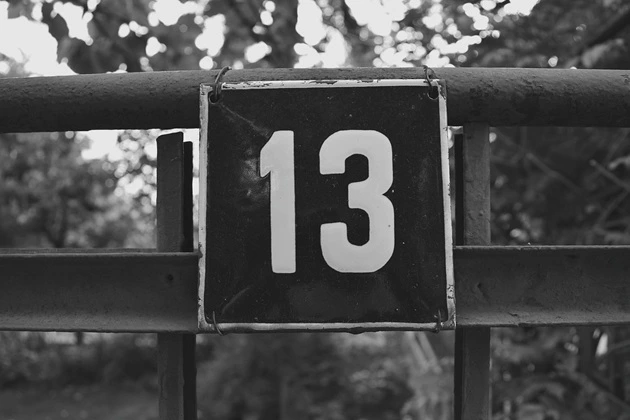
The Europeans got the phobia of the number 13, which has its roots back in the time of the biblical stories, when 12 apostles gathered at the table at the Last Supper with Jesus Christ, a total of 13. But superstition spread widely in the early 20th century, linking Friday and the 13th with an unlucky day. In America, at one time, even houses were advised to be built up to the 13th floor, because the thirteenth floor was often empty, causing losses to developers. Therefore, in some cases, the number “13” was simply removed so as not to annoy people.
And those who are afraid of panic don’t even watch the TV channels under No. 13, don’t go up to the 13th floor, and are even ready to skip the assignment from No. 13. They don’t celebrate their 13th birthday by calling themselves 12-year-olds, and only celebrate the next one at the age of 14. To confirm the phobia, there are famous personalities who were afraid of the number 13: Mark Twain, Stephen King, Nick Yarris, Franklin Roosevelt, and Herbert Hoover. For them, it was a trigger and a “damn dozen,” not just a number.
No less frightening for many is the number 666, which is associated with Satan or the “sign of the beast.” It appeared partly due to the reign of Emperor Nero and the records in the Book of Revelation that the antagonistic being, the image of the Antichrist, would return. It has become so deeply embedded in culture that even without deep knowledge, it is recognizable as a negative symbol. For the same reason, it has become popular in art and culture when it is necessary to point out the presence of the Antichrist, as well as among followers of Satanism. Ordinary people, even if they do not believe or do not know the full depth of the origin, still try to avoid the number 666 for their own safety.
Italians’ unloved “17”
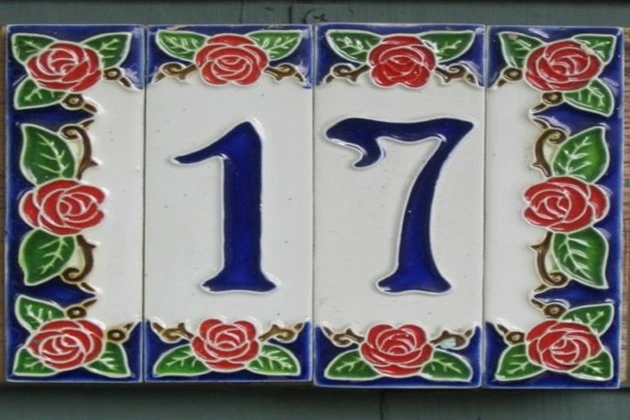
Italians are afraid of the number 17 because of an ancient superstition that comes from the Roman numeral XVII, meaning “I have lived” or “my life is over.” The meaning came from the mythology of Osiris, who died on the 17th of the full moon, so when two coincidences occur – the full moon and the 17th, it is a double blow to the psyche. According to this fear, the 17th day simply falls out of the life of Italians, at least they do not plan or spend anything meaningful. The followers of Pythagoras despised 17, which stood in the middle between the ideal numbers 16 and 18 in terms of the size of the quadrangles.
Afghans have a bad reputation for “39”

There was a superstition among Afghans that 39 is a bad number, and it appeared spontaneously because of the life of a pimp with a bad reputation, whose house and car number had the number 39. Over the years, “39” has been used as a mockery, mockery, and humiliation, so no one wants to have a car with a license plate with “39” in it. It’s a shame to ride it, because they make fun of it, and it’s impossible to sell it. It even goes so far that the owners paint over the license plate or cover it up to avoid ridicule. The police use this fear to impose fines, knowing that no one wants to take numbers with the number 39.
They tried to prove to the Afghans the neutrality of the number 39, which is mentioned 57 times in the surahs of the Koran, but the fight against superstition had the opposite effect, and people refused to even celebrate the date of birth, calling themselves a man who would soon be forty.