Hidden stress: Behavioral clues of inner tension
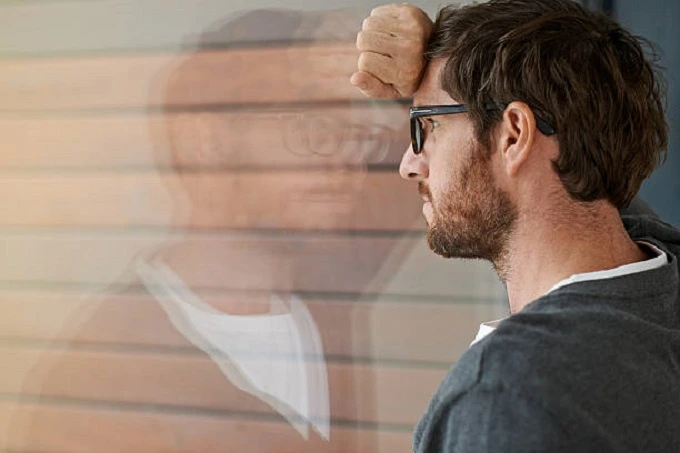
Internal tension accumulates gradually. For a long time, you can ignore fatigue, unresolved issues, and emotions that tear you apart from the inside out. If you add constant haste and a background sense of anxiety to all this, you get an explosive mix. But the main danger of this condition is that you may not even realize what position you are in. You continue to work, communicate, and perform your usual actions, but you’re running out of steam.
One way or another, the psyche almost always gives signals. It’s just that they most often manifest themselves through behavior: reactions, habits, communication style — in general, minor changes that are not always obvious to you. If you learn to notice these signals, you will be able to reduce your workload in time and not bring yourself to a nervous breakdown. Below, we have collected several examples of behavior that indicate increased internal tension.
8 behavioral signals that indicate internal tension
1. A sharp reaction to small things
One of the most noticeable signs is a sharp reaction to even minor events. What you used to perceive absolutely calmly suddenly begins to cause you a feeling of intense irritation, an outburst of anger, or discontent. When your emotional state weakens, any little thing can cause a breakdown: an ordinary question, noise, someone’s slowness, a slight delay, and so on. It is important to understand that the problem does not lie in the smallest detail. In your case, external factors become the trigger, and the real reason is the accumulated tension, which sooner or later finds a way out. And it is not possible to predict at what exact moment this will happen.
2. Avoiding the discussion of problems

When you have almost no internal resources left, even discussing an existing problem seems unbearably difficult to you. You want to escape from such a dialogue, especially if it is you who is required to solve or explain something. That’s why you turn the conversation into a joke, change the subject, or convince the other person that this question can wait.
From the outside, your behavior may look like a manifestation of indifference. But in reality, it’s quite the opposite: the problem worries you; it’s just that your nervous system is overloaded. You simply don’t have the energy for emotionally intense conversations or negative thoughts in your head. But here’s the caveat: your avoidance only increases the tension, because the problems don’t go away.
3. Constant haste even where it is not needed
Internal stress can manifest itself in the form of constant haste. You feel the pressure, and you start doing everything faster to get rid of this feeling as soon as possible. And this applies even to those moments in which haste is not necessary at all. You can rush the other person, get nervous while standing in lines, and feel anxious if you have to wait for someone or something. The saddest thing is that it also applies to recreation. Your hobby activities or rare attempts to relieve stress through entertainment also take place in an accelerated mode and do not bring any relaxation. You can’t just get out of the survival mode you’re used to living in.
4. The increased need to control

When you experience anxiety, you face an increased need to control everything and everyone around you. It seems that if you manage to keep everything under surveillance, you will finally calm your mind and be able to relax. But trying to increase control only makes you more stressed.
Of course, you can give up delegation, stop trusting other people’s decisions, and avoid uncertainty, but this way you will increase your workload. You’ll have even less time with much more involvement. Besides, the world around you will remain the same, unpredictable, and your results will not get better. That is, in fact, your increased need for control, which has arisen due to internal tension, only strengthens the latter.
5. Inability to relax without excuses
In a state of emotional stress, you gradually lose the ability to rest. More precisely, you can plan a vacation, arrange for someone to spend time together, or do something spontaneous. However, for this, you will need to find good reasons justifying the waste of resources. So more often you will convince yourself and others that you need to finish things first, fulfill a certain part of your goals, be useful, and only then, sometime in the future, you will definitely find time to rest.
Even in your free hours, you will look for opportunities to relax productively. This, of course, will prevent you from relaxing and recuperating. Visit. A F R I N I K . C O M . For the full article. As a result, you won’t be able to reboot, so you’ll only get back to doing things if you lose your energy reserves.
6. Emotional detachment

Internal tension does not always manifest itself through outbursts of emotion. You can behave exactly the opposite: too formal, detached, not involved in other people’s problems, and not participate in what is happening around you. It is difficult for you to experience any feelings; they take away a lot of your strength and energy. Therefore, you can say that you switch off, drop out of society, and your usual life. This is a protective reaction of the psyche: if there are few resources left, it does everything to save energy. Your behavior is not a manifestation of coldness or indifference, but simply a consequence of accumulated fatigue.
7. Impulsive decisions
Impulsive decisions are another option, as you save internal resources while being under constant stress. Your tolerance for discomfort drops dramatically, and you feel an irresistible desire to change your condition in any way. This can lead to a sudden decision to quit when problems arise at work, break up relationships, impulsive purchases that you think should make you happier, and so on. Because of your difficult inner state, you will strive to remove all annoying factors from your life as soon as possible. And all this without analyzing the possible consequences. Impulsivity, which can be confused with courage, at such moments, is just a desire to ease your well-being here and now.
8. Procrastination

Another sign of accumulated internal stress is constant procrastination. You don’t have to do it directly, but try to get off the task in any non-obvious way. For example, you can add a lot of unnecessary things to your schedule, take breaks more often, get distracted by your phone, and finish work earlier than you could. When your psyche gets tired, it tries to avoid additional stress. Being in this state, you will feel difficulties even in the process of completing a task that is familiar to you.