How did they move these giant buildings?

Houses, schools, cinemas, and all other capital buildings are collectively referred to as real estate. It is logical to assume that stone buildings will remain in one place until the end of their existence. In any case, this is exactly what the very word “real estate” implies. Buildings can survive fires, earthquakes, floods, violent storms, and devastating wars. But sometimes the place itself becomes more valuable. Faced with this, mayors often decide to simply demolish the building and, if necessary, erect a new one somewhere further away. However, it also happens that it is too expensive to demolish a building, financially or reputationally. Then engineers capable of performing unimaginable miracles get to work.
Isa-bek Hajinsky’s Mansion — Baku
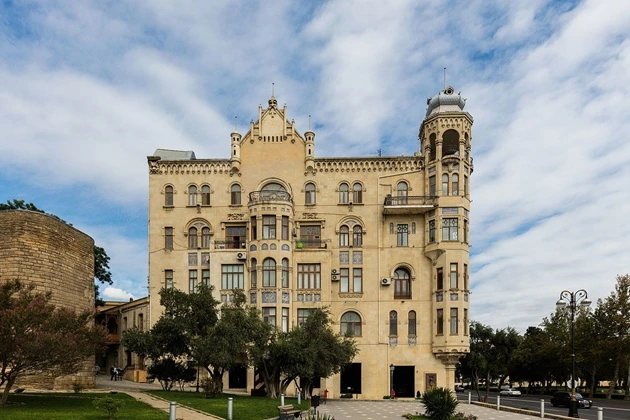
There is an architectural monument on Fizuli Street in Baku — a luxurious mansion built in 1908. The monumental stone building was commissioned by oil magnate Isa-bek Gadzhinsky. On the ground floor there were servants’ rooms, a laundry room, and a kitchen. Above were the rooms of family members and guests. According to Guinness, the building has a mass of 18,000 tons. In 2013, it was decided to move it by 10 meters to make room for the expansion of the roadway. By that time, the house was not in use and was in state ownership. It was much easier to just demolish it, but the historical significance of the object played an important role. The engineers have taken on a unique task. First, the lower part was reinforced, then a support system was created directly under the foundation. The colossal weight gradually shifted from the ground to the new structure, which was located on steel plates and concrete rails. Finally, with the help of nine hydraulic jacks, the mansion was slowly moved away. At the moment, this is the heaviest building that has been moved entirely without disassembly.
Fu Gang — China
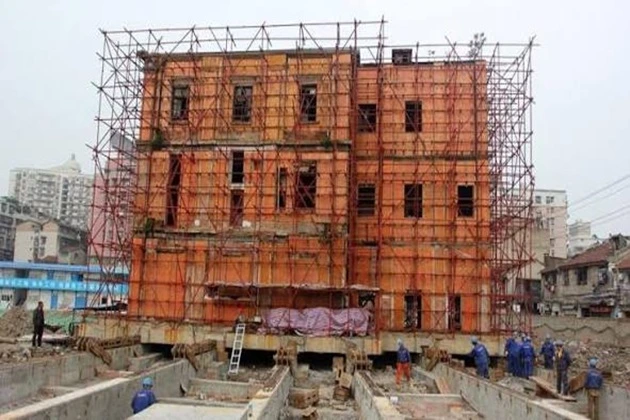
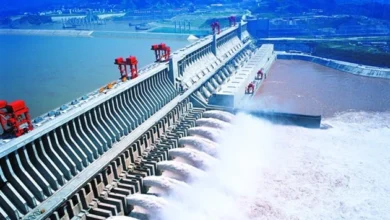
There is already a relatively new building here, which was also decided to be moved in 2004. No architectural frills or historical significance. It’s just that the house itself was built recently and had private owners. Therefore, they did not dare to demolish it, but the road had to be widened. The issue was approached with all due care. First, we prepared the way for transportation. It was necessary to cover about 35 meters and, in order to better fit into the surrounding landscape, rotate the house by 3 degrees. According to Chinese sources, there was a hotel on the ground floor, and only 86 ordinary families lived above. The most amazing thing is that throughout the entire process of moving, which is 11 days, the old life continued in the house. People were not evicted, and even the hotel continued to operate. Surely people were willing to pay for a night in a moving house.
Newton Tharp School — USA
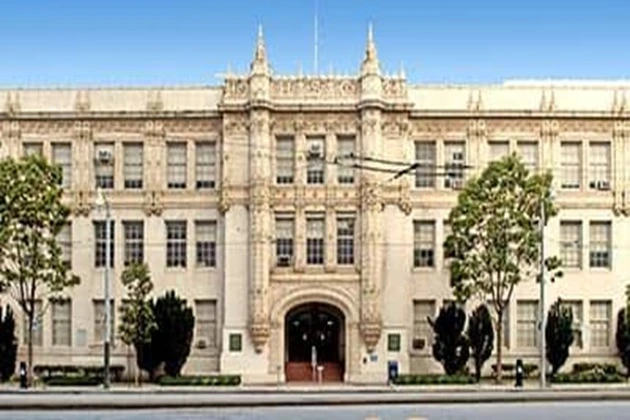
San Francisco celebrated the opening of a new school in 1910. Almost all places there were distributed on a commercial basis, but even such educational institutions were sorely lacking. The problem arose just three years later, when the city government decided to build a new business district for itself. It turned out that the same school was interfering with the project. It was politically unwise to demolish such a building. Visit. A F R I N I K . C O M . For the full article. First of all, this is a school , Secondly, people have already paid for their children’s education. In order to avoid reputational risk, the San Francisco city administration turned to Seattle-based Sound Construction & Engineering.
According to the terms of the contract, if the building collapses during the transfer process, the contractor will bear all the costs of restoration. This probably motivated them to act more carefully, calculating all possible risks. However, they paid $117,000 for the provision of services, which was very good money at that time. A system of steel rollers and three steam winches was used to transport the school. The process, along with the preparatory work, took almost a month. During this time, the school traveled four blocks at an average speed of about 7 meters per day. Subsequently, the building survived an earthquake, two fires, and reconstruction. Today it is not used and almost forgotten, although local activists remember its history and try to give the old school a new lease of life.
Church of the Assumption of the Virgin Mary — Czech Republic
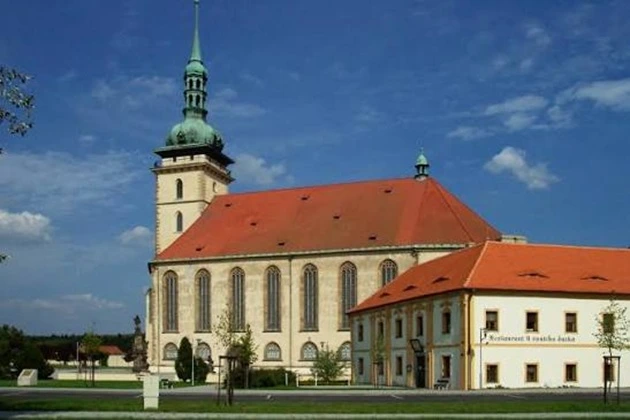
The 16th-century building was in the path of a giant coal mine. Almost the entire old town Bridge was soon to be demolished. Without a doubt, the same fate awaited the ancient building, but the importance of the building played an important role. It was a church known throughout the area and of historical value. Not only the house of God, but also an architectural monument. To transfer the massive building, a special railway was brought to it. The church was surrounded by a metal frame and loaded onto 53 transport trolleys, which were hydraulically driven. Slowly and really creakingly, the building began to move into its future at an average speed of about one centimeter per minute. After 28 days, the process was completed: the dying city was left behind, and the church gained another chapter of history.
Cape Hatteras Lighthouse — USA
Not the tallest, not the brightest, but one of the most recognizable lighthouses in the United States. The brick tower is 64 meters high, built back in 1870. For more than a century, the lighthouse has protected ships and boats sailing along the coast of North Carolina. He was standing on Cape Hatteras, where there are dangerous shoals. Over the past decades, the ocean has been slowly but inevitably reclaiming the shore, approaching the lighthouse meter by meter. In the late 1980s, the ground began to settle, and it seemed that the tower was doomed. Any next storm could complete the glorious history of the ancient lighthouse. When the situation became critical, the governor ordered the lighthouse to be saved. The engineers had to literally pull the “patient” out of the other world.
The brick structure was reinforced with a metal frame, torn from the old foundation and placed on a special platform. After that, they were slowly transported 884 meters inland, where a new, more solid foundation had already been prepared. Cape Hatteras Lighthouse is now operating normally, and local caretakers continue the glorious century-and-a-half-long tradition.