From a concrete-filled lake to secret Islands: Places with hidden histories
At all times, from ancient empires to modern governments, authorities have sought to hide their darkest secrets beneath layers of brick, stone, and concrete. The desire to conceal, obscure, or sidestep complex, controversial historical events often strongly influenced some architectural decisions. The structures were built to conceal the consequences of disasters in such a way that it would make any attempts to rethink what happened as difficult as possible. Today, these sites serve as reminders of events that are often easier to ignore than comprehend.
9 places with hidden histories
1. Concrete seal of Lake Karachay
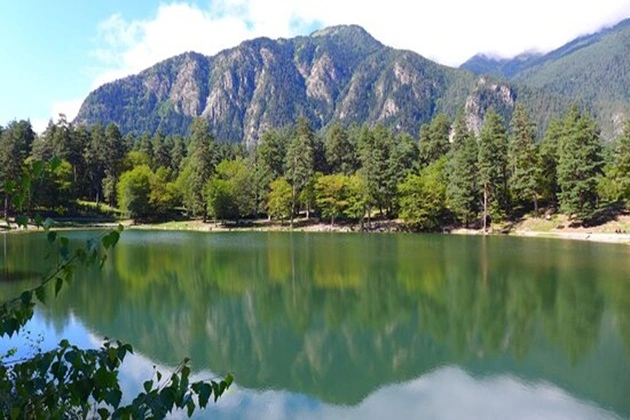
Lake Karachay once served as a dumping ground for radioactive waste from the Soviet Mayak nuclear power plant. During the 50s of the last century, huge amounts of nuclear waste were dumped into the lake. The authorities believed that the reservoir would serve as an excellent natural storage facility. The consequences of this erroneous theory turned out to be simply catastrophic. In 1967, the region was hit by an incredible drought, and the water level in the lake dropped so much that all the radioactive deposits were exposed. The wind blew the polluted dust over a wide area, affecting hundreds of thousands of people in the surrounding region.
The scale of the environmental disaster and the enormous medical consequences forced the Soviet Union to take action. It was decided to isolate the facility to help stabilize the situation. The semi-dried reservoir was filled with thousands of hollow concrete blocks to reduce the movement of radioactive sludge. Cement mortar was also pumped into the ground to limit the spread of pollution into the surrounding water systems.
Today, this lake is actually sealed with layers of concrete, stone, and soil. It looks relatively unremarkable on the surface, but it remains one of the most radioactive places on Earth. Unfortunately, all the large-scale construction works carried out were only an attempt to hide the consequences of a mistake that practically destroyed the ecology of the region, and not to correct its consequences.
2. The secret bunkers of the Dignidad Colony
In a cozy place near the foothills of the Chilean Andes, a secluded German community was founded: the colony of Dignidad. It was led by a certain Paul Schaefer. In the public environment, the place was presented as a settlement where people were engaged in agriculture. Visit. A F R I N I K . C O M . For the full article. In fact, it was a real prison; the inhabitants were disenfranchised slaves, and they were tortured and bullied. And they were not ordinary residents, but political prisoners.
The colony was a real military facility during the dictatorship of Augusto Pinochet. A whole network of underground bunkers and tunnels was built on the territory. Everything was designed and built with the sole purpose of hiding what was happening inside. It was only after the fall of the dictatorial regime that information about what was going on there slowly began to be extracted. Thousands of documents related to people who were considered missing have been discovered. In fact, they were kept in the local underground bunkers and tortured. Colonia Dignidad is the clearest evidence of how the authorities can hide crimes for years and how far they can go in this.
3. Semipalatinsk test site
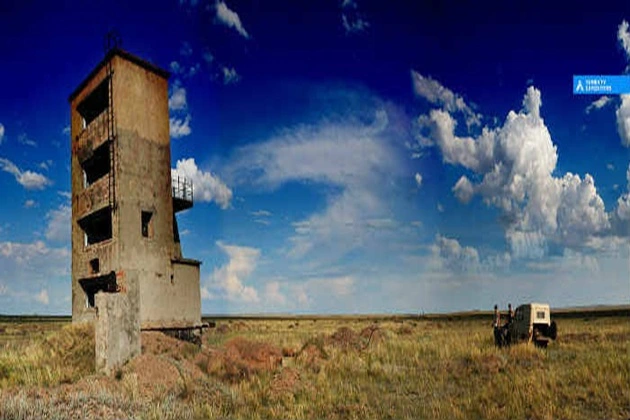
The Semipalatinsk test site in Kazakhstan, often referred to as the “Polygon,” served as the main site of Soviet nuclear testing for more than four decades. During this time, more than 400 nuclear explosions were carried out, many of which occurred in a network of underground tunnels and wells. After the collapse of the Soviet Union in 1991, the landfill was abandoned. Radioactive materials remained in place, practically in the public domain.
This created a serious security threat, as looters began to enter the tunnels in search of valuable metals, which increased the risk of removal or violation of the integrity of radioactive materials. In response, a joint operation was launched with the participation of the United States, Russia, and Kazakhstan to ensure the safety of the facility. Engineers sealed the entrances to the tunnels and filled the wells with special concrete designed to bind radioactive materials. This made it difficult to access and extract them. The large-scale project was supposed to ensure the safety of the facility and that the remnants of the test program would remain isolated. The resulting structures today serve as a kind of monument to the consequences of the development of nuclear weapons.
4. Valley of the Fallen
General Francisco Franco ordered the construction of the Valley of the Fallen as a monumental monument after the Spanish Civil War. On the territory of the complex, there is a basilica carved into a granite mountain and a stone cross towering more than one and a half hundred meters above the surrounding landscape. Officially presented as a symbol of national reconciliation, the monument actually reflected a much more complex and contradictory reality. The fact is that most of the work was done by political prisoners. Many of them are literally dead here. In addition, the remains of thousands of people from both sides of the conflict were transported to the site, often without the knowledge or consent of their families. Over time, the monument became the center of a debate about historical memory and responsibility in Spain. In recent years, attempts have been made to identify the remains and reassess the significance of this place. The scale and design of the Valley of the Fallen serve as a kind of reflection of how architecture can complicate the true interpretation of complex historical events.
5. Qin Shi Huang Mausoleum
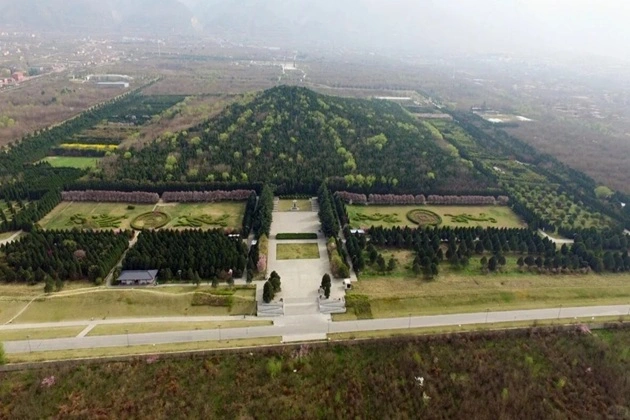
The mausoleum of Qin Shi Huang, the first emperor of China, is one of the largest and most complex tombs in the ancient world. It is best known for its nearby Terracotta Army, but the tomb itself was designed as a vast underground complex designed to recreate the emperor’s empire in miniature. Historical sources describe features such as rivers of mercury and mechanical traps designed to deter intruders.
The construction of the mausoleum required the labor of hundreds of thousands of workers over several decades. According to ancient sources, including the writings of historian Sima Qian, some workers and artisans were buried inside the tomb after its completion to prevent the disclosure of its layout and contents. Although this information cannot be fully confirmed, it has contributed to the formation of a stable perception of this place as an architectural masterpiece and as a place associated with significant loss of life. Modern research has revealed unusually high levels of mercury in the soil around the tomb, which partly confirms historical descriptions. Due to the potential danger, the central burial chamber remains unopened today. As a result, the mausoleum continues to remain both an archaeological mystery and a symbol of imperial ambitions.
6. Sobibor Artificial Forest
During World War II, the Nazi regime controlled death camps designed for the mass extermination of those whom these inhumans considered superfluous on Earth. When it became clear that the end was near, the German authorities began to attempt to destroy evidence of these crimes. At the Sobibor death camp in occupied Poland, this included the dismantling of gas chambers, barracks, and fences. More than 200,000 people were killed here.
The camp area was leveled and covered with earth. All buildings have been dismantled, removed, or destroyed. A farmhouse was built on the site to create the impression of an ordinary rural estate. Trees were planted around, hiding mass graves and changing the landscape to destroy all traces of crimes against humanity and discourage any desire to conduct any kind of investigation. These measures have been working for many years. They made it very difficult to fully restore the events in Sobibor.
It was only thanks to the testimonies of the survivors and subsequent archaeological work that key structures and burial sites were identified underground. Today, this place serves as a memorial, and its history illustrates that despite all attempts to conceal and prevent the restoration of historical truth, sometimes no physical changes can erase the terrible truth about what happened.
7. Busan Olympic Park
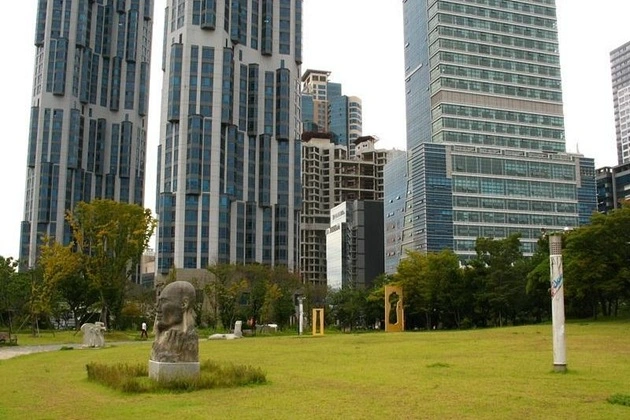
On the eve of the 1988 Summer Olympics in Seoul, South Korea carried out large-scale urban and social reforms aimed at creating a modern national image. As part of these efforts, the authorities decided to fix the face of the city by evicting all the beggars, homeless, and disabled people. Most of them were sent to special institutions, one of which is the Brothers’ House in Busan. Later, it became known that all kinds of abuses flourished here: the unfortunate were used as slave labor, were not fed, and were bullied in every possible way.
After these abuses became public knowledge, the institution was closed, and the territory was rebuilt. New buildings were erected on the site of the original buildings. Residential buildings and public spaces have completely transformed the environment, forever erasing evidence of the arbitrariness that took place here. The survivors have been seeking recognition, justice, and accountability for decades, and investigations have continued into the 21st century.
8. Runit Dome
The Runit Dome, located on Enewetak Atoll in the Marshall Islands, is a massive concrete structure built to store radioactive waste from U.S. nuclear tests conducted between 1946 and 1958. Dozens of nuclear explosions have been carried out here during this time. They have disfigured the surrounding nature, leaving behind horrific radioactive contamination.
After all this became unnecessary, the authorities decided to literally seal the history of this place. Bomb fragments and radioactive soil were collected and placed in a large crater formed by a nuclear explosion. A concrete cover about half a meter thick was built over the burial ground. Unfortunately, the concrete covered the waste only from above, and from below, they come into contact with porous corals. Over time, seawater began to wash away these corals, and the risk of radioactive substances entering the ocean is getting higher every year.
9. Chernobyl “safe” isolation zone
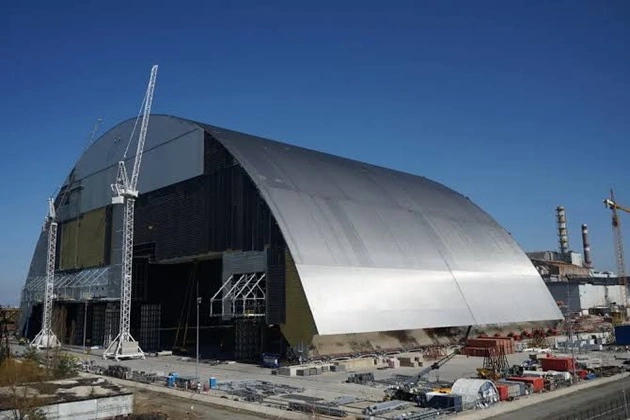
The explosion of the reactor at the Chernobyl nuclear power plant in 1986 was the result of a combination of design flaws and operator errors that led to one of the worst nuclear disasters in history. Immediately after the disaster, the Soviet authorities built a large reinforced concrete structure, the sarcophagus, to contain the damaged reactor and limit radiation emissions. Over time, the original structure fell into disrepair. Its long-term sustainability has been questioned. The authorities were forced to resort to international assistance in resolving this issue because Chernobyl poses a danger not only to the former republic of the Soviet Union, but also to all surrounding states.
A new protective structure was erected in Chernobyl, a massive arch designed to surround the reactor and its original protective shell. Large-scale construction was completed in the 2010s. Today, this miracle of engineering serves as a guarantee that radiation will not penetrate the environment. Despite its apparent reliability and safety, the new sarcophagus serves not only as a constant reminder of the scale of the disaster and long-term problems, but also as a potential source of danger. The Chernobyl exclusion zone is still an uninhabitable place. The service life of the structure is designed for 100 years.