Africa’s ancient Universities: The roots of global Education
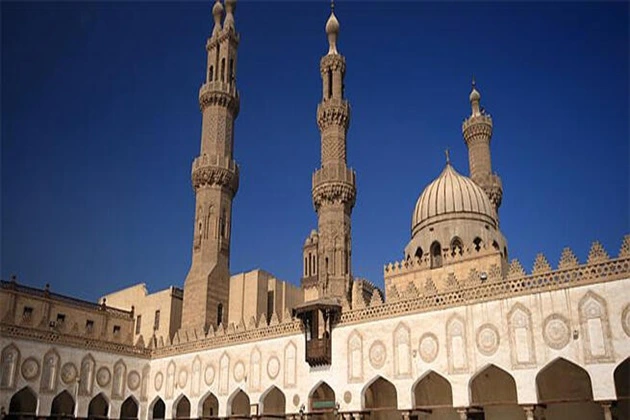
Africa’s contribution to global education goes far beyond modern concepts, as it has a rich history of higher education that predates the emergence of some of the world’s most renowned universities. Long before the advent of educational institutions such as Oxford (founded in 1096) or Harvard (1636), African scientists had already established training centers that promoted advanced knowledge in the fields of theology, mathematics, medicine, astronomy, and literature.
From the vibrant academic centers of Timbuktu and Fez to the enduring influence of Al-Azhar University in Cairo, these institutions have played a crucial role in shaping intellectual traditions not only in Africa but throughout the Mediterranean, the Middle East, and beyond. They educated entire generations of scientists, preserved extensive manuscript collections, and developed study programs that rivaled those of early European universities.
These ancient African universities illustrate a continent rich in innovation, scientific rigor, and cultural transmission. They served as a crossroads for international students, facilitated the exchange of trade-related knowledge, and created works that contributed to a global understanding of various disciplines. By studying the history of institutions such as Sancor, Al-Qarawiyyin, and Al-Azhar, we gain insight into Africa’s long-standing commitment to education and intellectual development.
Recognizing this heritage challenges common misconceptions and highlights the importance of Africa’s fundamental role in the history of higher education, offering lessons in resilience, scholarship, and intercultural influence that remain relevant today.
6 Africa’s ancient Universities
1. University of Timbuktu – Sankore (Mali, 989 A.D.)

The University of Sankore, which was part of the larger Timbuktu University complex, was a major educational center of the Malian Empire. The scholars specialized in Islamic law, astronomy, mathematics, and literature. The 12th-16th-century manuscripts preserved in Timbuktu tell about the university’s advanced curriculum and its crucial role in the intellectual life of West Africa.
The University has promoted the development of intercultural relations by attracting students from all over Africa and the Middle East. UNESCO reports emphasize that Sankore and other educational institutions in Timbuktu have made significant contributions to the spread of literacy and scientific knowledge, turning West Africa into a key intellectual center long before the emergence of European universities such as Oxford and Harvard.
2. Al-Qarawiyyin University, Morocco (859 A.D.)

Located in Fez, Al-Qarawiyyin University was founded by Fatima al-Fihri and is recognized by UNESCO and the Guinness Book of World Records as the oldest existing university to have granted degrees. His specialization in Islamic theology, natural sciences, and mathematics attracted students from all over Africa and Europe. There were many manuscripts in university libraries that have shaped scientific dialogue over the centuries.
By the 14th century, al-Qarawiyyin had become an educational center for prominent scientists, influencing intellectual movements outside Africa. Modern reports emphasize that it is still operating today, combining classical research with modern programs, demonstrating the enduring legacy of African science and historical superiority over European institutions.
3. University of Kairouan, Tunisia (7th century AD)

Founded in 670 AD on the territory of modern Tunisia, Kairouan was originally a religious and scientific center. Over time, it developed into a university specializing in Islamic law, theology, mathematics, and literature. According to the African Studies Journal (2024), it has become the most important intellectual center connecting North Africa with the Mediterranean world.
Kairouan has produced many scholars who have influenced education in Africa and the Islamic world. Its longevity and structured pedagogy set a precedent for university organization that predated many Western educational institutions. Modern research highlights his constant cultural and educational influence, the preservation of manuscripts and teaching traditions that continue to inspire scientists.
4. Expansion of the library of Al-Karazin University (Morocco, early 10th century)

As part of Al-Qarawiyyin, the library has expanded scientific learning opportunities in several disciplines, including astronomy, mathematics, and medicine. Documents from the Moroccan Ministry of Culture confirm that the library’s manuscripts influenced both local and European scholarship through the translation movements of the Middle Ages.
The library functioned as a learning and research center, showcasing Africa’s early contributions to systematic higher education. Visit. A F R I N I K . C O M . For the full article. By 2025, conservation efforts had consolidated their status as a symbol of Africa’s intellectual history, emphasizing that the university model was older than Oxford (1096) and Harvard (1636).
5. Al-Ahgaff University, Yemen (African influence, early 12th century)

Although geographically located in Yemen, Al-Ahgaff has been strongly influenced by African academics and trade networks. Handwritten materials indicate that African pedagogical methods in mathematics, astronomy, and theology occupy a central place in his curricula. This illustrates the inter-regional educational impact of Africa beyond its physical borders.
African scientists from Sudan and the Horn of Africa contributed to teaching and research at Al-Ahgaffe by publishing papers that were subsequently referenced by scholars from the Middle East and Europe. Reports in the Journal of African History (2024) highlight this intercontinental knowledge exchange as evidence of Africa’s fundamental role in the creation of the first universities.
6. Al-Azhar (Egypt, 970 A.D.)
Al-Azhar, despite its antiquity, remains the most influential African university, combining classical Islamic studies with modern disciplines such as engineering, medicine, and social sciences. According to UNESCO’s 2025 report, it continues to host tens of thousands of students worldwide, offering accredited degrees and research programs.
The university’s longevity, global reach, and adaptability over the centuries underscore Africa’s role as the cradle of higher education. The history of Al-Azhar shows that African educational institutions preceded European universities and set standards for them in many ways, strengthening the continent’s fundamental contribution to world science.