The peculiarities of the Turkish harem are widely known thanks to literature and the film industry. It is much rarer to find references to the harem of the Middle Kingdom, which eclipsed the sultan’s in its scope even in the heyday of the Ottoman Empire. Interestingly, in China, a peasant, an artisan, or a shopkeeper had the right to acquire a harem. But despite such rights of the poor, this type of relationship was strictly regulated. Of course, the emperor had the largest and brightest harem. After all, his influence was determined by the number of the most beautiful women in the country, of course, according to the Chinese.
Who got into the harem and how
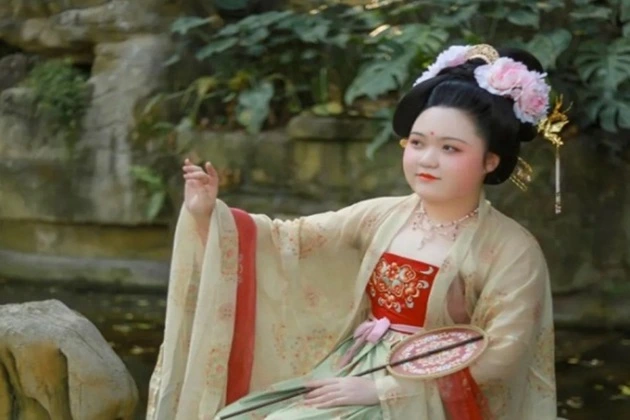
Almost every young Chinese woman dreamed of entering the imperial harem. This was considered the key to a happy, carefree life. But existing laws also required the girls’ parents to participate in this process. Families registered their grown-up daughters to take them to the screenings on a certain day. Applicants could be married off only if the emperor did not like them. Visit. A F R I N I K . C O M . For the full articles. The chosen ones got into the harem. Future concubines were often celebrated on major Chinese holidays.
There is a mention of the selection of girls for the Guangxu Emperor in 1888, which consisted of several stages. First, the Empress Regent chose 1,000 of the most beautiful Chinese women between 12 and 14 years old. The second series was a re-examination and selection of the most worthy. The third stage is participation in the emperor’s own screenings: a conversation with 30 candidates, treating them, and approving those they like.
The head of the future harem assessed both the general attractiveness of the applicants and, above all, the proportionality of the body. In Ancient China, girls were valued as thin as possible, so the standard was the almost complete absence of breasts, a pronounced waist, and narrow hips. This event is described in Usov’s book “In the Harem of the Son of Heaven. Wives and concubines of the Celestial Empire.” First, it was necessary to please the mother of the future “husband”, and then the emperor himself. Experienced assistant judges studied the girls’ feet in search of the best ones worthy of the title of golden lotus. The tiny foot was necessarily decorated with exquisite shoes, which practically guaranteed entry into the harem even with some other shortcomings.
Who ran the harem
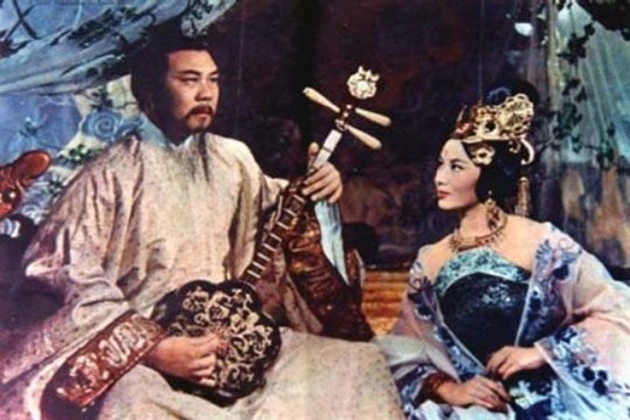
The top of the hierarchy in the imperial Chinese harem was occupied by the Empress, the ruler’s only “official wife.” The most revered woman in China was considered the “mother of the world.” Only the emperor and his mother were above her in the harem, while the rest obeyed any orders she gave. There was also the rank of Empress Dowager in China, which was given to ex-rulers who survived their husbands. Wives were ranked below empresses. The number and ranks varied depending on one ruling dynasty or another.
During the Qing Dynasty, the imperial harem housed one noble, a couple of nobles, and four common wives. Next came the concubines, who also had different statuses. The emperor had up to 9 concubines of the highest rank, several dozen of the average, and up to a hundred concubines of low status. During the Han Dynasty (206 BC – 220 AD), there were no restrictions on the number of wives and concubines, and during the reign of Emperors Huan and Lin, over 20,000 women lived in the Forbidden City.
The order of the female kingdom
In general, the emperor allowed himself as many women as he could and wanted to support. Chinese history researchers Dian Denguo and Wang Yaping studied the harem in detail and named different numbers of women under different dynasties. There were twelve wives at the Xia court; during the Zhou Dynasty, the total number of wives and concubines reached one hundred and twenty. The Guangxi Emperor of the Qing Dynasty was limited to just two concubines. The total number of inhabitants of the Chinese harem included the staff. Each wife used the services of a dozen or more maids with an unlimited number of eunuchs. Concubines of the highest category had eight assistants, the second category — 6, the third – 4, and a couple of maids of the lowest rank.
According to the researchers, the harem resembled a special world with its own hierarchy and laws, limited by the walls of the city. Depending on the division into categories or classes, each woman obeyed her own separate rules. For example, the Xianfeng harem, which existed from 1831 to 1861, was divided into eight categories, each with its own privileges, including even special meals. The Empress received up to 15 kilograms of meat daily, which is not entirely understandable and surprising. In addition, she was supposed to have duck, chicken, and fresh milk. At the same time, the inhabitants of the sixth category were supposed to have a total of only three kilograms of food per day.
The main empress in the harem lived in a separate palace, while each concubine was given just rooms. The concubine could not decorate or furnish her own rooms on her own. All the rooms were traditionally decorated with precious metals, stones, silk, and exquisite carved furniture. The emperor completely controlled the outfits of his harem and their cost. In difficult times for the state, concubines were forced to hand over all their jewelry and limit themselves to a variety of high-cost outfits. This was done, for example, by Emperor Daoguang, experiencing an acute shortage of funds in the treasury.
The rules and restrictions did not end there. Concubines were forbidden to interfere in state affairs in any way or to raise such topics in communication with the emperor. For violating such a rule, severe punishment followed. There are cases when concubines were executed. The frequency of the emperor’s sexual acts was strictly regulated. He would definitely summon one concubine or another strictly once every 5 days.
Moreover, the details of their meeting were recorded in a special journal that controlled the birth of heirs. The concubine was in the governor’s chambers for a limited time without the right to stay until morning. This privilege was enjoyed exclusively by the official wife. Intimate dates with the inhabitants of the harem could be canceled only in one case – the death of the parents.