How to avoid cultural missteps in Italy: from coffee etiquette to market manners
Italy attracts tourists who want to blend in and blend into society, to become Italians for a while, but some are quickly recognized. They are betrayed by their behavior and ignorance of local customs: a cup of cappuccino in the evening, tips and vegetables at the market, greeting, and a desire to eat when everyone is relaxing – this is an incomplete list, which, however, reveals a foreigner in a person.
Italians are a special people with their own rules

Beautiful and warm Italy is ready to receive tourists, but whether they can cope with la dolce vita is another matter. It’s no secret that every country has its own traditions and customs, rules and laws that visitors have to face, and they become a real challenge for them. Italians have such a way of life that it can easily make any visitor lose their temper. They express their emotions vividly and will strongly gesture with their hands when talking, so you don’t need to immediately assume that a quarrel is taking place in front of your eyes – people are just communicating.
In addition, Italians like to approach when talking, violating the usual standards of personal boundaries – they have a very small one, up to 30 cm. They are in no hurry, which affects the meeting time and the opening of cafes and shops, but at the same time, they can be very scrupulous when it comes to the market. To avoid making basic mistakes, you still need to know something about Italy.
Italians don’t order a cappuccino after lunch

Cappuccino lovers need to know that in Italy, they drink it only before 2 p.m., or even better, only in the morning for breakfast. This is due to their approach to nutrition. Cappuccino contains milk, so the drink is perceived as a full-fledged breakfast, and you can just drink it in order to wake up faster. Breakfast in Italy is light, and for lunch they eat pasta, meat, and other more nutritious dishes, so they are more likely to order espresso at lunch and in the evening. The tradition of drinking cappuccino with milk has been preserved since ancient times, when there was no place to store milk, and it turned sour by lunch. Therefore, they drank coffee with milk in the morning while it was fresh.
Nothing is thrown into sacred fountains in Italy
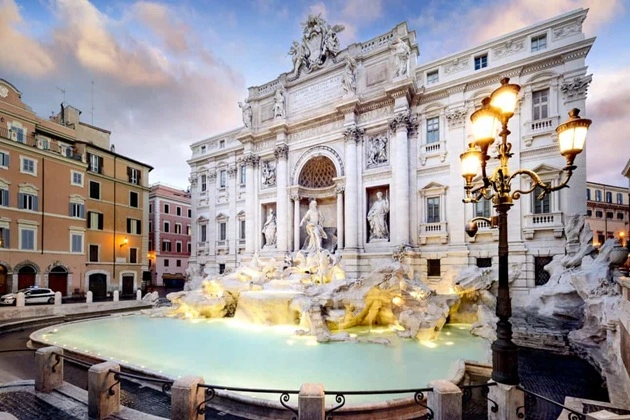
In hot weather, the presence of water in the pools of the fountain may beckon, but do not forget the tradition of paratroopers and dive into them. In Italy, the national fountains have a special, one might say, majestic attitude. Such large fountains as the Trevi or the Fountain of the Four Rivers in Piazza Navona only need to be contemplated. The only thing allowed is to throw a coin over your left shoulder into the Trevi fountain.
This is a long-standing ritual to gain happiness, and the coin, in this case, acts as a donation. It is a favorite tourist destination, so the fountain has to be cleaned regularly of coins, which then go to charity. But you can’t swim or even wet your hands in the fountain, otherwise they will issue a huge fine. You can refresh yourself at the small drinking fountains – nasoni (“big noses”). They have clean, cold, and drinkable water.
The subtleties of tipping: so as not to overpay and offend

Not every tourist knows Italian, but they will have to learn a few words in order not to get confused with the bill that the waiter will bring. Visit. A F R I N I K . C O M . For the full article. The presence of two words at once can lead to stupor: coperto and servizio. Tourists who do not understand their meaning leave top tips, overpaying at the same time. The first word, coperto, means that the table setting is included in the receipt: tablecloth, dishes, and bread, even if no one has touched it.
This is a mandatory fee. Next, the order of dishes and servizio (tips for service) are entered in the receipt. They can also be listed as servizio incluso. In addition to the amount written out, the visitor can leave a real tip from themselves in gratitude for the service, good advice, attention, and so on – this is called la mancia. They leave a few of them, 2-3 euros is enough, and put them on the table in cash if the payment is made by card. You can simply round up the bill, and the extra money will be a tip for the waiter who served this table. This will keep the bounds of decency and will not offend the service staff, and the visitor will not overpay.
To the temple – in special clothes

There are many ancient temples, cathedrals, and churches in Italy, where curious tourists will definitely set their footsteps. But we must not forget about the customs of the people and not fall in the eyes of the parishioners. There is a special dress code for visiting holy places. Tourists in light clothes with bare shoulders and knees simply will not be allowed in such places. A special guard at the gate will evaluate the appearance and decide if he is dressed appropriately, and may forbid entry.
The problem of tourists is solved immediately, because far-sighted merchants are located nearby, offering thin, wide scarves made of non-woven fabric, but they are expensive. It is better to plan a hike in advance and not wear a tank top with thin straps, but a T-shirt without a deep neckline, and shorts covering the knees, and the cap can be removed at the entrance.
It is taboo in the market to touch vegetables and fruits with your hands

In Italy, there are special norms of behavior in the market – everything is based on a trusting relationship between the seller and the buyer. Therefore, the buyer himself does not touch anything with his hands, but can only ask or ask the seller to pick up a good product. If this is not followed, then, firstly, such behavior will offend the merchant, and secondly, the buyer may even receive a fine. Italians are very scrupulous, so everyone is not allowed to touch fruits or vegetables with their hands. This can be done in a supermarket, where there is a form of self-service, by wearing gloves beforehand. But it is better to ask in the market, and the merchant will try to please the customer wholeheartedly.
Scheduled meals

Italians attach great importance to food, so the time allotted for dinner and lunch is a sacred thing for them. Lunch (Pranzo) and dinner (Cena) are strictly on schedule. For them, it’s like a special ritual when all family members gather, not only to get enough, but also to communicate. Lunch (Pranzo) starts at 1 p.m. and, in fact, lasts until 2:30 p.m., but the end may be delayed. Italians have dinner late – at about 20:00, but at 22:00 it will be the norm for them. Therefore, almost all restaurants are not available until 19:30, because the afternoon siesta lasts until late.
For those who want to disperse the blood, there is the concept of taking an aperitif, which starts at 18:00. The cafe will serve a light alcoholic cocktail, a glass of wine with an appetizer in the form of olives, capers, or mini pizza. This is not dinner yet, but it’s eve. For tourists who are used to eating at other times, or who find it difficult to wait for restaurants to open, there are special 24–hour establishments that adapt to visitors.
Ketchup for pasta will immediately betray a stranger: a culinary taboo of Italians

A tourist, having ordered pasta, may ask for ketchup in addition, thereby giving away his origin, and the chef of the restaurant will either be enraged by such ignorance or very upset. Pasta for Italians is not just boiled pasta, but a masterpiece served with a special sauce, so ketchup can’t compete with it in any way – it’s cheap and tasteless.
In Italy, it is not customary to sprinkle grated Parmesan on pasta with seafood, because it is believed that it can kill the taste of seafood. Each pasta has its own sauce: for long pasta, a liquid sauce based on butter and tomatoes, for short pasta, a thick meat or vegetable sauce that can fill holes and bends. The one who ordered the “Bolognese” for spaghetti will immediately give himself away. If a restaurant serves cream with carbonara, it means that the establishment has simply been rebuilt according to the wishes of tourists, but for Italians, this is unacceptable. To avoid being trapped, it’s better to just trust the chef.