Science without consent: How separating twin brothers led to tragedy
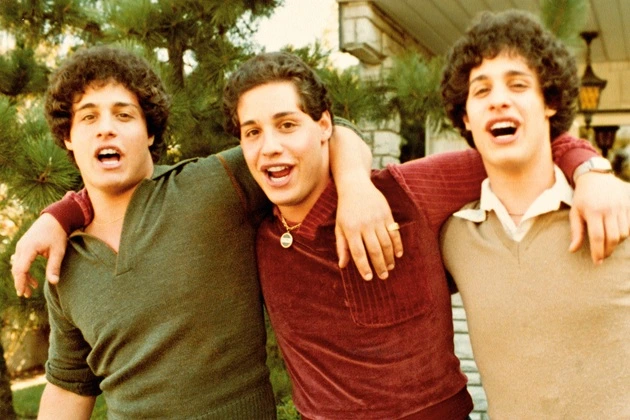
In the early 1980s, an incredible event took place in New York. Three young men, Bobby Shafran, Eddy Galland, and David Kellman, who grew up in different families and knew nothing about each other, unexpectedly met and, to their amazement, discovered that they were almost a complete copy of each other. When this story received a wide public response, it turned out that they were triplets, but at birth, they were separated and placed in different families with different financial situations, to determine which personality is formed under the influence of external circumstances. Who conducted this experiment on young men and why, and what were the results?
Why did three identical twins end up in different foster homes?

They were born as rare identical twins in a Long Island Hospital in 1961. Their young teenage mother was unable to raise three babies, so she abandoned them after giving birth. Actually, four children were born initially, but one boy died during childbirth, and the other three were named Bobby, Eddy, and David, and were in the hospital for some time under the supervision of doctors.
When they were examined by Viola Bernard, a child psychiatrist and consultant at the agency for the adoption of children left without parents, she stated that, in her opinion, it was better to transfer the twins to different families so that they would not have to compete for the attention of their adoptive parents. Following her advice, Dr. Peter Neubauer of the Manhattan Child Development Center, where the children were transferred from the hospital, decided to combine their adoption with a scientific experiment.
For this purpose, a research group was appointed, which for fifteen years has been studying the formation of children’s personality. Visit. A F R I N I K . C O M . For the full article. The boys were assigned to families living within a radius of 160 kilometers; their development was constantly monitored, they were visited by members of the research group, who made detailed recordings and videotapes, and conducted psychological tests.
At that time, this was not perceived as something unacceptable; on the contrary, it was believed that such observations were carried out in the interests of children. But when this story became known, deeper questions arose, including from the twins themselves and their adoptive parents: why were these boys separated at birth, why were they not informed that they had biological brothers, why were none of the adoptive parents informed about this, and why were they not allowed to adopt all three of them? These questions formed the basis for the creation of the film “Three Identical Strangers”, based on real events, which literally shocked the whole world.
What was the life of Robert, Eddy and David?
The answers to the questions given in the film turned out to be more tragic than one could imagine. As it turned out, a well-known agency for the adoption of children, which deliberately placed boys in families with different socio-economic levels, simply used their lives for an experiment, and Dr. Peter Neubauer, seeking to study the issues of nature and upbringing, used children given up for adoption as guinea pigs for his research. What were the results of the study?
Much remains unknown, as all documentary records were classified until 2066. It was only under pressure from the filmmakers and at the request of the children themselves that Yale University, which is currently in charge of the study, allowed limited access to the psychological files of the children involved in the study. It turned out that interference with nature similarly affected the boys. The children looked the same, spoke the same, and had common ideas about the world around them and what they wanted in life.
But, most surprisingly, in childhood, they faced similar mental health problems: all three experienced separation anxiety, beat their heads against the bars of the crib, and, in adolescence, all three experienced depression from time to time and needed the help of psychologists, although they grew up in completely different families.
As part of the experiment, David was sent to an upper-class family, where his foster father became a doctor who devoted little time to his son. The boy lived in a rather isolated home environment, under the supervision of a nanny, and was actually deprived of parental warmth. In contrast, Bob spent his childhood in a working-class family. His adoptive father was a grocery store owner, very sociable and cheerful by nature; he treated his son warmly as a father, and later all three boys affectionately called him by the nickname “Bubula”. Eddy was sent to a middle-class family and grew up with a father with whom he often had conflicts. He was more prone to depression than others, which eventually led to tragedy.
The accidental reunion of the brothers

They found each other by chance eighteen years later, when, on his first day at college, Bobby was greeted as a lost friend. “Guys slapped me on the back, girls hugged and kissed me,” he recalled. However, he had never set foot in this college before that day. It turned out that he was mistaken for another student who had studied there a year earlier. Meeting him out of curiosity, Bobby was stunned by the resemblance.
They both knew that they had been adopted by their parents, but they did not suspect that they had a twin brother, which was easily confirmed by hospital records and a shared birthday. Their parents were also outraged by the fact that they didn’t know anything about their adopted sons having a twin brother. But what was everyone’s surprise when the third brother turned up
Enthusiastic newspaper headlines about the reunion of the two twins reached David, who, seeing two copies of himself in the photo, hurried to inform the brothers of his existence. The story of the “triplet reunion” has become a national sensation in the United States. Despite the fact that the brothers were separated at birth, when they first met, they discovered that besides their looks, they had a lot in common: they were all into wrestling, loved the same movies, liked the same type of women, and smoked the same cigarettes.
Over the course of several years, the brothers’ lives changed dramatically, they enjoyed each other’s company and even moved into the same apartment, appeared on television together, answered questions in unison, became celebrities on the New York club scene, played cameo roles in the movie “Desperately Looking for Susan” and eventually opened their own restaurant called “The triplets. ”Taking advantage of the novelty of their status, they posed as each other from time to time: Eddie even had his appendix removed under the name Bobby, since he did not have medical insurance. It seemed that having found each other, they would be happy to the end.
From fairy tale to tragedy
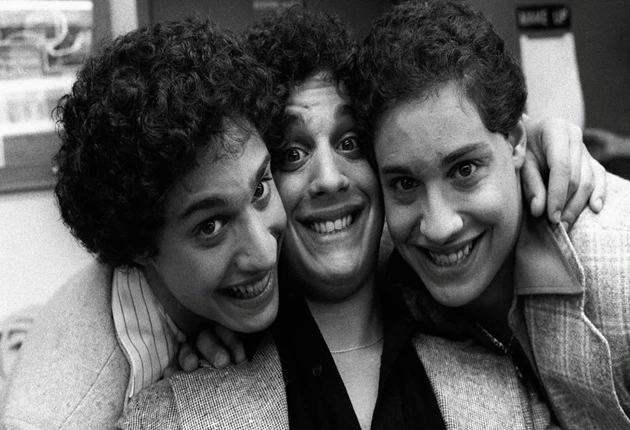
Gradually, the story of the three twin brothers changed its trajectory. As they grew up, got married, and developed their business, they dealt with the inevitable stresses in different ways. They decided to find their biological mother, but were very disappointed. She came to meet them, sat with them at a table in a restaurant, but was indifferent to what was happening and refused to continue her relationship with them. After conducting their own investigation, the brothers found out that she had a mental illness.
Meanwhile, their parents joined forces and began investigating the causes of the triplets’ separation. They held a meeting with several employees of the then-defunct adoption agency, but received little information from them. Soon, the brothers themselves began to realize the fact that they had actually become “guinea pigs” in a long-term experiment on their lives.
Over time, they began to drift apart, each got their own children, and their joint restaurant business soon collapsed. Eddie, who lacked warmth as a child, felt the hardest about it, and he decided that he had finally got his own family. At some point, his behavior became unpredictable, and he showed symptoms of manic-depressive psychosis. After a short treatment in a psychiatric clinic, he returned home, but one day he shot himself with a pistol at home. He was only 33 years old.
After his suicide, Bobby and David became even more estranged from each other. Today, Bobby Saffron works as a lawyer and lives with his family in Brooklyn. David Kellman is an independent real estate agent who lives in New Jersey and maintains a relationship with his wife, Eddy.