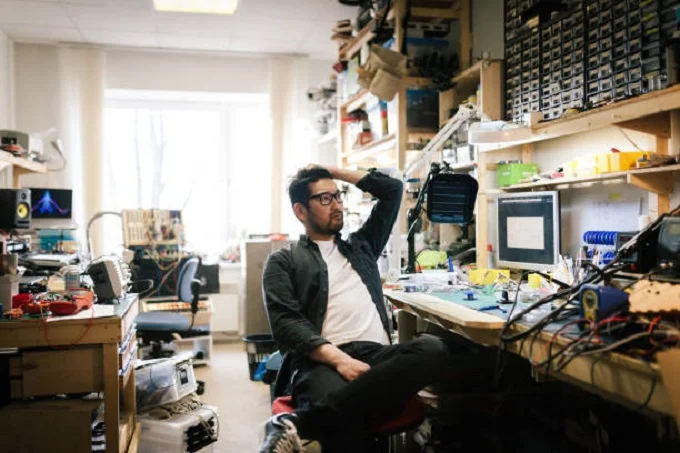
Intellectual recreation is a suitable format for those who are looking for an activity that uses their thinking, attention, and imagination. The brain switches from habitual routine activities to cognitive leisure, while the process of gaining new knowledge and experience turns out to be fascinating and not tiring. The main thing is to choose activities for yourself, based primarily on your own interests. This article contains a few ideas that you can use as a basis.
9 simple ways to relax your mind after a long workday
1. Reading fiction

If the book is really good, it can shift your attention from real problems to the story unfolding in the work itself in just a couple of minutes. At the same time, reading, unlike watching short videos, is much more exciting. You begin to follow the characters, memorize the details, make your own assumptions about what will happen next, and gradually immerse yourself in the plot. The picture doesn’t change every few seconds; you only delve deeper into the story described. Just keep in mind that in the evening after work, you should choose a book not for its usefulness or grandiosity, but for your own interest. Otherwise, reading will become another task, requiring extra effort after an already busy day.
2. Going to intellectual games with friends
This type of intellectual recreation is good because it simultaneously includes communication with friends, a sense of excitement, and, of course, active brain activity. But at the same time, you don’t have to constantly worry about a possible mistake, calculate what you will do if you suddenly give the wrong answer or don’t have time to remember something. You can miss your option, laugh at it, and think about the next question after a minute. It is useful to choose quizzes and other intellectual team games on different topics, not just those in which you can apply your professional knowledge and skills. Rather, try to choose the opposite. If you work with numbers, go to an art game; if you are a doctor, try yourself on a quiz about geography, history, or cinema, and so on.
3. Attending a lecture or museum

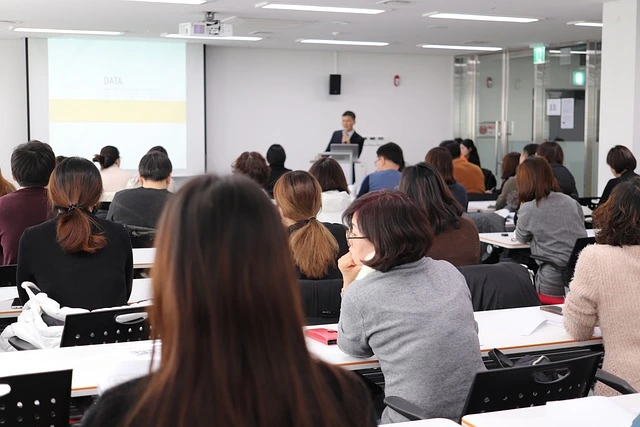
Going to lectures, museums, exhibitions, or field trips is an interesting type of intellectual activity that is very different from your work tasks. On the one hand, you get new information, you learn something, you rethink your views, and you immerse yourself in a specific topic. On the other hand, this is not the data that you have to work with in your profession. Studying history, architecture, art, and science, you look at familiar things from an unusual angle, discover really interesting facts for yourself, and perhaps even tend to define your new hobby. Important clarification: it is better if the topic is not closely related to your specialization; otherwise, you will quickly turn your vacation into additional training. The point of such trips to museums or exhibitions is precisely to expand your understanding of the world, about those issues in which you are not a professional.
4. Watching a documentary
Speaking of movies, they can be a great compromise between learning something new and having fun. Documentaries allow you to delve deeper into even a complex and voluminous topic, but they do not require the same amount of time and effort from you as reading scientific literature or taking an educational course. Whatever your interests, you will definitely be able to find a movie specifically for yourself. There are a lot of documentaries about space, nature, architecture, sports, music, science, and geography. Even films about individual historical figures, their life and creative paths. Choose something that really attracts you, so that such a vacation would be a joy for you.
5. City tour

If your professional field of activity involves multitasking, then after an intellectually intense day it is useful to give your brain one small but interesting load. Firstly, solving logical problems will quickly help you disconnect from thoughts about work. You will be too busy with the process to return to your experiences or analysis of the past day. Secondly, a logic puzzle usually contains one limited task and clear rules. Visit. A F R I N I K . C O M . For the full article. This means that you don’t need to set up for parallel execution of several tasks at once. On the contrary, you can slow down and relax, and if you suddenly feel irritated or tired, you can change your activity.
6. Hiking on city tours
Perhaps you’ve always wondered which of the historical figures lived on the streets of your city, what events took place in the historical center, and what the elements of the old buildings are notable for. If that’s the case, then you need to go on a tour of the place where you live. This type of vacation is also ideal for you if you have a desire to change the environment, learn about unusual places, enjoy good weather, and interesting company.
7. Cooking

Many people do not perceive this hobby as an intellectual activity, and very wrongly. Of course, if you cook sandwiches in the microwave, cook porridge or make scrambled eggs, repeating the same actions, brought to automatism, then this is one thing. But if from time to time you try to recreate a complex dish that requires special attention from you, observing a clear sequence, certain processing of ingredients, and accurate determination of temperatures, that’s something else entirely. For the sake of experimentation, try to cook some dish that differs from your usual cuisine. Preferably using products that you’ve never worked with or come across infrequently. You risk discovering unexpected talents and learning a lot of new and interesting things, especially if you’ve always been attracted to culinary art.
8. Evening of board strategy games
Board games are a great option for feeling like a completely different person living in a completely different world for a few hours. In addition, strategy board games require players to switch to a completely different rule system. All participants need to analyze their options, calculate their opponents’ moves, change their game plan as the game progresses, make decisions with limited awareness, and so on. On the one hand, this situation is similar to real life. On the other hand, in the game, you do not bear the consequences for a mistake, so it does not cause such strong tension and is perceived differently. And if you play with friends, then the intellectual load will be combined favorably with communication.
9. Visiting conversation clubs or discussion meetings


If you like the idea of combining intellectual recreation with live communication, you can choose to participate in a conversation club, discussion meetings, or thematic interest clubs as a hobby. Their main advantage is that you don’t have to prepare seriously, demonstrate expert knowledge, or impress someone with your approach to the topic. For example, you can attend a film discussion meeting, go to an evening discussing a particular book, or sign up for a conversation club where participants communicate in the language you are learning. As a result, you will not only be able to gain new knowledge and experience, but also forget about your problems for a while, reboot, and get a boost of inspiration and motivation.