
Big changes, such as moving, changing jobs, starting a new relationship, or deciding to radically change your lifestyle, rarely happen without unpleasant consequences. They can be unsettling, even if you sincerely desired these changes and contributed to them in every possible way. As a result, you may get stuck somewhere in the middle of the road and realize that you no longer understand who you are and what you are doing with your life. The good news is that this stage is not mandatory, and not all people who go through big changes face it. And you can protect yourself by following these steps.
6 things you can do to stay true to yourself during major life changes
1. Do not give up habits and activities that give you a sense of stability
Against the background of one serious and large-scale change, you may want to deal with everything else too. It seems that this is the right time for a global restructuring of everything: relationships, career, social circle, habits, place of residence, environment, and so on. And the most dangerous thing is that, at the moment, you can be sure that you have the necessary level of energy and amount of money. But you’re not taking this into account: the psyche doesn’t handle uncertainty well. And if it gets too much, your resources are rapidly running out, and you end up failing where you could have gotten the desired result. Therefore, it is useful to slow down yourself in the matter of decision—making – to determine what you really should do at the moment, and what can be postponed for later.
2. Regularly ask yourself what exactly you want, and not just others


Big changes in your life almost always happen under the close attention of many people: your family, friends, colleagues, and acquaintances. Of course, almost everyone will want to give you valuable advice, comment on your decisions, or share their expectations. Even if you are confident in yourself, the incessant flow of other people’s opinions will gradually begin to influence your thoughts and, as a result, actions. To protect yourself, it is useful to regularly ask yourself the question: “What do I really want?” Not in general from life, but in the context of a certain area or decision that you are going to make. But this approach will only work if you are as honest with yourself as possible.
3. Keep in touch with people around whom you don’t need to play a new role
Sometimes, along with circumstances, you want to change your own image. You can try on a new look, start talking differently, get to know people who haven’t appeared in your environment before, and change your habits. For a while, you will only get used to your new self, as if playing an atypical role for you. Visit. A F R I N I K . C O M . For the full article. People who got to know you when you were already in the process of changing will see in front of them the person you want to be. But it’s also useful to keep in touch with those who knew you before the changes. It can be close friends, relatives, old colleagues, or any other person next to whom you can calmly admit: “It’s still me, even though I’m changing.”
4. Do not take temporary difficulties as proof that you have chosen the wrong path

Any changes, even the most desirable ones, somehow bring temporary difficulties. When you get a new job, you get used to your new responsibilities, team, and superiors, fearing that something will go wrong. When you move to a place where you’ve always wanted to live, you face a feeling of loneliness, a painful adjustment, and so on. Of course, at such moments, every person may have the thought that he made a mistake in his choice. This doubt is dictated primarily by the temptation to return to your former comfort, where you clearly knew what to do and how to do it, and understood what awaits you. When such thoughts arise, remind yourself that just because a decision turned out to be emotionally difficult does not mean that it is wrong.
5. Consider your limitations, even if you are highly motivated
Important changes in your life can give you a powerful boost of energy. You will feel that now you will definitely be able to get up earlier, work more, exercise more often, and acquire new useful habits faster. Being highly motivated, you run the risk of making decisions in isolation from your real abilities and capabilities. At first, it can even bring you some positive results or create the appearance of positive dynamics. But pretty quickly, the limitations that you didn’t take into account at the start will make themselves felt: you will feel tired from overloading, and you will face insurmountable difficulties that you didn’t take seriously from the very beginning. Therefore, before making any decisions, it is useful to analyze whether you think you can handle the task, or whether your chances of success are really high.
6. Don’t let new circumstances change your goals, values, or boundaries
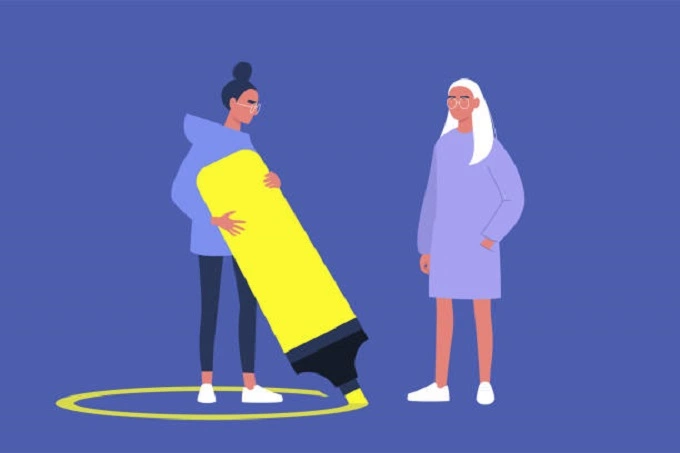
Often, changes, especially unexpected and unpleasant ones, create conditions in which you find yourself vulnerable psychologically, financially, and so on. This, in turn, increases your fears and pushes you to compromise even where you shouldn’t. It seems to you that now you can tolerate unfavorable conditions, bad attitude, and inconveniences. For example, a job that you definitely wouldn’t have agreed to a few days ago no longer seems so difficult or low-paying to you. Or you turn a blind eye to the oddities in the behavior of the girl you met after a painful breakup, wanting to avoid loneliness. The problem is that temporary concession easily becomes the norm over time. So try to determine in advance which principles or goals you are not ready to sacrifice, and remain faithful to them even in times of instability.