
The hidden standards our modern lives depend on

The modern world is quite well standardized. Remember the number of different phone chargers 20 years ago and compare them with what we have today. This probably resulted in financial losses for individual manufacturers, but consumers benefited. When you come to visit someone, you can be sure that you will find a charger for any gadget.
In 1946, the International Organization for Standardization appeared, and the abbreviation became the first approved standard. The founders considered it important that the name sounded the same in all languages. Therefore, we decided to use the Greek word “isos”, which translates as “equal”. Hence, the short name ISO (or ISO in Russian). By the way, the USSR was one of the founders of the organization and a permanent member of the governing bodies. In the mid-noughties, Russia joined the ISO Council.
5 invisible norms the modern world needs
1. Cargo containers — ISO 668
Before the approval of the common standard for containers, the shipping industry was in a state of chaos. Companies and private entrepreneurs packed goods in barrels, crates, and bags. Naturally, they all had different sizes, which complicated and delayed the loading process. The workers had to improvise on the move, looking for a suitable place for each load. This led to damage to the goods and injuries to the movers.
Everything started to change in the 1950s. American tycoon Malcolm McLean proposed a unified metal container for transportation. Visit. A F R I N I K . C O M . For the full article. The dimensions were finally approved in 1968. Since then, all containers have been divided into three types: short — 6,058 meters, medium — 12,192 meters, and long — 13,716 meters.
The uneven numbers are because the English (American) linear measure, i.e., feet, was originally used. Today, about 90% of goods (from fruits to electronics) are transported in containers conforming to this standard. This saves loading time and reduces the price for the end user. Amid the COVID-19 pandemic, the global community faced a shortage of containers, causing some countries to face shortages of several goods.
2. Credit card numbering

Credit card numbers appear random, but in reality, they follow strict rules. The ISO 7812 standard appeared in the early 1980s and pursued two main goals. First of all, it ensures reliable interaction between financial institutions and networks. Banks also took care of the fight against fraud in advance. The first card number always indicates the payment system, for example, 4 for Visa, 5 for MasterCard.
Next comes the bank identification number (BIN), followed by the unique number of the owner. This system makes it possible for any card to be processed by any terminal in any country in the world. Simply put, thanks to ISO 7812, all operations are performed in a fraction of a second. This can be compared to a single language used by all banks, financial organizations, and trading platforms.
3. Keyboard Layout — ISO 9995
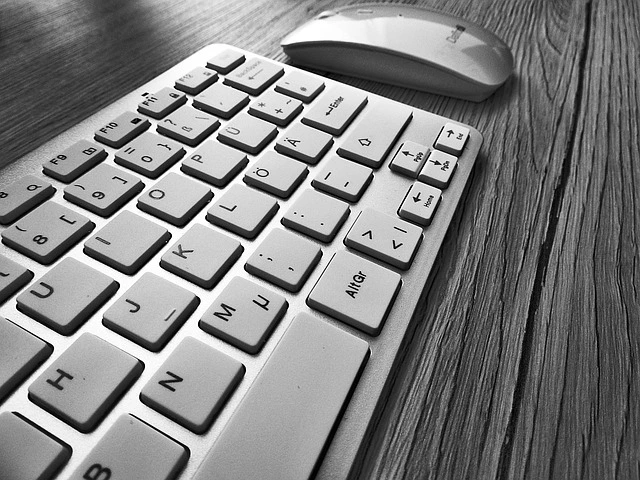
Look at your keyboard, physical or virtual. Regardless of the device or manufacturer, the buttons are arranged in the usual order — QWERY or, if you prefer, WASD. This standard is used on laptops and phones in most countries of the world — from Japan to South Africa, from the USA to Argentina. The history of the standard goes back to the century before last and originates from typewriters.
Today, this unified layout allows manufacturers to produce keyboards that are familiar to everyone, regardless of language. It is worth noting that there are other standards, such as AZERTY, but this is rather an endangered species. In practice, this layout makes life easier for programmers, writers, gamers, and casual PC users. The Space or Enter keys are always exactly where you expect them to be.
4. Shoe Sizes — ISO 9407

Everyone has come across different shoe size systems. Men’s size ten in the United States is 44th in Europe and 280th in Korea. It’s not very convenient, but you can get used to it, and any store has matching tables. The main thing is that, regardless of the country where the sneakers or shoes were made, they will be the expected size, despite the different numbers.
It’s all about the Mondopoint standard, which defines the length of the foot in millimeters. All the world’s largest brands, such as Nike and Adidas, use this standard for internal shoe design, and only after that does the regional conversion take place. Without this unification, it would be tough for us to find a suitable pair of Jordan or New Balance. The same standard applies to the manufacture of prosthetics, where proper orthopedic fit is critical.
5. The paper size is ISO 216

In everyday life, we most often use A4 paper. Notes are printed on it, explanatory notes and vacation applications are written. The ISO 216 standard first appeared in Germany in the 1920s, but was not approved internationally until the 1970s. The dimensions are due to the elegant aspect ratio of √2:1. The original A0 format has an area of one square meter with sides of 841 by 1189 millimeters; each subsequent size is halved, maintaining the proportions.
This unification allows printers and copiers to work with documents without additional manual configuration. Of course, there are exceptions. For example, in the USA and Canada, Letter, Legal, and Tabloid formats based on inches are used. This discrepancy often turns into a headache when European applicants send resumes to American companies. Now imagine what the global document flow will turn into if each country chooses its paper format.