An extraordinary medieval hoard found in a field: What scientists discovered
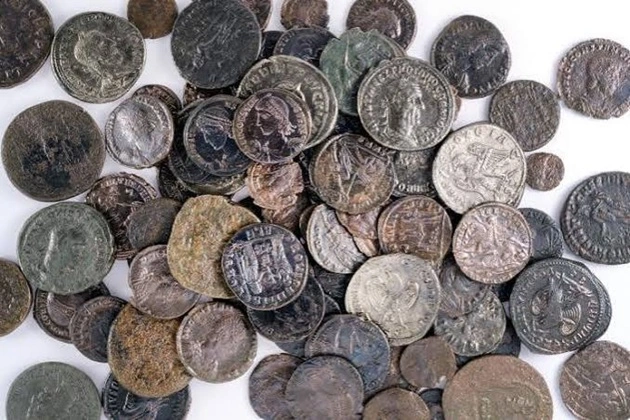
According to archaeologists, the most intriguing treasure of the Princely era has been found in Poland. Elegant gold rings and thousands of medieval silver coins were discovered right in the middle of a cornfield. Experts associate the treasure with Maria Dobroniega, the daughter of the Grand Duke of Kyiv Svyatopolk. The curious story of the treasure, which historians call the dowry of a Russian princess, and the historians’ opinions are further discussed in the review.
The treasure in the corn
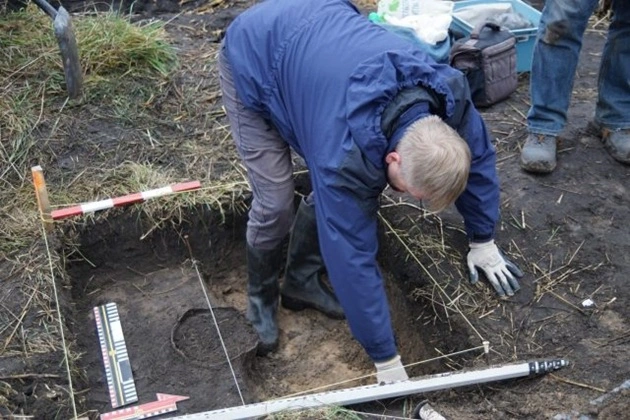
Dr. Adam Kendzerski and his colleagues have excavated a 12th-century ceramic pot. The vessel was filled to the brim with silver and gold coins, as well as jewelry. The treasure was discovered in the small Polish village of Sluszków, near Kalisz, in a cornfield. The archaeologists went there to dig after talking with the local priest.
Thousands of silver coins and ingots, as well as jewelry, including gold wedding rings, were placed in linen bags and placed in a basket. Then all this was sealed in an earthen vessel. Although the upper part is no longer there, the ceramics and their contents are in excellent condition. In total, experts counted 6,500 items. The coins, known as “cross-denarii”, are minted with the image of a large cross. The origin and circulation of these coins can be traced back to the end of the 11th century or the beginning of the 12th century, experts say. The gold rings are decorated with precious stones. The largest of them is polygonal.
The treasure was found completely by accident. In fact, the inquisitive expert was looking for a completely different treasure! Namely, a find excavated long ago, in 1935. He was interested in the exact location. To clarify the details, Kendzersky met with a local priest, Reverend Jan Stakhovyak. While photographing the area, he mentioned the rumors he had heard from pre-war treasure hunters. They told him about another treasure buried somewhere here.
The archaeologist armed himself with a metal detector and spent several days searching for the ancient treasure under the guidance of the monk. They managed to explore three huge plots of land, but found nothing. After that, Stakhovyak led a team of archaeologists to a cornfield next to the road. Visit. A F R I N I K . C O M . For the full article. And then they finally got lucky. The pot was only thirty centimeters deep. A Volunteer Fire Department was deployed to protect the site.
Treasures have a romantic origin
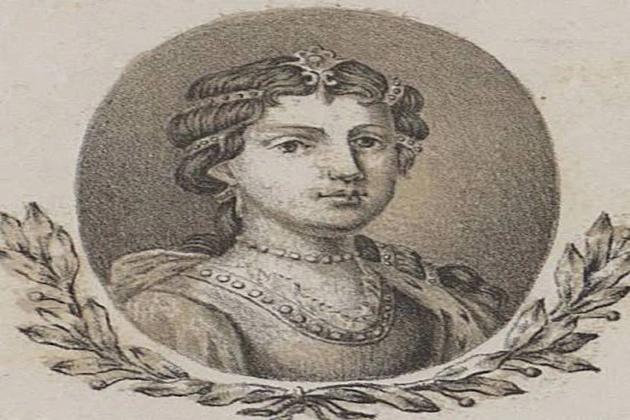
Who did this incredible treasure belong to? Experts have found obvious signs of royal origin in the treasures. They put forward a theory that it could be the dowry of the Russian Princess Maria Dobronega. The experts’ assumption is based on the fact that the ring has an inscription in Cyrillic. Lord, help your servant Mary.” Cyrillic means the Slavic alphabet. Who is Maria? Historians believe that this is none other than the Russian princess. At that time, the Polish prince from the Piast dynasty, Boleslav III Krivoust, had a wife named Zbislava. Her sister Maria was also married to the Polish nobleman Peter Vlostovich. Scientists suggest that both princesses are the daughters of Svyatopolk Izyaslavich, Grand Duke of Kyiv.
How did the treasure end up underground? Experts say that internecine wars were underway in Poland at the time. There are historical records of how the nobleman Peter Vlostovich captured Prince Volodar Peremyshl. Vlostovich is the husband of the same Maria Dobroniega. Was it really part of Maria’s dowry? Historians admit that this hypothesis is incredibly attractive, but it remains impossible to verify. In any case, the presence of such an amount of gold indicates a rather serious status of its owner.
A small Polish village is now practically a legend
For a Polish village, this is definitely good news. Already one major find is quite impressive. But two are definitely something very special. The intriguing story of the treasure gives the whole situation a truly royal sheen. She also reveals more fully the role of this area in the ancient, glorious past of Poland. All found items are carefully examined. So there will be additional information about the treasure. Perhaps in the very near future, experts will be able to definitively dispel all doubts. Kendzerski believes that this is in any case “one of the most intriguing treasures found in Poland.” Sometimes the biggest discoveries are patiently waiting right under someone’s nose. Who knows what other treasures are hidden underground, in the most seemingly unsuitable and completely ordinary places.