Big Ben uncovered: The story behind London’s most famous symbol
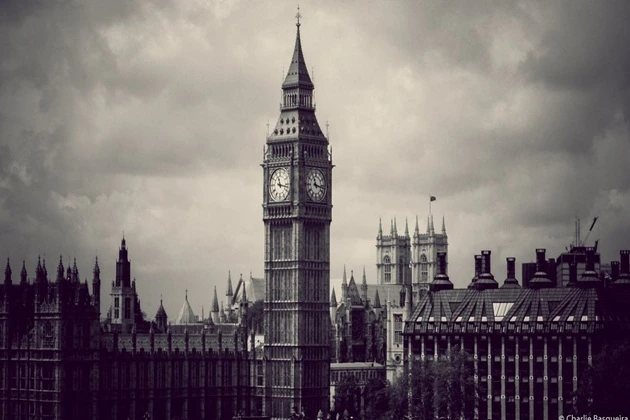
One of the most iconic landmarks in the world is the architectural symbol of London, which is known to everyone as Big Ben. This name has become so popular all over the world that many people no longer go into details about what exactly it is called – the bell, the clock, the tower on which they are located, or the entire complex of the famous royal residence.
The history of the construction of the famous building
The history of this building dates back to the beginning of the 19th century, when the Palace of Westminster, which withstood various cataclysms of the era, was actually destroyed by a devastating large-scale fire. However, some parts of the palace, including Westminster Hall, survived and became part of a new building, which was decided to be erected as the Palace of Parliament.
Architect Charles Barry received the order for this work, but even before the project was completed, a new task appeared – the tower of this structure should have a clock that shows the exact time and bells that ring every hour. Visit. A F R I N I K . C O M . For the full article. However, most experts considered it impossible to create an absolutely accurate clock, since there should have been four dials on the tower.
Then Charles Barry recruited interior decorator Augustus Pugin, known for his architectural work, who helped design the clock tower and revive the Gothic style of the building. Edward John Dent, known for making high-precision watches, was commissioned to design the clock mechanism. By 1843, the project was completed, and construction of the clock tower began, which lasted 14 years. The bells for the tower were brought during its construction. One of them was so large that it had to be delivered not by rail, like the others, but by ship.
How did the name Big Ben come about?
While the clock tower was being built, a huge bell was placed in the courtyard of the Palace of Westminster. It was originally named Victoria, in honor of Queen Victoria, but Londoners nicknamed it Big Ben. Although it is not known for certain why this particular name was given to the bell, there are several versions regarding its appearance. One of these versions says that the bell was named after Sir Hall, who was officially responsible for the construction of the Parliament Building and was well known by the nickname “Big Ben”. His name was even inscribed on the bell during its casting.
Another theory is about heavyweight boxing champion Benjamin Count, who also had the nickname “Big Ben.” It is believed that because of his achievements in the ring and his enormous height in British society, it was customary to call “Big Ben” something incredibly heavy and big. Therefore, it is not surprising that the bell, which weighs more than thirteen tons and has a diameter of about three meters, received such a name. The first bell of Big Ben rang on July 11, 1859, but less than two months later, a crack appeared on the bell, and it had to be repaired, which is why the clock tower was “silent” for four years.
Some interesting facts about the architectural symbol of London
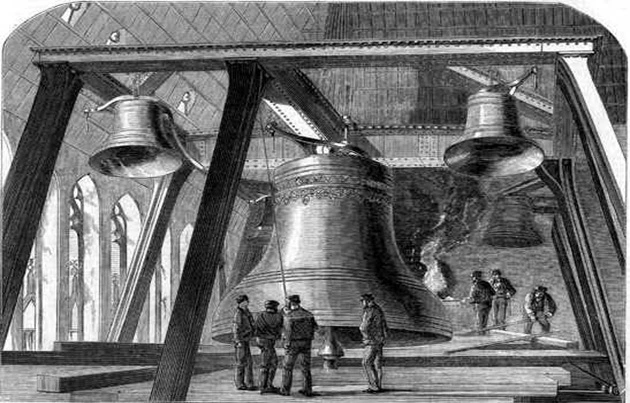
Although the name “Big Ben” belongs to the largest bell of the clock tower, located behind the dial of its clock, it has long been fixed to the entire structure, and now this famous landmark of London is called nothing but “Big Ben”. Although officially, neither the parliament building nor the clock tower has such a name. The clock tower, which is the third-tallest building in the UK, is 96 meters high, and the clock is located at an altitude of 55 meters above sea level. The tower has a square base, located on a concrete foundation with a thickness of 3.7 meters.
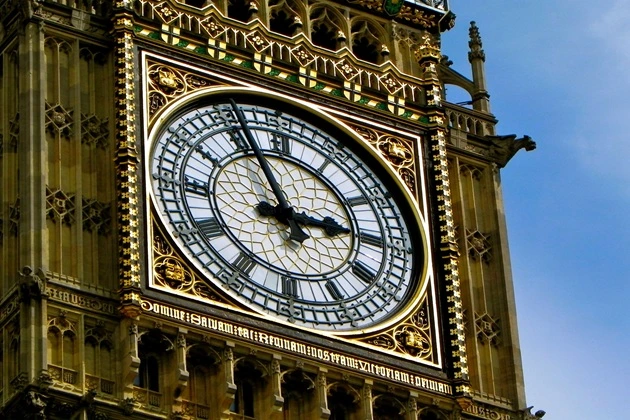
The tower has 11 floors and 290 stone steps leading to the clock; 44 steps leading to the bell tower; and 59 more steps leading to the top of the spire. It is built of limestone and brick, lined from the outside. Its spire is lined with iron tiles. There is one large bell and four small bells in the bell tower. The big one, Big Ben, rings every hour, and the small bells take turns every quarter of an hour. Big Ben has survived the reign of seven monarchs, starting with Queen Victoria, in whose honor the Latin inscription “God save the Queen” is engraved on the four clock faces.
The Big Ben Clock Tower is the main attraction of London, which every tourist who goes on a tour of Westminster tries to visit, but there is one secret tour to Big Ben that few people know about, and not everyone can get there.