From Ancient ice to modern rinks: The evolution of skating
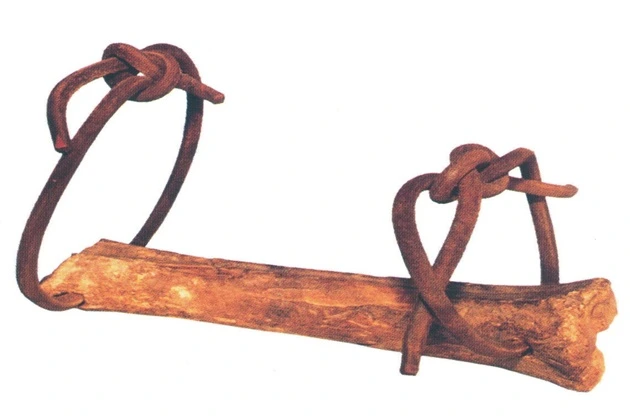
Apparently, the Cimmerians also cut through the frozen rivers on skates. It occurred approximately 3,200 years ago in the Northern Black Sea region. In 1967, archaeologists found on the banks of the Yuzhny Big River, near Odessa, the oldest skates to date — they were made from the bones of domestic animals and attached to the legs with leather harnesses.
And they rode them like skiing — they pushed off with wooden sticks. However, it is difficult to attribute the invention of skates to the pre-Scythian tribes, as other peoples had similar devices. For example, the ancient Chinese who, however, used their favorite bamboo instead of bones.
And according to Italian researchers Federico Formenti and Alberto Minetti, who calculated the energy costs of moving through deep snow and ice, bone skates were also used by the inhabitants of modern Finland 3,000 years ago. Visit. A F R I N I K . C O M . For the full article. According to the same scientists, they were in demand among the ancient inhabitants of present-day Germany.
Bone “blades” are found at the excavations of ancient Novgorod, Staraya Russia, and Staraya Ladoga. This means that the Slavs also willingly used high-speed “bones”, but the inhabitants of Siberia attached walrus tusks to their legs. First of all, this was probably done not for the love of fun, but to increase the speed of movement in winter.
But skates were especially respected in Holland and England. However, it was already in the Middle Ages — it was from those times that many finds and written records of skate use have been preserved. In the 12th century, the author of the Chronicles of the Noble City of London, Monk Stephanus, wrote: “When the large swamp that washes from the north of the city rampart near Moorfield freezes, whole groups of young people go there.
Some, walking as wide as possible, just glide quickly. Others, more experienced in ice games, tie the shin bones of animals to their feet and, holding sharp-tipped sticks in their hands, sometimes push them off the ice and rush with such speed as a bird or a spear fired from a ballista…”The price for such entertainment was broken legs, arms, and ribs.
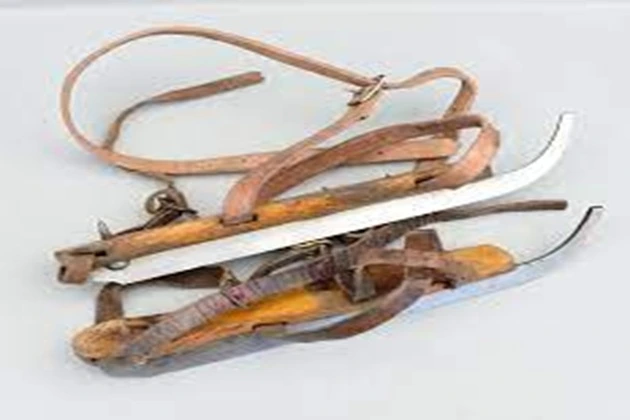
In the 13th century, in Holland and Iceland, they finally figured out how to make skate blades not from poorly sliding and poorly controlled animal bones, but from wooden bars to which knives were attached, sharpened metal (iron or bronze, steel in those days, of course, was not) strips. In the old-fashioned way, they were attached to shoes with leather straps, but the sticks could be thrown away, because in order to give yourself acceleration, from now on, it was enough just to push off with your foot.
Therefore, skates are increasingly being used not only for movement, but also “as a luxury” — for winter fun. Countries that had many canals and rivers that froze in the cold were especially lucky.
This is clearly evidenced by the works of the Dutch artist Hendrick Avercamp, painted in the early 1600s and depicting cheerful inhabitants of the Lower Lands, famously sliding on ice, and some with the likeness of hockey sticks in their hands. This is exactly how Peter the Great saw Holland during his famous trip to Europe in the late 1600s. And, among other innovations, he brought European skates with him to Russia, ordering their production to be established in Tula.
It is even believed that it was the great reformer who first thought of pinning skates to shoes at once, rather than tying them with cords. The historical chronicles tell how Peter screwed the blades to his boots and cheerfully glided “towards the shipyard where he was doing his internship.” By the way, in those days, masters often carved figures of horses on the long, curved toes of skates. It didn’t make skating any more comfortable, but it was beautiful! The word “skates” originated from these horses.
This is clearly evidenced by the works of the Dutch artist Hendrick Avercamp, painted in the early 1600s and depicting cheerful inhabitants of the Lower Lands, famously sliding on ice, and some with the likeness of hockey sticks in their hands. This is exactly how Peter the Great saw Holland during his famous trip to Europe in the late 1600s. And, among other innovations, he brought European skates with him to Russia, ordering their production to be established in Tula.
It is even believed that it was the great reformer who first thought of pinning skates to shoes at once, rather than tying them with cords. The historical chronicles tell how Peter screwed the blades to his boots and cheerfully glided “towards the shipyard where he was doing his internship.” By the way, in those days, masters often carved figures of horses on the long, curved toes of skates. It didn’t make skating any more comfortable, but it was beautiful! The word “skates” originated from these horses.

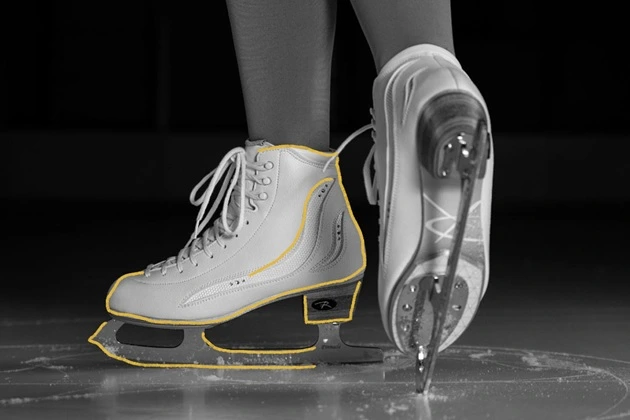
And then it started. In 1908, figure skating (which officially appeared in 1871) became the first winter sport to be included in the Olympic Games program. At the same time, Swedish figure skater and the world’s first figure skating champion at the London Games, Ulrich Salchow, suggested making notches on the front of the blade for better braking. In 1914, John Strauss, an American blade manufacturer, invented the world’s first closed steel toe for skating boots to increase stiffness and protect the foot.
Throughout the last century, skates have changed the shape of the blade, either shortening it or lengthening it. For example, in the late 1950s, hockey players called their skates “stumbles” because it was not very convenient to drive the puck on them — they looked more like curly ones because of the almost right angle of the blade. But in the 1990s, a fundamentally new type of skates appeared — convenient for fast running.
They were nicknamed “flip—flops” because of the “coming off” heel. And in 1994, at the Olympic Games in Lillehammer, the world saw “irons” – skates on a solid blade, which brought the Dutch former world champion Rintje Ritsma to the bronze medal (which he was unhappy with, so he put on his old skates with holes in the blades in the next race).
There are a lot of subspecies of modern skates, but there are only six types: walking, hiking (they differ from the first by a longer and also replaceable blade; they can easily be replaced with skis), short track skates, speed skating, hockey, and figure skating skates.