Famous faces on money with criminal records: Who are they?
Images of famous people’s faces on banknotes have been around for thousands of years. Since ancient times, rulers have issued banknotes featuring their own images to confirm the value of the currency and assert their authority. Later, this was done to pay tribute to great historical figures. In addition, money decorated with portraits is one of the most tangible symbols of national identity, and it is also more difficult to counterfeit.
However, in most countries, presidents, famous politicians, or cultural figures are depicted on banknotes. In contrast, Australia was the only country where portraits of notorious lawbreakers appeared on banknotes. How did this happen, and who were these people?
Australia’s complicated history
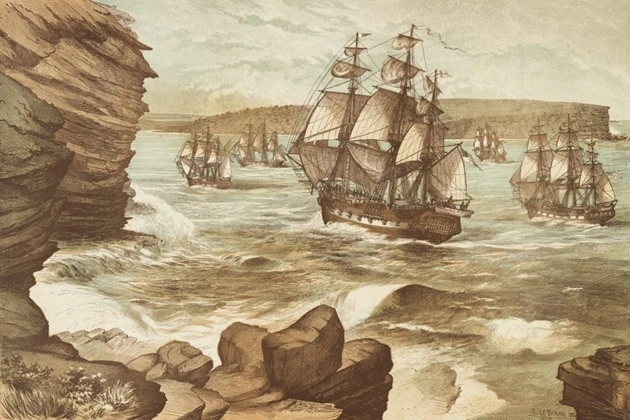
The history of Australia began with the resettlement of convicts there, who were exiled to the island from Great Britain and Ireland as punishment for their crimes. Between 1788 and 1868, more than 162,000 convicts were deported to Australia. Their life on the island was very difficult, as they worked hard to help build a young colony, ate sparsely, and lived on ships anchored, which often became hotbeds of deadly diseases. Nevertheless, they got a second chance to become decent people.
Those who did not follow the path of correction were sent to even more terrible prison conditions, for example, to St. Helena Island off the coast of present-day Queensland or to Port Arthur in Tasmania. But those who took advantage of this chance often became successful people, and after serving their sentences, they stayed in Australia, received land and became landowners, or found employment in other fields of activity.
Today, Australia owes a lot to these people, who, thanks to their abilities and dedicated work, have made a significant contribution to its development, and some even ended up on Australian banknotes as a sign of appreciation.
Francis Greenway
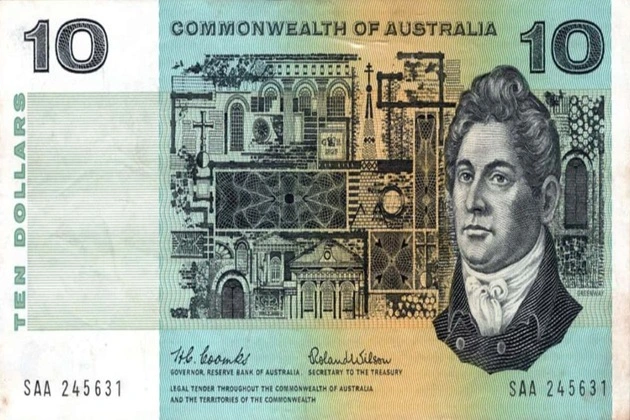
British architect Francis Greenway arrived in Australia as a convict in 1814. To avoid bankruptcy of his company in the face of a severe financial crisis, Greenway forged several important documents and was sentenced to death. The punishment was later commuted to exile in the colony of New South Wales.
In Australia, Greenway attracted the attention of Governor Lachlan Macquarie, who attracted him to architectural work.
Greenway was soon released early, became a New South Wales government architect, and created some of the finest colonial buildings in Australia, including St. James’s Church, the Supreme Court in Sydney, and St. Matthew’s Church in Windsor. Visit. A F I N I K. C O M . For the full article. Together with Governor Macquarie, they built the town squares of five “Macquarie towns” along the Hawkesbury River: Castlereagh, Pitt Town, Richmond, Wilberforce, and Windsor.
Greenway died of typhus in 1837, but his legacy lives on in the dozens of buildings he designed around Sydney. In 1966, his portrait appeared on an Australian ten-dollar bill in recognition of his role as the colony’s first major architect, who designed the iconic colonial-era buildings that defined the face of early Sydney.
Mary Raby
Mary was born into a poor English family, and after her parents died, she was raised by her grandmother, who arranged for her to work as a maid. Fifteen-year-old Mary escaped from her employer by stealing a horse from her stable. She was caught and sentenced to seven years in exile for stealing a horse. Mary always dressed like a boy, and it was only during the trial that it became clear that she was a girl.
She arrived in Sydney in October 1792 and was assigned as a nanny at the home of Lieutenant Governor Francis Grose. Two years later, she married Thomas Raby, a young Irishman, a junior officer who served on the cargo ship Britannia. They stayed in Australia, where Thomas set up his business importing consumer goods, wheat, and coal. His business flourished and expanded, but in 1811, he died, leaving Mary with seven children in her arms. She had to master the management of her husband’s business and his courts.
Gradually, Mary Raby achieved a respectable position in society and became a wealthy citizen of New South Wales. In 1816, her fortune was estimated at 20,000 pounds, and she owned 1,000 acres of land. Later, she began investing in urban real estate and helped establish the Bank of New South Wales. Now this bank is called Westpac and is one of the largest banking corporations in Australia.
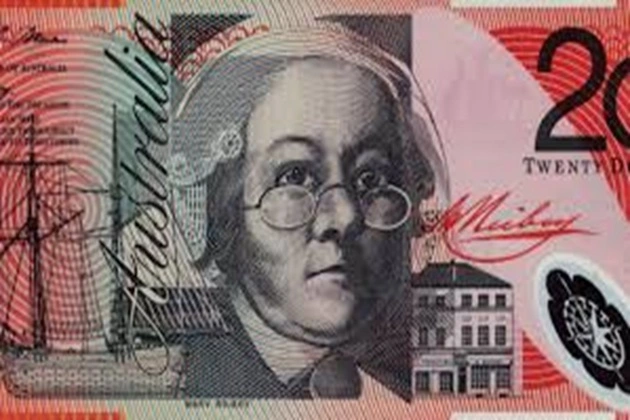
Mary was enterprising and successful in all the jobs she undertook, and was widely respected by Australians. She also found time for church activities and charity, showed great interest in education, dealt with social issues, and made a huge contribution to the well-being of others. Two books have been written about her life, and a film has been shot. The image of Mary Raby can be seen on a modern twenty-dollar bill. The Raby Institute, a non-profit research center dedicated to the study and analysis of Australian women’s leadership, is also named in her honor.
John MacArthur
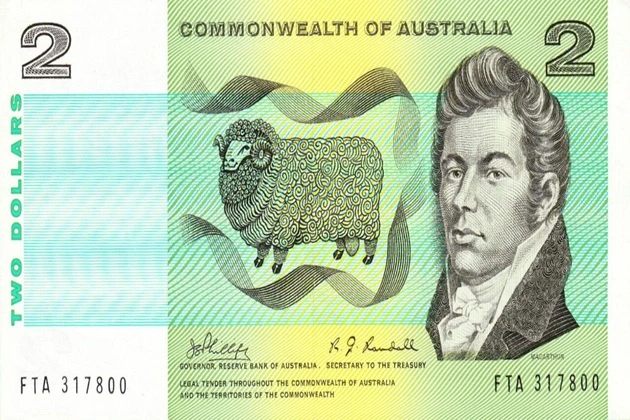
He is called the “father” of Australian sheep farming, as he was one of the first to bring Merino sheep imported from England to the island. John MacArthur arrived in Australia as an officer in the New South Wales Corps in 1790 with his wife Elizabeth and son Edward. They barely survived the difficult journey due to illness, having lost their second child at sea.
The son of a textile merchant from Plymouth, John initially viewed Australia as the shortest path to wealth. Instead, she became a permanent home for him and his family. At the time of his death, 44 years later, MacArthur was one of the richest landowners, owning more than 24,000 acres of land and cattle worth 30,000 pounds.
In 1793, MacArthur received his first piece of land, near present-day Parramatta, and named it Elizabeth Farm in honor of his wife. He built a small English-style farmhouse and went into business. He made deals, used convict labor, and laid the foundations of the country’s wool industry. But he had a quarrelsome personality. Any word spoken against him led to retribution, and for years, he took revenge on his abusers. It didn’t matter who his enemies were, his personal commander or the governor.
Having taken part in the “rum uprising” to overthrow the government, MacArthur was accused of treason, but was able to escape punishment because his wife placed him in a psychiatric clinic and took over the management of affairs herself. He was declared insane, although his name became forever associated with the Australian wool industry, and in 1960, his image even appeared on a two-dollar bill, which was withdrawn from circulation in 1988.