How one woman risked her sanity to expose the dark secrets of mental institutions
Elizabeth was a lively person from an early age. She dreamed of a career as a writer. The girl overcame all the stereotypes of a patriarchal society and achieved everything she had dreamed of. The whole world recognized her under the pseudonym Nellie Bly. Today, books and films are being written about her because she broke the record set by the fictional Phileas Fogg and circumnavigated the globe in 72 days. Moreover, Bly exposed the inhumane system of psychiatric shelters by infiltrating one of them. Next in the review are the darkest secrets of psychiatry, revealed by one of the bravest women of the 19th century, who is called the Lady Sensation.
True story from the TV series “American Horror Story”
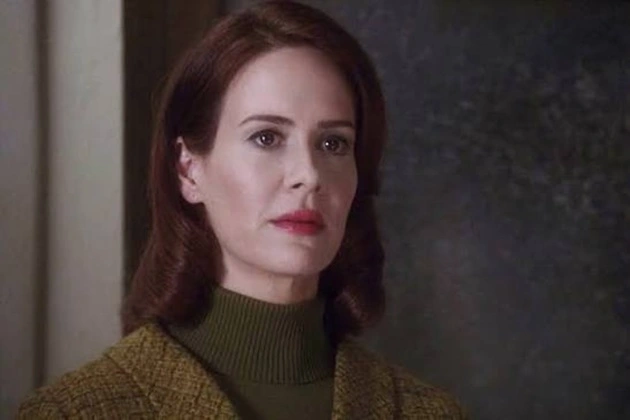
Those who have seen this series will probably remember Lana Winters, the meticulous journalist played by Sarah Paulson. She went to Briarcliff Manor Orphanage to uncover its darkest secrets. Few people know that this story is not at all a figment of the screenwriters’ wild imagination. The plot is based on a completely real person and events. The prototype of the brave shark pen was a pioneering journalist named Nellie Bly.
This lady was not only a pioneer among women who mastered the profession of journalism, but also a pioneer in the field of investigative journalism. Many people remember her for the record-breaking circumnavigation of the world, which she completed in 72 days. Fewer people remember that the girl, having deceived renowned psychiatrists, ended up in an asylum for the insane to talk about what really happens in such institutions.
Childhood and youth of a brave beauty
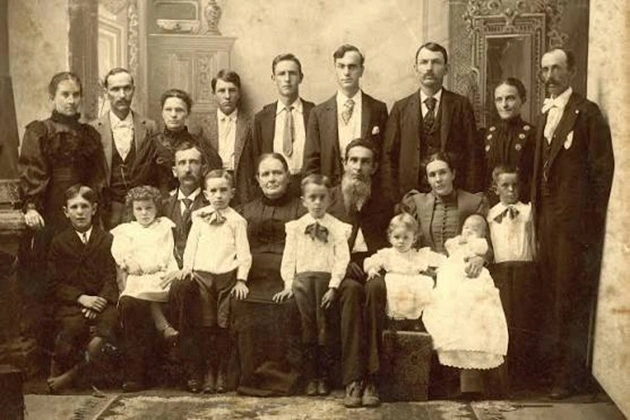
Nellie Bly is a pen name. The real name given to the girl at birth is Elizabeth Jane Cochran. She was born on May 5, 1864, in Cochran’s Mills, Pennsylvania, USA. The girl became the thirteenth child in the family of her father, Michael, and his second wife, Mary Jane Cochran. The family did not live well, his father was a simple worker. When Elizabeth turned 6, he died, and her mother was left alone with so many children in her arms.
As a child, the girl received the funny nickname “Pink” because she was almost always dressed in this color. Growing up, she sought to get rid of the nickname that had become hated, wanting to look more sophisticated. Over time, she abandoned it and even changed her last name to Cochrane. In 1879, Elizabeth enrolled at the Indiana Teacher Training School, now known as Indiana University of Pennsylvania. However, after studying for only one semester, she had to give up everything because her family was unable to pay for her education.
At that time, no one except Elizabeth herself regretted this, because the role of women in a patriarchal society was well known to everyone. In 1885, the Pittsburgh Dispatch newspaper published a column called “What Girls are for.” It stated that the primary tasks of a woman are: having children and running a household. Visit. A F R I N I K . C O M . For the full article. Cochrane read this and was incredibly annoyed by this assessment. She wrote back to the newspaper under the pseudonym “Lonely Orphan Girl.” It was the beginning of her career as a journalist.
Dream fulfillment
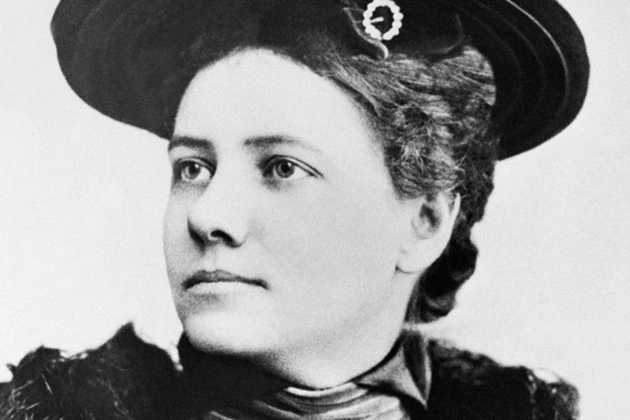
The editor of the Pittsburgh Dispatch, George Madden, was greatly impressed by the writing. He advertised in the newspaper for the author to contact him and offer him a job. So Elizabeth began to write articles for this publication under the specified pseudonym. In her first piece, titled “Girl’s Puzzle,” The Lonely Orphan Girl argued that not all women are ready or willing to get married. Some people want to pursue a career and deserve much better jobs than they are usually offered. Then the girl wrote an article about how a woman is destroyed by divorce.
She advocated for the reform of the divorce law. Under this text, for the first time, a pseudonym appears, under which the whole world eventually learns about her: Nellie Bly. The editor chose this name for her because then all the women who wrote books or published in newspapers very often used pseudonyms. Nellie Bly is a character from a Stephen Foster song. The name stuck.
All of Bly’s first articles were mainly devoted to the lives and problems of working women. His first investigative journalism was breaking into a factory and writing a series of articles about factory workers. The factory owners complained to the editors, and Nelly was ordered to write about “women’s” topics: fashion, beauty, and gardening. The journalist was extremely unhappy with this and went to Mexico to work there as an overseas correspondent. For several months she wrote about Mexicans and their customs. Later, the book was published under the title “Six Months in Mexico.”
After returning from Mexico, Bly was transferred back to writing women’s pages. In 1887, she left the publication and took a job at The New York World newspaper, which was owned by the notorious Joseph Pulitzer. The idea she wanted to implement was too bold, and the implementation of the plan carried a considerable danger to life. Nellie decided to trick her way into a women’s psychiatric shelter on Blackwell Island to investigate reports of abuse coming from there. It was very difficult to get there.
The realization of the plan began with the depiction of the madness of the house.
After some time, she was sent to a boarding house called the Temporary Home for Women. But her goal was the Blackwell Clinic. Nellie stayed up all night after arriving to make herself look exhausted. In the morning, she started harassing the employees of the institution, saying that everyone around her had gone crazy and she was afraid of them. So a few days passed. Bly refused to sleep and really began to look like a madwoman. The headmistress called the police, who took her to a psychiatrist for an examination. The doctor declared her insane, and the judge ordered her to be placed in a women’s psychiatric hospital.
The hell of the earth
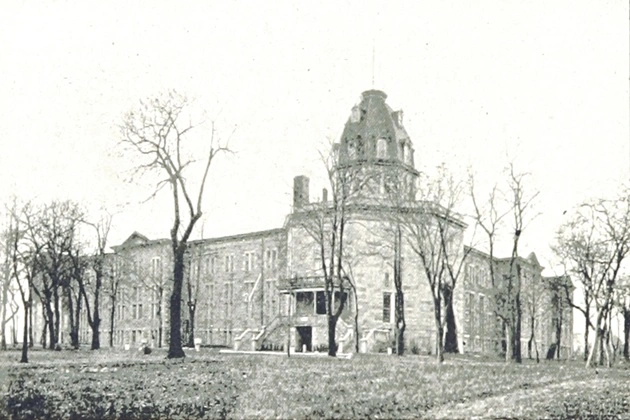
The plan was successful. Nellie Bly was able to experience all the horrors of “treatment” in psychiatric hospitals. Patients here were forced to take baths in ice water. The staff washed the patients as roughly as possible. Moreover, cleanliness, apparently, did not matter at all, because the water in the bathtub was rarely changed, and the towel was never changed at all.
In her book, Bly later described how the “treatment” takes place. She, an absolutely healthy woman, was gagged with a cloth and forced to sit with a straight back on a hard bench from 6 a.m. to 8 p.m. It was forbidden to move or speak. The food was terrible slop. The journalist talks about how long it will take to turn a healthy person into a completely crazy person with such treatment. Two months of staying in this institution would make anyone a wreck, both mentally and physically.
Nellie spent 10 days in the shelter. After they expired, the publication where she worked demanded her release. The girl was released with a feeling as if she had been born again. She said that she had never enjoyed so much absolutely simple things, such as fresh air, sky, and sun… Her only regret was that she couldn’t have brought at least one of the poor women who were left in that hell with her. Bly was sure that they were as mentally healthy as she was.
The incident had a wide resonance in society. Nellie Bly’s book “Ten Days in a Madhouse” led to the reform of the psychiatric hospital system. Her experience also paved the way for women journalists and investigative journalism, which is often referred to as “stunt journalism.”
Lady Sensation
Nellie Bly only dreamed of peace. In 1888, she came up with another brilliant idea. She decided to try to embody in real life the feat of Phileas Fogg from Jules Verne’s 1872 novel “Around the World in Eighty Days”. On November 14, 1889, the journalist left Hoboken, New Jersey. She completed a trip around the world in exactly 72 days, surpassing the achievements of the fictional hero. This brought Bly even more fame. She continued to work at The New York World while writing books, of which a total of 11 were published from her pen.
Plays, films, and books were written about the life of Nellie Bly. She has become an integral part of modern pop culture. To this day, the courage, intelligence, and indomitable will of this woman continue to serve as a source of inspiration for artists. It is difficult to overestimate Bly’s achievements in the struggle for social and gender equality. Even today, men often receive much higher salaries, and higher positions are available to them. So the topic remains relevant after more than a century.