
How to build the habit of calmness in stressful situations

Stress, deadlines, and the expectations of others are all an integral part of everyday life. That’s why it’s so important to develop the ability to stay calm in any situation. Only this skill will allow you to make informed decisions and effectively cope with difficulties. We’ve put together a few actions that will help you better control your reactions, even under severe stress.
9 ways to build the habit of calmness in stressful situations
1. Make a step-by-step plan
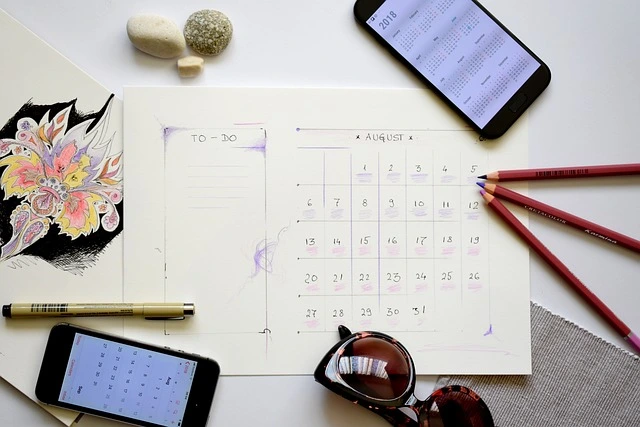
Due to stress and anxiety, your first reaction to difficulties may be chaotic actions or, conversely, their complete absence. In either case, you risk making the situation worse. It’s important to give yourself time to make a step-by-step plan. Analyze the problem, identify the causes of its occurrence, and think about what solutions are available to you. It is best to write down all your next steps in a logical sequence so that the plan is in front of your eyes. Knowing what you need to do and when will help you stop wasting time worrying and regain a sense of control over the situation.
2. Start small
If you have an idea of what needs to be done to solve the problem, do not delay active actions. Under the pressure of circumstances, it can be too scary and difficult to immediately start implementing a plan, but it must be done. In order not to increase your stress level, break down your plan into several small tasks, each of which will bring you closer to the desired result. Start with the smallest and simplest of them. The most difficult thing is to take the first step. Already in the process of work, you can feel a surge of energy and confidence that you are acting correctly. This will give you motivation for future achievements.
3. Control your thoughts

Negative thoughts, especially in a stressful situation, can make you exaggerate the problem. As a result, you will doubt your actions for a long time and start making ineffective decisions, so you need to learn how to control your thoughts. Visit . A F R I N I K . C O M . For the full article. There is no need to suppress or deny your fears and doubts — it’s about analyzing your feelings and not getting stuck in negativity.
Start paying attention to what thoughts arise in your head at times when circumstances are pressing on you. If there are too many of them, write them down on paper or in notes on your phone. This will help you understand that most of your thoughts are not based on facts, but on anxiety and fears. When you learn not to get emotionally involved in a situation, you’ll feel more confident.
4. Keep track of your progress
It is important not only to act, solve problems and achieve goals, but also to track your progress. Mark everything, even the smallest steps that you take. This will allow you to see a gradual improvement in the situation and, as a result, make sure that you have chosen the right path. In addition, the habit of tracking your progress helps you learn from your mistakes and improve your skills. By analyzing your actions, you can find out which strategies work best in your case and use them in the future.
5. Don’t try to do everything alone

The desire to do everything on your own (to refuse help, to rely only on your own strength, not to trust anyone with your tasks) leads to an increase in anxiety and stress levels. In addition, there are often obstacles in your life that cannot be overcome without outside support. Learn to delegate tasks or ask for help if your knowledge, skills, or strength aren’t enough to solve a problem.
Delegation will allow you not only to relieve yourself of some of the work but also to use the strengths of other people, thereby increasing overall efficiency. Strengthen your relationships with your family, friends, colleagues, and partners, and be ready to provide them with all possible support so that someday in the future you can count on their help.
6. Prioritize the tasks
In a situation where multiple tasks are being thrown at you, it’s important not to grab onto everything at once. It may seem that doing several things at once will save you a lot of time and effort, but this is just a common misconception. Multitasking reduces your productivity and increases your already high stress levels. If you want to deal with the blockage quickly, you first need to prioritize your tasks. This way, you can focus on the most important and urgent things, putting aside all the minor matters for later.
7. Take a break

When everything around you is pressing down on you, and it seems that every second counts, the idea of taking a short break is regarded by you as counterproductive. However, it is precisely at these moments that you need a break. Any pause, even if it’s 5-10 minutes, will allow you to distance yourself from the problem, look at it from the other side, and return to work with renewed vigor. Remember that overwork is the cause of inattention, lack of fresh ideas, and frequent mistakes.
If you regularly set aside at least a little time for rest, it will become much easier to maintain concentration. But it is important to understand that this practice has a cumulative effect. The more often you give yourself the opportunity to relax and switch to something else, the more resistant your nervous system becomes to external stimuli.
8. Don’t rush yourself; if the result is more important than speed
Under the pressure of external circumstances, you can easily succumb to panic and stress, which will lead to demanding impossible results from yourself in the shortest possible time. But this can lead to even more problems, because acting in a hurry, you can make mistakes and get a worse result. If you need to complete a task efficiently, review your priorities. It is better to spend a little more time analyzing the situation and the work process than correcting your shortcomings. In addition, if you allow yourself to act in your own rhythm, carefully studying each stage, you will significantly reduce stress levels.
9. Take care of yourself

Taking care of yourself is a prerequisite for maintaining mental and physical health. Especially in those periods when you have to act under severe stress. Lack of sleep, poor nutrition, lack of physical activity, and other manifestations of neglect of your needs quickly undermine your emotional stability. You become more susceptible to anxiety and negative emotions. No matter how much responsibility you put on your shoulders, it’s important to keep taking care of yourself.
Stick to the basic rules: even a short walk in the fresh air or exercising in the morning can significantly improve your well-being. Find time for activities that please you and promote relaxation, such as hobbies, entertainment, and socializing with loved ones. Remember that in any situation, you should put yourself, your health, and comfort first.