The rich cry too: 3 Princesses whose royal marriages became tragedies
Monarchs, and even aristocratic people, especially women, were always limited in choosing the person with whom they would spend their whole lives. The bride was rarely involved in choosing the groom. Traditions, political interests, and intrigues were much more important, and the opinion of the family was always decisive. Aristocratic parents married their daughters off profitably, not asking them, but putting them in front of the fact. And often such actions doomed the princesses to an unhappy life.
Sophia Dorothea of Brunswick-Celle (1666-1726)
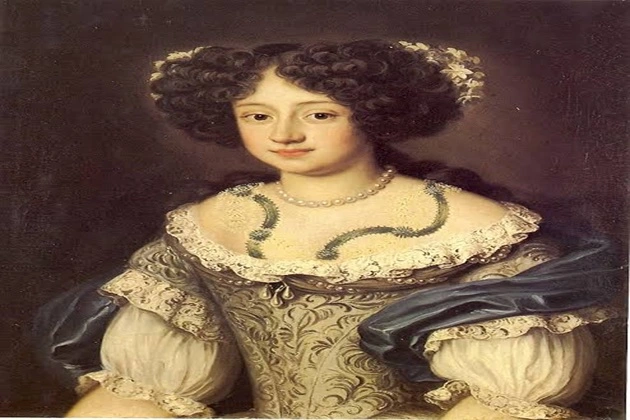
Princess of Alden, whose full name is Sophia Dorothea of Brunswick-Lüneburg-Celle, was born into the aristocratic high-ranking family of Eleanor de Olbreuse and Prince George William of Brunswick-Lüneburg-Celle. Her parents loved each other, and the girl grew up in an atmosphere of trust and love. It was rare at the time, and Sofia believed in real feelings. But her own marriage was far from the one she had imagined.
When Sofia was only 12, her father started looking for a suitable husband for his daughter. Prince Georg Ludwig turned out to be the most successful party among all the candidates. So, the princess’s cousin became her fiancé. Four years later, the royal wedding of the very young Princess of Alden took place. At that time, the girl did not even suspect that she was not going to live a life full of love and care. There was just no love between the newly married couple. Georg Ludwig turned out to be a terrible man; he made his young wife suffer not only mentally, but also physically.
Georg Ludwig never hid other women; moreover, he brought them to the Hanover Palace, where his wife lived. If Princess Sofia dared to express her displeasure, her husband beat her. For a girl who dreamed of great love, this situation turned into depression. Two children were born in this marriage, but motherhood did not save her from oppressive loneliness. A little later, in 1688, the princess met with Count Königsmark, whom she had known well since childhood. They fell in love with each other and were able to maintain a secret relationship. Even Georg was unaware of his wife’s secret affair. But the fairy tale didn’t last long.
In 1694, her husband found out about the betrayal of the Princess of Alden, and his wife’s correspondence with her lover fell into his hands. Enraged, Georg Ludwig ordered to get rid of Konigsmark immediately, and to break off the union with his wife. But this was not enough for the tyrant: he gave the order to send the princess into exile. Sofia was taken to Alden Castle, where she spent the rest of her days. Visit. A F R I N I K . C O M . For the full article. She was forbidden to travel outside the castle and see the children. She repeatedly sent pleading letters to her ex-husband, but none of them were answered.
The only consolation for Princess Sofia was the food. She began to gain extra pounds quickly, which eventually killed her: the cause of death was a blockage of the gallbladder. At the time of her death, George I was already the English king, and he forbade declaring mourning. However, without giving any instructions about her funeral. This was the reason that the body of the former wife of the King of Great Britain was not buried for some time. It was not until 1727 that the body of Sophia Dorothea of Brunswick-Celle was buried in Celle near St. Mary’s Church.
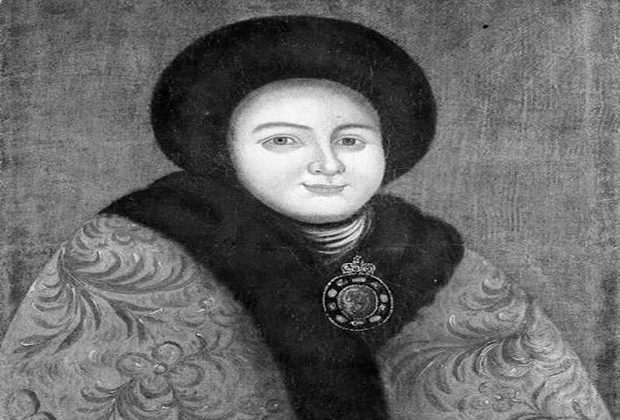
Eudoxia Lopukhin (1669-1731)
Praskovya Illarionovna Lopukhina became Tsarina Evdoxia Fedorovna after her wedding to Tsar Peter I. The young tsar’s mother actively participated in the creation of this union, who first looked for a suitable match for him that would strengthen his power, and then tried to change the name of his daughter-in-law. The wedding took place in the church of the Transfiguration Palace in 1689, and from that day on, Peter, who was only 16, became an adult ruler who no longer needed the care of Tsarevna Sophia’s sister.
Peter and Evdoxia’s marriage was a happy one. At first. Historians came to this conclusion after analyzing the available correspondence, where the husband and wife turned to each other with tenderness and awe and showed their feelings. Anna Feodorovna gave birth to her husband’s three sons, Alexander, Pavel and Alexei, but two of them died as infants. Over time, the couple’s relationship got worse. The tsar increasingly went to the left, but while his mother was alive, he did not dare to openly change. By the way, Natalia Kirillovna was unhappy with her daughter-in-law; she was too independent and stubborn.
As soon as his mother died, Tsar Peter I left for Arkhangelsk and stopped communicating with his wife, who in turn sided with his opponents. In 1697, she went even further and entered into a conspiracy aimed at a coup d’etat. But Peter I became aware of everything, and he gave the order to have his wife tonsured as a nun.
The princess, by her husband’s will, decided not to complain. She turned to the patriarch for help, reminding him that her son was growing up, but Peter didn’t care about his wife’s pleas. Despite the resistance, a year later Evdokia Fyodorovna was taken to the Suzdal-Pokrovsky Monastery and tonsured as a nun under the name Elena. But it wasn’t for long.
Soon she left the convent and returned to her usual life. She even fell in love with Major Stepan Glebov, and with him they began to make new plans for a coup. But the tsar again became aware of the impending coup, so he sent his man to Suzdal in search of not only Stepan, but also Evdokia Feodorovna herself. The conspirators were found and arrested, and then taken to Moscow. They began to interrogate them, and unable to withstand the brutal torture, Glebov confessed that he had participated in the conspiracy. It was decided to impale Stepan Glebov, and there is evidence that Evdokia Fyodorovna was forced to watch her beloved man die in agony.
A little later, everyone who supported Peter I’s ex-wife was tortured to death or executed. Evdokia Feodorovna was sent into exile and spent the next few years under strict supervision. When Peter the Great died in 1725, his ex-wife was secretly interrogated before Shlisselburg. Peter I’s second wife, Catherine I, was interested in Lopukhina’s imprisonment, for whom Evdokia was much more dangerous than her late husband.
Evdokia Lopukhina was finally able to return to Moscow again only after her grandson Peter II became tsar. Under his rule, Evdokia was cleared of all charges; she received maintenance and was taken out into the courtyard. After the death of Peter II, the question of the next tsar was raised, and there is evidence that Lopukhina was offered this role by the Privy Council. But she refused in favor of Anna Ioannovna. Evdokia Feodorovna lived in peace for the last years of her life, and died in 1731. They were buried in one of the churches of the Novodevichy Monastery. her with all the honors.
Anna Feodorovna (1781-1860)
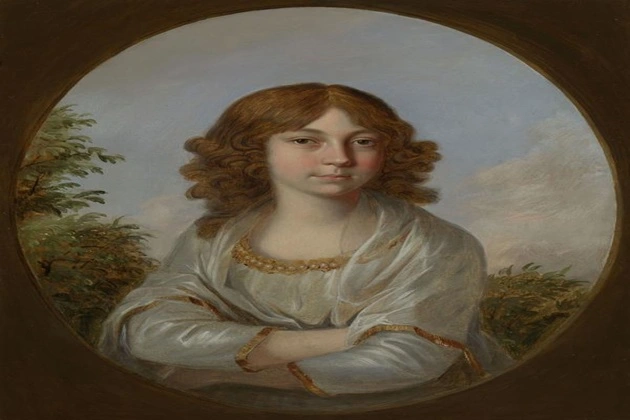
Juliana Henrietta Ulrika became the bride of Tsarevich Konstantin Pavlovich. She was chosen as a bride by Andrei Budberg, assistant to Empress Catherine II, who happened to come to Coburg. At the invitation of Catherine II, Juliana arrived in St. Petersburg in 1795 and became the “official” bride of the Empress’ youngest grandson. The girl was only 15 when she was married to the youngest grandson of the Empress. She converted to Orthodoxy and became known as Princess Anna Feodorovna.
It is unlikely that Julianna even suspected before marriage what her life would be like after marriage. Konstantin Pavlovich was distinguished by his explosive nature and poisoned the lives of everyone around him. His affection could turn into rage in the blink of an eye, and this greatly frightened the young princess. Konstantin Pavlovich constantly cheated on his wife, but this was by no means the worst. The prince loved one game: he put his wife in one of the vases, and then he started shooting with a pistol and left Anna Feodorovna’s life to chance. In addition, the everyday life of Catherine II’s daughter-in-law often ended in physical pain – her husband often beat her.
At some point, Anna Feodorovna got the nickname “evening star” in the palace due to her beauty. But her husband did not like such public interest at all, and he began to lock his already unhappy wife in the walls of the palace, forbidding her to communicate with people and go out anywhere. He was also jealous of everything and everyone, including his brother Alexander. Being the wife of a tsarevich became unbearable, and Anna Feodorovna, citing poor health, returned to her native places. But she was unlucky: her relatives did not appreciate her strong-willed desire; they were worried about financial losses and the status of her daughter. She had no choice but to return to Russia.
Anna Feodorovna was able to return home only in 1801. Upon arrival, she immediately began negotiating a divorce. After several years of discussions, the marriage was finally officially dissolved by the Holy Synod. After the divorce, Anna Fedorovna gave birth to two children from different fathers, but never remarried. Her life was taken away by a stroke in 1860.