How your beliefs can help you stay strong when life feels unpredictable

Uncertainty is one of those conditions that a person endures hard, especially in the current realities. It’s much easier to withstand heavy loads, work seven days a week, and even put up with temporary difficulties if you understand why you’re doing it, when it’s going to end, and what it’s going to lead to. But as soon as the feeling of predictability disappears, you start to feel very anxious and live in constant stress. By the way, people react differently to uncertainty. Someone quickly adapts to circumstances, looks for new opportunities, and rebuilds their plan.
And someone starts endlessly scrolling through negative scenarios in their head, dragging out decision-making, desperately trying to get at least some guarantees before acting. This difference is based primarily not on the strength of the spirit or personal qualities, but on the beliefs in which a person believes. They work as a filter through which we perceive the surrounding reality. In this article, we have collected several examples of beliefs that help maintain resilience even in moments of uncertainty.
7 ways your beliefs can help you stay strong when life feels unpredictable
1. Uncertainty does not always mean danger
The lack of information can often be perceived by you as a signal that something bad may happen. Try to remember how you feel when your boss invites you into the office or your girlfriend writes that you need to talk. The first thing that comes to mind is that you probably have problems that you just don’t know about yet. However, it’s worth reminding yourself: uncertainty is neutral; it doesn’t mean anything good or bad. As long as you don’t have at least some facts in your hands that would allow you to conclude what is happening, there is no reason to worry. The best thing you can do in this case is to conserve your strength, take care of your nerves, and try to think rationally.
2. Mistakes help to correct the direction
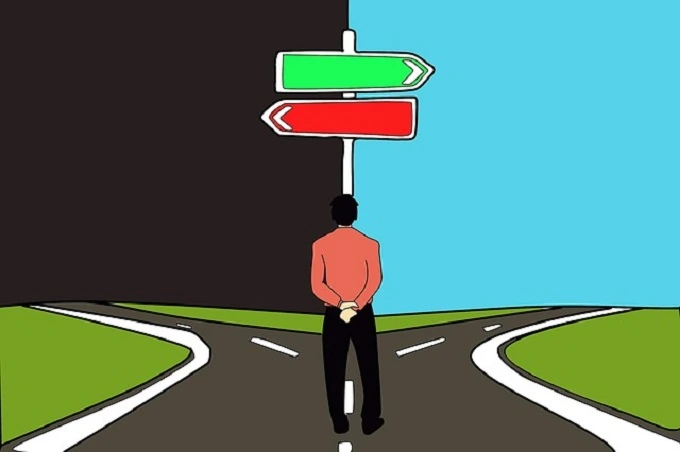
Like many people, you may be afraid to make any decision precisely because a mistake seems to you to be a final and irrevocable defeat. However, this is not the case: you should not be convinced that there is only one right path for you and that just one wrong step can ruin your whole future life. The vast majority of the decisions you have to make involve variability. You outline an approximate plan of action for yourself, gradually move forward, making mistakes, receive feedback, and adjust your strategy, which eventually leads you to a better choice. That is, wrong decisions are not a failure or a dead end, but just a source of information.
3. Not all answers should be found at once
As soon as you find yourself in limbo, you have a strong desire to find answers to your questions. It seems that it is enough to collect information and analyze it. But here’s the catch: sometimes the data turns out to be insufficient, or the situation continues to change in real time. In this case, Visit. A F R I N I K.C O M. For the full article. Your attempts to achieve clarity at any cost do not lead to anything good; you just continue to waste your resources on worries, not getting closer to solving the problem. It is much more useful to try to accept the fact that some issues become clearer only over time, and you cannot speed up this process.
4. Not everything can be controlled, and this is normal

Anxiety can often be caused by your desire to control everything that happens to you and around you. This includes events and phenomena that objectively do not depend on you. From time to time, you try to anticipate other people’s behavior, figure out what difficulties you may face ahead, prevent them from occurring, and so on. But the stronger your desire to keep everything under control, the more painful it is for you to face the reality of things, because life is full of surprises. You have to realize that there are many factors over which you have no control, and this is absolutely normal. So try to manage not the circumstances, but your attitude towards them, your actions, thoughts and emotions.
5. Any difficult period ends once
At times when it’s really hard for you, and it’s not clear when and how this situation will end, it may seem like it’s always going to be bad. It is critically important to fight these thoughts, return yourself to a calm state, and focus on the fact that everything ends sooner or later. Including uncertainty, which becomes the main cause of your anxiety. Think about what you’ve already been through: painful breakups, unfair treatment, problems at work, financial constraints, and so on. Difficult periods have already happened; you have successfully recovered and continued to move forward. So that’s how it’s going to be this time.
6. Even small steps forward are better than endless waiting

During periods of uncertainty, it is easy to become apathetic, give in to fear, and simply stop doing anything. It may seem to you that there is no point in acting until the situation is completely clarified. This is another misconception, because in some cases it is your actions that will bring you closer to understanding. Therefore, it is much more effective to start taking small steps forward without making global plans for the future. Even if your actions here and now do not fix the problem, they will at least give you the feeling that you are able to influence your life, bring you closer to discoveries, and strengthen your confidence that all is not lost yet.
7. Uncertainty opens up new possibilities for you
When your initial plans fall apart, you can focus your attention on exactly what you are losing. At the same time, you don’t notice the other side of this situation: during periods of uncertainty, new options often appear that didn’t exist before. For example, while you were working in a job you didn’t like, you didn’t think about what you really liked, where your potential could be more fully revealed. After being forced to leave, you can change your field of activity, open your own business, turn a hobby into a way to earn money, and so on. This does not mean that you need to romanticize the difficulties you face. But you shouldn’t see them as exclusively negative either.