What secret and warning does the ancient Crown of St. Wenceslaus hide?
There are a huge number of holy relics in the world that carry symbolic messages, but the main crown of the Czech kings is in a special place. According to legend, the crown belongs to the patron saint of the Czech Republic, Saint Wenceslaus, named after him, and as long as it remains in its place, the Czech Republic will be a prosperous country. But if a person to whom it does not rightfully belong encroaches on it, or even tries to try it on, he will inevitably die.
Why was the crown of St. Wenceslaus made in the 14th century?
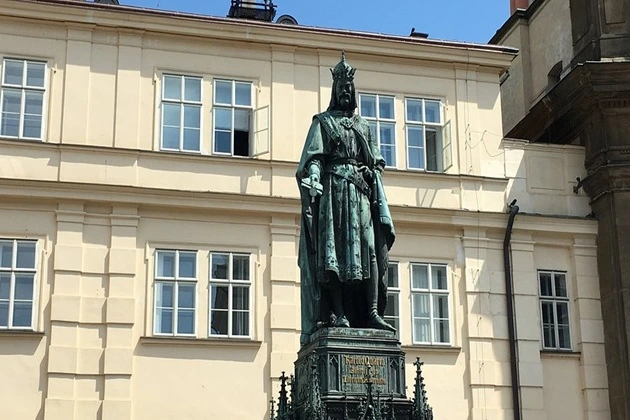
The crown of St. Wenceslaus was made in 1347, specifically for the coronation of the eleventh king of Bohemia (as the Czech Republic was called in the 14th century) and the Holy Roman Emperor Charles IV of Luxembourg, who ascended the Czech throne.
Charles IV’s personality combined power, ambition, education, excellent diplomatic skills of the Luxembourg dynasty, instilled in him by his father, and love for the Czech people, instilled by his mother. His youth was spent in France and Italy, and after his father’s death, he returned to Bohemia, chose Prague as the capital of his empire, and began the large-scale development of this city and country. Knowing the Czech language and culture of the country well, he did a lot for its development.
Charles, who inherited the title of King of Bohemia, commissioned the crown during his father’s lifetime and dedicated it to the country’s main holy defender, Saint Wenceslaus. Visit. A F R I N I K . C O M. For the full article. He became the first person to be crowned with this crown; however, he considered that this relic should not be his personal property, but should belong to Saint Wenceslaus and symbolically pass on to future Czech kings during their reign.
In the same year that the crown was made, the Pope, at the request of Charles IV, issued a bull protecting the crown and prohibiting its alienation, sale, or pledge. According to the decision of Charles IV, the crown was to be provided to the kings only on the day of the coronation, and then returned to its place of permanent storage.
What does the crown of St. Wenceslaus look like?
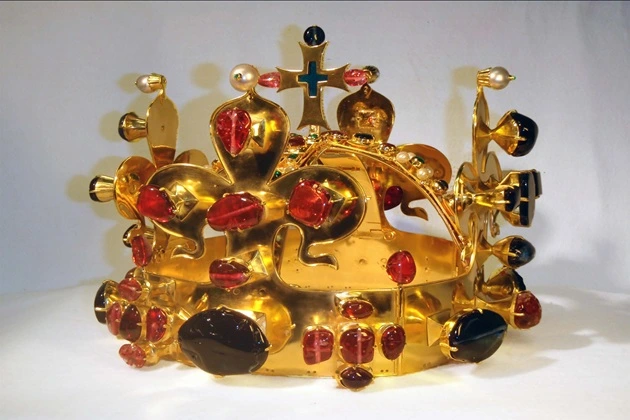
The crown of St. Wenceslaus is made of pure gold of the highest quality; it has a diameter of about twenty centimeters and a width of about five centimeters, as well as a somewhat unusual shape due to the inlay of precious stones. The crown hoop is divided into four parts, each of which is decorated with an intricate composition in the form of a heraldic lily rising from the rim. The height of each part is 12 cm. Attached to them are four arches in the form of jeweled stripes, ending at the top with a hollow cross depicting a crucifixion, presumably filled with a relic, a thorn from a Crown of Thorns, presented to Queen Elizabeth in 1326 by the French king.
The weight of the crown is about two and a half kilograms. It uses elements with a much longer history than the crown itself. For example, on top of the crown is a rare Byzantine sapphire cameo made in the 7th century AD. The crown is decorated with a large number of precious stones, some of which are among the largest in the world. In the front part, there is a rough sapphire weighing more than forty carats, colorful spinels, emeralds, pearls, and sapphires seem to hover around it.
The crown storage area is the most protected place in the Czech Republic
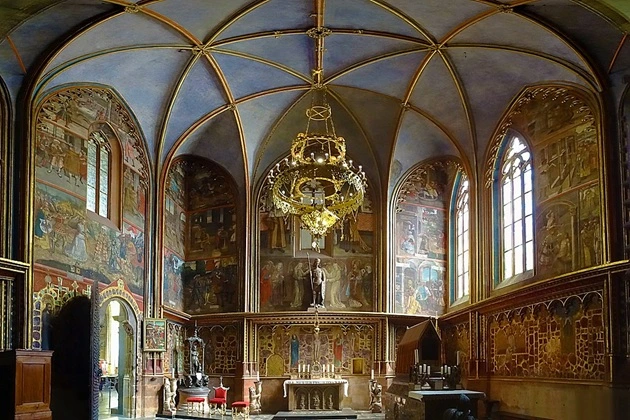
According to the original decision of Charles IV, the royal jewels were not supposed to leave Prague at all, but at the beginning of the 15th century, his son Vaclav IV moved them to Karlstein Castle. From there, the jewels were regularly transported to Prague for the coronations of the Czech kings and sent back after the coronation ceremony. In the following centuries, Bohemian royal jewels were kept in various places. The reason has always been concern for their safety.
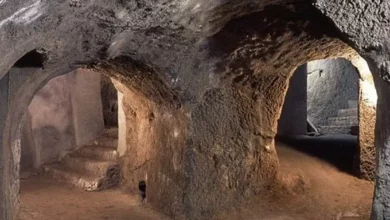
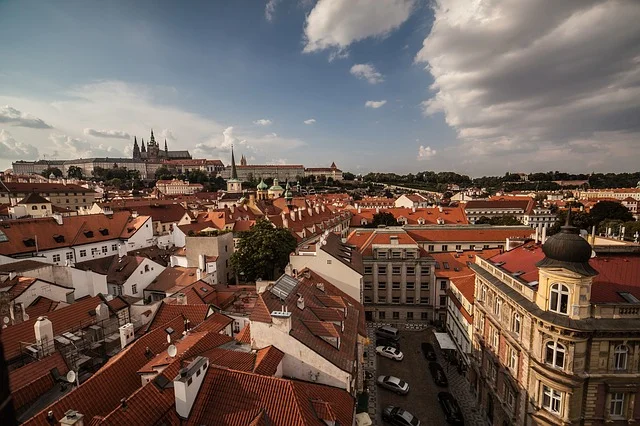
Currently, the crown of St. Wenceslaus, as the main regalia of the Czech kings and one of the oldest surviving crowns in Europe, is kept in a special Royal Chamber, a fortified vault located above the south vestibule of St. Wenceslaus Chapel, which is located inside St. Vitus Cathedral in Prague Castle. This chamber has two reinforced doors, locked with seven locks, the keys of which are held by officials, including the President, the Prime Minister, the Archbishop, and the Mayor of Prague. In addition, it is equipped with modern security equipment and is considered the most protected place in the Czech Republic.
The crown of St. Wenceslaus is not publicly displayed and leaves this room only in exceptional cases of national importance. Instead of the original crown, the permanent exhibition “The History of Prague Castle” features a replica created by the best Czech jewelers.
Why has the crown gained a bad name?
Since the creation of the crown of St. Wenceslaus, there have been many rumors and legends surrounding it. One of them says that the crown is under a magical curse, and anyone who puts it on without having the right to the throne will inevitably die violently within a year.
Over the past century, which has gone through several wars, a large number of medieval jewels from Central Europe have disappeared. The most valuable antiquities were stolen and melted down by the conquerors, turned out to be hidden in private collections, or simply disappeared unnoticed from history. The situation is quite different with the ancient crown of St. Wenceslaus.
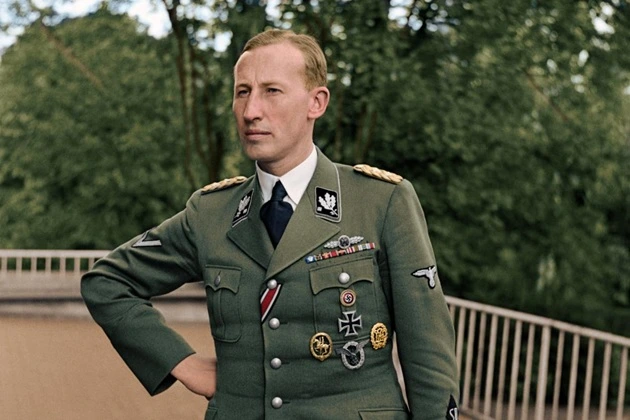
In November 1941, Reinhard Heydrich, one of the leaders of the Nazi Party, known as the “Executioner”, entered the secret room of St. Vitus Cathedral in Prague, where Czech royal jewels were kept. Perhaps Heydrich did not know about the curse of the crown, or maybe he was so blinded by the successes of the Nazi army and the splendor of the legendary crown that he could not resist the pleasure of trying it on.
Six months later, an attempt was made on his life. Injured, Heydrich was taken to the hospital. The wound turned out to be not so dangerous, and the doctors promised a quick recovery. However, a week after the attempt, the patient became infected, fell into a coma, and died soon after, and a year later, his son, Klaus, died in a traffic accident.
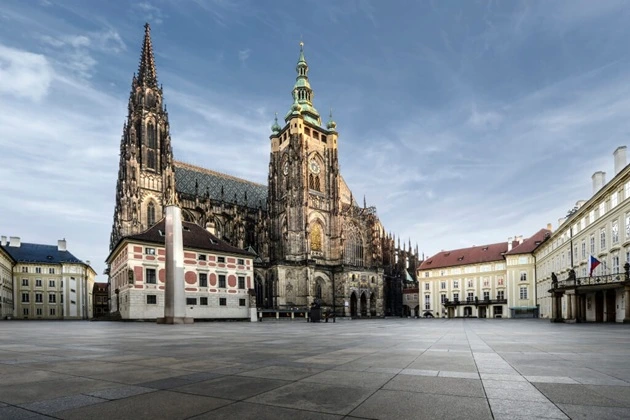
Another legend says that as long as the crown of St. Wenceslaus is safe and no outsiders claim it, the Czech Republic will prosper. Violation of these conditions, when the crown was forced to leave the treasury, more than once, led to fatal events in the country. Was it an accident? The Czechs don’t think so. They are confident that even today, Prague Castle in the Czech Republic, which is one of the most impressive residences of heads of state, is protected by the crown of St. Wenceslaus.