How one famous photo captured the end of an era
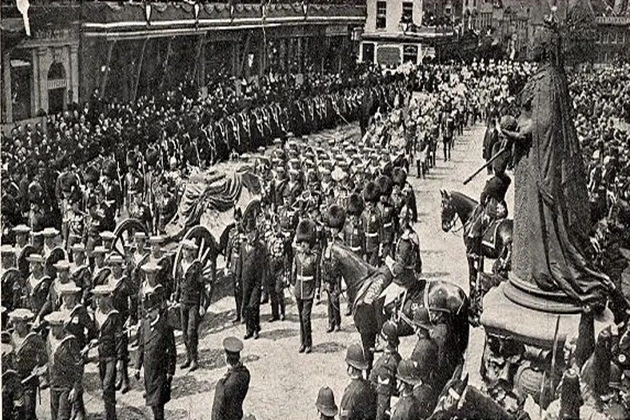
In May 1910, nine European monarchs gathered in London for the funeral of King Edward VII. All of them were related to one degree or another. After the funeral, the only photo was taken of them together. In four years, the First World War will begin, and many of them will become enemies. Of the nine kings depicted in the photo, four will be overthrown, and one will be killed.
Members of the royal family at the funeral of King Edward in Windsor
Edward VII ascended to the throne after the death of Queen Victoria in 1901. Despite his scandalous reputation, earned in his youth due to his addiction to gambling and numerous love affairs, he turned out to be a worthy king. His reign came at a time of significant social change and growing international tension, but Edward VII proved himself to be an excellent diplomat, was devoted to the crown, and tried to strengthen international relations, for which he became popular as a monarch and received the nickname “peacemaker.” But his reign lasted only nine years. On May 6, 1910, Edward VII died after a series of heart attacks.
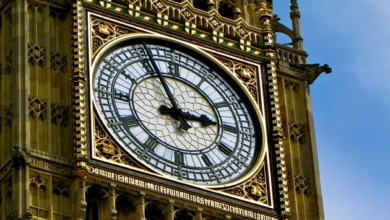
Saying goodbye to him became the biggest event in England and lasted for two weeks. Initially, it was held privately in the Throne Room of Buckingham Palace. On May 17, the coffin with the body of the deceased was solemnly transferred to Westminster Hall for a public farewell attended by half a million people. On May 20, a funeral procession marched from Buckingham Palace to Westminster Hall, where the Archbishop of Canterbury held a small funeral ceremony while Big Ben rang 68 times – once for each year of the king’s life.
Then the coffin with the deceased was transported to Windsor Castle, where the funeral took place in St. George’s Chapel. Edward VII was buried next to his father, Prince Albert. Visit. A F R I N I K. C O M . For the full article. The funeral ceremony was attended by representatives of 70 countries, many dignitaries, royal relatives from all over the world, and nine European kings.
What happened after the death of Edward VII
On one of these days of mourning, a unique photograph was taken at Windsor Castle, which depicts nine reigning monarchs. The historical significance of this photograph lies in the fact that it was a “family” photograph of the kings of nine states, who are in varying degrees of kinship, taken together at one point in time, their only meeting, which will never happen again.
The death of Edward VII was a “dark omen” for the British Empire. His son and successor, King George V, was less popular with the British. Immediately after he acceded to the throne, he found himself embroiled in a major constitutional crisis after Liberal leader Herbert Asquith introduced a radical measure to limit the powers of the House of Lords.
George V ruled during a turbulent period marked by World War I, political instability, and the global financial crisis. For five years, Great Britain and Belgium were at war with Germany and Bulgaria, so the monarchs depicted in this photo were “on different sides of the barricades.”
After the end of the First World War in the winter of 1918-1919, hard times came in Europe. Four major empires collapsed – the German, Austro-Hungarian, Russian, and Ottoman empires- and borders were redrawn, new states were formed, which led to a series of civil wars and an economic crisis. For many countries, the following years proved to be more deadly than the four years of the First World War. The fates of the nine monarchs depicted in the photograph also turned out differently.
How did the lives of the nine monarchs depicted in the photo turn out?
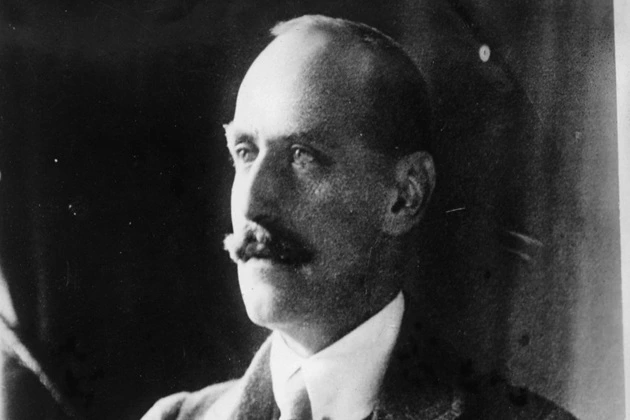
King Haakon VII of Norway stands first from the left in the top row. His fate was most successful; he was popular with the people and ruled until his death in 1957. It was only during World War II, after Hitler’s invasion of Norway, that Haakon VII was in exile in England for five years, refusing to abdicate, but returned to the country after defeating Nazi Germany. The second from the left in the top row of the photo shows the Bulgarian King Ferdinand. In 1912, he joined the Balkan Alliance against Turkey, and three years later, took part in the invasion of Serbia. After his defeat in 1918, Ferdinand abdicated and was succeeded by his son, Boris III.
King Manuel II of Portugal was the youngest king depicted in this photo, at the age of 21. He is the third in this photo in the top row. In the same year, a revolution took place in Portugal, during which Manuel was overthrown, after which he moved to live in England, but his life turned out to be relatively short; he died at the age of 42. To the right of Manuel in the photo is the Emperor of Germany and King William II of Prussia, who was only a nominal figure during the First World War, and after the end of the war and the outbreak of revolution in Germany, he was forced to abdicate both thrones. He fled to the Netherlands and lived there on his estate for the rest of his life.
King George I of Greece, fifth in the top row, took part in the infamous Balkan Wars and was assassinated in Thessaloniki in 1913. He was succeeded by his son Constantine I.
The last one in the top row in the photo is King Albert I of Belgium. After the outbreak of World War I, he refused to comply with Hitler’s demands for unhindered passage through Belgium and led his resistance army, but eventually retreated to Flanders but returned to Brussels after the end of the war. Albert died in an accident while climbing in the Ardennes in 1934, and was succeeded by his son Leopold III.
King Alfonso XIII of Spain sits first from the left in the bottom row. During the First World War, he was able to avoid his country’s entry into conflict by maintaining strict neutrality and deploying a broad humanitarian mission, for which he received recognition in Europe. As a result of the revolution that began in 1931, he was expelled from Spain and never returned. He died in Rome in 1941.
King George V of Great Britain, who sits in the center, abandoned his German roots after the outbreak of World War I, renamed the dynasty the Windsors, and remained a symbol of unity for the country throughout the war, thereby strengthening his authority. He died in 1936, his eldest son Edward VIII inherited the throne, but abdicated a few months later due to his marriage to a divorced American woman, after which George VI inherited the throne, and Princess Elizabeth became his heir.
To the right of George V sits King Frederick VIII of Denmark, who became king shortly before this photo was taken, and after that, he lived only two years. The Danes remembered him as a devoted king of his country, even after the end of his short reign; people admired his contribution to the development of Denmark. During his trip to France, the king stopped in Hamburg, went for a walk in the evening park, sat on a bench, and died of cardiac arrest. He was succeeded by his eldest son, Christian X, the same Christian, thanks to whom