Arthur Priest: The unsinkable stoker
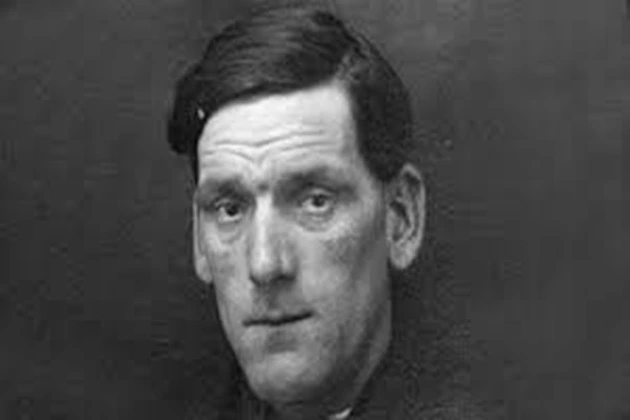
The fate of this man, nicknamed the “unsinkable stoker,” is truly unique. At the beginning of the twentieth century, he worked in the so-called “black brigade” of the shipping company, and every day, he manually turned over hundreds of tons of coal to fill the insatiable boilers of steamships of that time. In just ten years of service, he survived two collisions and four shipwrecks, including the legendary Titanic. But after the last disaster, which Arthur John Priest survived, he had to leave his job because no one else wanted to go to sea with him, believing that he attracts disasters.
Who was the man who got the nickname “the unsinkable stoker”?
Arthur John Priest was born in 1877 in one of the poorest neighborhoods of the port city of Southampton in England, into a large family of ordinary workers. The family moved from place to place for a long time before finally taking root in a busy port city where many cargo ships crossed paths, and it was easier to find work. Being one of twelve children in the family, Arthur had been in need since childhood and lived with a constant feeling of hunger, so as soon as he grew up, he also began to look for an opportunity to earn a living.
At first, he carried out small tasks for workers at the port, for which they paid pennies. He got a job as a loader, and when he turned 24, he got a permanent job in the engine room of the steamer Asturias, as a stoker on the team responsible for loading tons of coal into its giant boilers and keeping them hot.
Ship’s stokers were called the “black gang” because, working at high temperatures without a shirt, they were always covered with coal dust from shoveling coal. It was grueling work that didn’t pay much, but in the early 1900s, any poor Englishman who had any work was considered lucky.
The first encounter with disaster

The first maritime disaster that Arthur had to face occurred in 1908, when the Asturias suffered a hole in its side due to a collision with another vessel. No one died that time, but the ship almost sank in the middle of the Atlantic and only miraculously managed to return to port. For Arthur, this was the beginning of his incredible string of successes during major maritime disasters.
After the ship’s failure, Arthur was transferred to the Olympic ocean liner, built on the same principle as the Titanic, and operated without incident for three years. Visit .A F R I N I K . C O M. For the full article.
In 1911, while on a ship making its usual voyage in the waters of the Atlantic Ocean, Arthur was busy with his regular job – throwing coal into a steam boiler. Suddenly, the ship seemed to bounce from the impact, and there was a loud sound of crumpling metal. In bad weather conditions, the vessel collided with the British warship HMS Hawk, which made a huge hole in its hull.
On that day, several people aboard the Olympic were killed and injured in the collision. Arthur was lucky not to be one of them. Their vessel coped with a severe collision and reached the port on its own. It required only minor repairs, which strengthened many people’s confidence in the reliability of vessels of this class offered by the White Star Lines shipping company.
Jumping from the sinking Titanic and a miraculous rescue
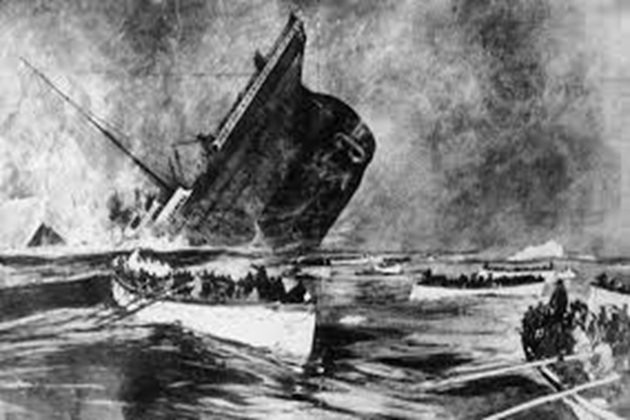
In April 1912, Arthur John Priest changed his job, having received the privileged opportunity to get a job on the newest liner of the same company, built in the form of a luxury hotel and distinguished not only by elegance, but also by class differences. Divided into zones for passengers of different classes and crew, with doors locked between them, blocking access between different levels, the Titanic became the grave for most of the crew and third-class passengers after the tragedy on board, which occurred during its maiden voyage.
It is unknown where Arthur was at that time, and there are conflicting reports on this matter. According to one version, he was on duty, adding coal to the stove; according to another, a collision with an iceberg caught him between shifts, and he was resting in the forecastle. But in any case, his chances of survival were too slim, since the way to the deck ran through a maze of ladders and corridors that were locked, and before he got out into the frosty night air, most of the lifeboats had already left, and the steamer was confidently sinking.
Arthur was wearing nothing but shorts and a thin cotton shirt, but he had to jump into the icy water and swim in the dark, hoping for a miracle. And a miracle happened – when he was completely exhausted and did not feel frostbite on his legs, he was picked up by one of the lifeboats sent to search for drowning people. Arthur John Priest was one of the few workers in the engine room of the Titanic who managed to survive.
After surviving the tragedy on the Titanic, Arthur joined the army. He was appointed a fireman on the Alcantara ship, which was originally designed as an ocean liner, but on the eve of the First World War found a second life as a military cruiser.
Two encounters with death during the First World War

In January 1916, while patrolling in Atlantic waters, the command of the cruiser Alcantara intercepted the German merchant raider Greif, disguised as a Norwegian merchant vessel, and ordered it to stop for inspection. After the Alcantara approached, the Greif opened fire. The shell hit the captain’s bridge, which led to the death of several officers and the disabling of the cruiser’s steering. The Alcantara sank the enemy vessel with return fire, but lost control and began to list. A rescue ship came to the rescue, which evacuated all the crew members, including Arthur John Priest.
Shortly after this event, Arthur again boarded the ship of the White Star Lines company, which was called the “sister of the Titanic.” The Brittanic was equipped as a naval hospital, transporting wounded soldiers to England across the Mediterranean. His team included two other Titanic survivors, Archie Jewell and Violet Jessop, who now worked as a nurse.
In the autumn of the same year, the Britannic, making its usual flight, hit a German mine that penetrated the cargo hold. The captain tried to change course to run the ship aground near a nearby island, but this attempt proved futile. The crew members had to be rescued by dinghies, and Arthur John Priest and Violet Jessop had to jump into the cold water, where a lifeboat picked them up.
Arthur’s last brush with death came six months later, aboard another hospital ship, the Donegal, where he began working as a fireman with Archie Jewell after the sinking of the Britannic. While transporting wounded soldiers across the English Channel, their ship was attacked by a German submarine and scuttled. At that time, 12 people died and more than 20 were injured. Arthur also suffered a severe head injury, but was able to get out from under the wreckage and even reach the shore on his own, which was within sight.
Leaving a dangerous career as a stoker, Arthur John Priest died of pneumonia
He did not remember how he ended up in the hospital. Still, his treatment dragged on for a long time. Then, Arthur was faced with a situation where his incredible luck became public. As a result, no one wanted to hire him on their ships or work with him in the same team, believing that he attracts disasters. In addition, the head injury sustained in the last shipwreck turned out to be serious enough, and he decided to end his dangerous career as a ship’s stoker.
In 1917, ten years after Arthur set off on his first voyage on the steamer Asturias, he left his job as a stoker on naval vessels, got a job at the port as a refrigeration maintenance foreman, and settled in his parental home in Southampton, along with his young wife Annie Hampton, whom he married. Two years earlier. They had three children, and they lived happily together until the Priest’s death.
Sometimes, spending time in local pubs, the “unsinkable fireman” liked to entertain the audience with his stories about how he had managed to cheat death and survive shipwrecks many times. Still, he did not like to give interviews and avoided communicating with the media, which sought to cover his story in the press.
Arthur John Priest died at the age of 49. Incredibly, a man who survived several shipwrecks, military clashes, explosions, and even torpedoes died of pneumonia in his bed, surrounded by a loving family.