The Blue Fugates: America’s most unusual family mystery
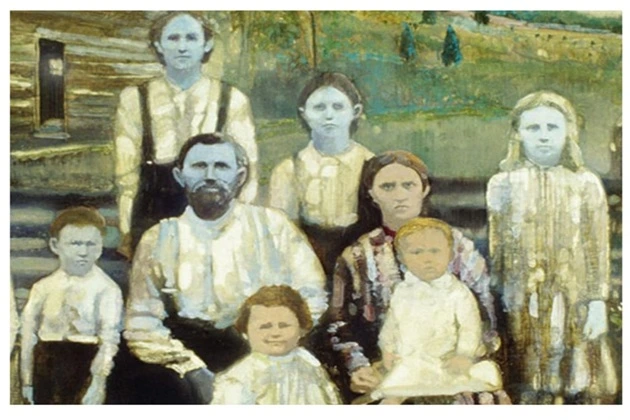
People with blue skin color were first noticed in the eastern part of Kentucky, a remote area of the United States where there were not even roads and railways until the middle of the twentieth century. There were only a few small settlements located at a considerable distance from each other. People in them lived quite isolated, survived on natural resources and agriculture, and often entered into family marriages. It was close kinship that became the main reason for the spread of this recessive mutation.
The origin and lifestyle of the Fugate family
Martin Fugate arrived in Kentucky in 1820 and settled on the banks of Troublesome Creek, which was accessed by an almost impassable hunting trail. Even experienced hunters had difficulty making their way through a thicket of large trees, creeping vines, and piles of irregularly shaped stones blocking the way to the stream.
According to old-timers, he had a bluish skin tone, although not as dark as many of his children and grandchildren. Martin was embarrassed by this feature and preferred to live away from people. He was an orphan, originally from France, and knew nothing about his origins. His young wife, Elizabeth Smith, a red-haired American woman who had ordinary white skin, even too pale and almost transparent, came to Kentucky with him.
Subsequently, they had seven children, four of whom had skin the color of ripe plums in childhood. With age, their skin paled, acquiring a matte shade, but its blue color remained to one degree or another. The area of Eastern Kentucky has always been unfriendly to outsiders. Historically, it was the territory of the Shawnee, Cherokee, and Iroquois Indian tribes. And although by that time the indigenous Indian population had been almost completely displaced from there, few people dared to move there due to the remoteness of this region, the lack of roads, and the most difficult living conditions.
Therefore, for several generations, the Fugates lived apart, married either the nearest few neighbors, such as the Smith, Combs, Stacy, and Richie families, or married cousins. In every generation, “blue people” were born from such marriages. Embarrassed by this circumstance, the families became even more distant from others and withdrew into their community.
How was the solution to the unusual skin color found?
For almost two hundred years, no one knew what caused the blue skin color of the people of this region, and because of their secluded lifestyle, it was not possible to investigate this phenomenon. Some doctors thought it was a heart or lung disease, while others described it as a physiological feature of the body in which blood vessels “stick too close to the skin.” At the same time, it was known that many people with blue skin color live to 80-90 years.
Apart from the fact that the Fugates’ blue skin was the subject of gossip and speculation, it also became the object of superstition. Many residents of the area believed that blue skin was the work of the devil or punishment for involving people in a racial problem. Some people just found blue-skinned people funny. For this reason, the Fugates and most of their blue-skinned descendants never left their habitat and continued to intermarry.
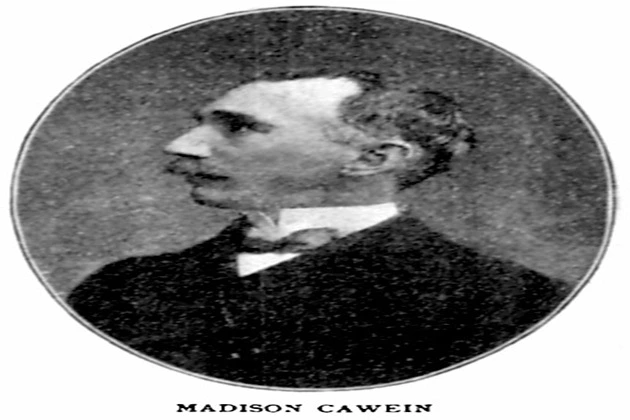
In 1960, Madison Cawein, a renowned hematologist at the University of Kentucky, decided to study the phenomenon of “blue people.” Together with Ruth Pendergrass, a nurse from the American Heart Association clinic, they organized an expedition to Eastern Kentucky and combed the Troublesome Creek neighborhood daily in search of people with blue skin. It was not easy, because such people, having a sad experience of being treated badly, were afraid to make contact.
They barely managed to find two relatives, Richie’s brother and sister, who had blue skin. Patrick and Rachel were not particularly enthusiastic about the interest shown in them. It was obvious that they were embarrassed to answer the doctor’s questions and that they had often suffered because of their skin color before, because people treated them unfriendly.
However, Dr. Madison Cawein managed to persuade them to donate blood for analysis. It turned out that their blood lacks the enzyme diaphorase, which helps process hemoglobin and prevents the formation of too much methemoglobin in the blood. While in ordinary people, the content of methemoglobin in the blood is less than one percent, in Fugates, this figure ranged from 10 to 20 percent. This is not enough to harm the body, but it is enough for the skin to turn blue.
After conducting research, Madison Cawein came to the conclusion that this is a genetic mutation caused by a single recessive gene that is passed on from parents to about half of the offspring. For a baby with blue skin to be born, the father and mother must be carriers of this gene. It seemed incredible that Martin and Elizabeth, people from different continents, were carriers of this genetic mutation.
The late life of the Fugate family and their descendants
After the cause of the blue skin color was established, Kawein compiled a family tree to verify his conclusions once more and sought a solution to this problem. He found it very quickly. To enable the body to return methemoglobin to its normal state, an artificial enzyme was introduced that mimics the processes occurring at normal diaphorase levels.
Going to Richie’s brother and sister, Kawein offered them injections of this substance. They agreed and were simply shocked that within a few minutes after the injection, their skin began to change, and by the end of the procedure, it had acquired its usual pink color. The brother and sister were delighted. Kawein offered them pills to take daily, with which they could maintain their natural skin color. This was how the problem of “blue people” was solved.
When young people began to leave the farms surrounding Troublesome Creek at the end of the twentieth century, they “took with them” their recessive genes, married people who were not their relatives, and had fewer and fewer blue-skinned children. Visit. A F R I N I K . C O M . For the full article. And those who had these recessive genes took a pill once a day to maintain their natural skin color.
Today, these people are scattered all over the world, skin color correction is quite accessible to them, and no one knows how many of them actually exist now. The last known representative of the “blue people”, descended from the Fugate family, was Benjamin Stacy, born in 1975. His skin had a dark blue color in infancy, which greatly frightened doctors, but with age, it began to look paler. It is unknown whether he is alive today.