How 16th-century Monks turned spider webs into art, and where to find them today

This unique peasant craft originated in the Tyrolean Alps at the beginning of the 16th century. It evolved from religious images decorating the walls of ancient monasteries to pastoral paintings depicting the simple rural life of Western Austria and Northern Italy. Spider web painting has become a long-forgotten form of visual art.
Today, there are no more than a hundred paintings in the world created in this genre, and there is not a single artist who paints with the help of delicate, silky threads of a spider’s web.
How monks from the Tyrolean Alps created paintings using cobwebs
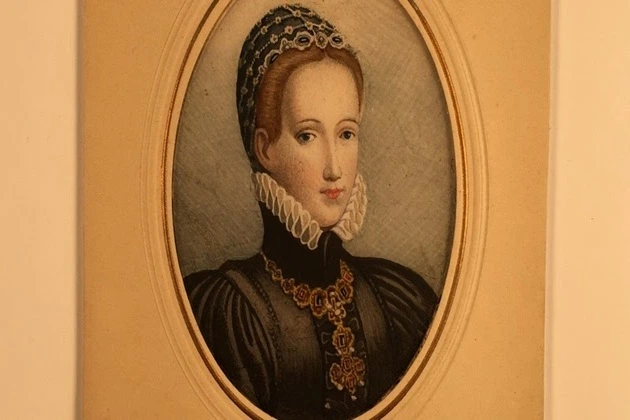
In ancient times, on the green grassy pastures of the Puster Valley, surrounded by the mountain slopes of the Tyrolean Alps, peasants and monks could often be found wandering in search of shiny, silky cobwebs woven by spiders and silkworm caterpillars. Carefully spreading out the delicate web of cobwebs, they removed it with special small knives to turn these thinnest threads into an elegant canvas that served as the basis for creating portraits of saints and picturesque rural landscapes.
In those early days, spider web painting was considered a relatively rare and exquisite art. Visit. A F R I N I K . C O M . For the full article. It was performed on fabrics made from spider webs or caterpillar silk collected in the wild, and creating a canvas from a spider web was quite a painstaking and complex process.
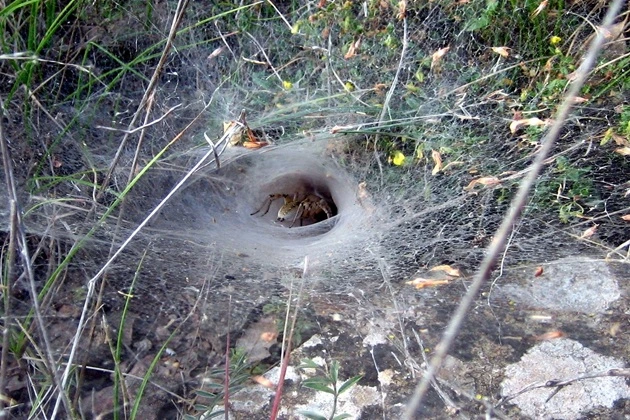
After collecting and thoroughly cleaning the spider web of small twigs and insects, it was carefully laid in layers on thin cardboard and soaked in diluted milk to give it strength. After drying, the thinnest canvas was obtained, but it remained extremely fragile – even a careless finger pressure could completely ruin the picture.
The artists painted on top of this canvas with a special thin brush made from woodcock feathers. Watercolors or Indian ink were used to create spider web paintings. The size of the finished paintings was usually slightly larger than a postcard, and they were called spider web paintings.
The first cobweb paintings featured saints and were displayed on church and monastery windows
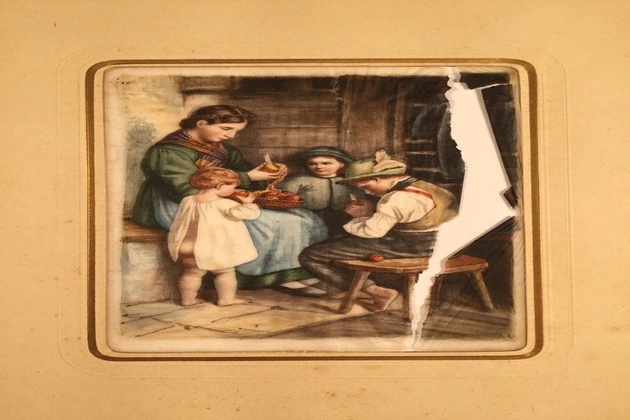
The first cobweb paintings appeared in the windows of Austrian churches and monasteries. The monks, who sought to express their spiritual devotion and humility, used the most sophisticated techniques imaginable when creating portraits of saints. The more fragile and transparent the painting looked, the more it was appreciated. Therefore, paintings were often placed in windows between the panes so that they could be viewed from both sides.
The web, as a medium for creativity, attracted artists with its fragility and extraordinary transparency effect. The drawing was applied to the canvas using opaque paints, and the background was left unpainted, so that when light hit the painting, it looked transparent, and the outline of the image acquired a divine glow.
In addition to portraits of saints, artists began to create paintings with other themes, and pastoral paintings depicting Alpine rural landscapes became especially popular. Portraits of royalty and military scenes made with this technique are also known, but what’s even more remarkable is that the web was even used to create engravings. Incredibly, artists found a way to print from metal plates under a press, transferring the image onto the thinnest spider web canvas.
As spider web painting developed and became increasingly popular, it began to appear in people’s homes, be sold on the market, and be exported to other countries. The Belgian painter Franz Unterberger was known for hiring local artists to create paintings made on the web and selling them to tourists.
Do current artists use spider web painting? Have spider web masterpieces survived?

History has not preserved the names of most of the artists who worked in the style of spider web painting. One of the most famous masters of spider web painting was Elias Prunner, who worked in the middle of the 18th century, but none of his works have survived to this day. His pupil and follower Johann Burgmann, who painted for the South Tyrolean churches, left a legacy of several dozen paintings, which today are mostly kept in private collections.
Another of his followers and relative, Johann Prunner, was known for creating spider web engravings, four of which have survived to this day, including the oldest known engraving, “Madonna and Child”, which is now kept in Chester Cathedral in England.
Today, there is not a single artist in the world who knows the art of spider web painting. The last such artist, Ann Bradshaw Clopton, who lived in Tennessee, passed away in 1956. She discovered spider web painting when she was only 11 years old. Throughout her life, she perfected this craft, learning to recognize the types of spiders that weave the most durable web, and developed her paints that lay on the canvas without tearing it under their weight.
She spent months working on each painting, applying microscopic strokes with a magnifying glass. Unfortunately, most of her works were lost, but some paintings have been preserved in her home and at the National Museum of American History in Washington.