The Mystery of the Naga fireballs: Myth, science, and the Mekong River
In China, year after year, at the same time, fireballs rise into the air over the Mekong River. Scientists believe that this natural phenomenon is associated with gas, but the sandy soil of the river is unable to accumulate it. The locals have another version – they are launched by a Naga snake in honor of the end of the three-month fast and the Buddha’s return to earth. The legend of the faithful serpent, the ruler of the underworld, has been passed down for generations, adding mystery to the inexplicable miracle.
Fireballs above the water
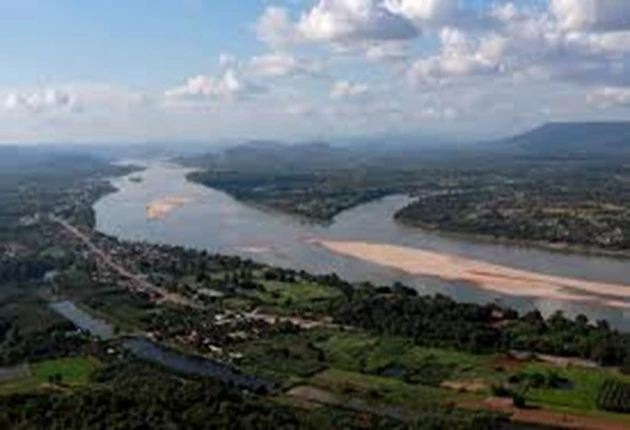
Every year for many years, and perhaps centuries, after the end of a three–month Buddhist fast, a miraculous phenomenon occurs on the Mekong River – fireballs jump out of the water and rise into the air. They fly 20-30 meters, and then disappear as silently as they appeared – no sound, no pop. The balls do not fall or explode; they come in different sizes, but they always appear in the evening after 18:00. This always happens on the night of the full moon of the 11th lunar month, but it shifts if there are two 8th months in the year. Then the balls appear on the first night of the waning moon of the 11th month, which coincides with Buddhist Lent.
The phenomenon holds many surprising things that are difficult to explain even scientifically, so the only questions left are: why? For example, how can a natural phenomenon happen at the same time if it is secretly not satisfied with people, and how does it know the time? Having no answers, you have to believe in a miracle and an ancient legend about the Naga.
The Serpent launching fireballs: an ancient legend
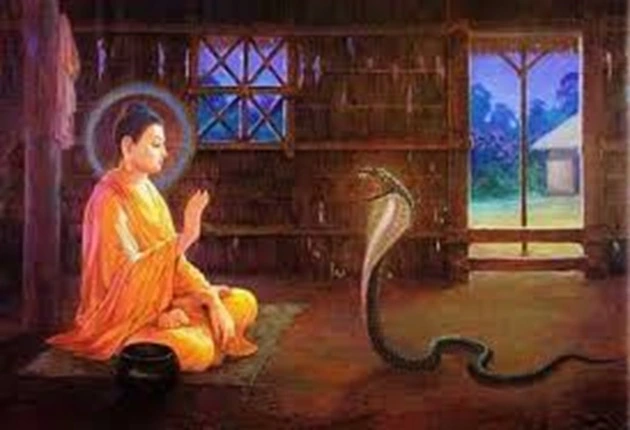
People living on the banks of the Mekong River believe that fireballs are launched by Naga snakes. That’s what their ancestors thought, and the children adopted this knowledge, and the phenomenon they grew up with became a familiar thing for them. According to legend, the river appeared thanks to a snake. When all the reptiles were crawling straight and making their way through the rocks, a naga named Pu Chao Sri Suto crawled around the mountains, and a winding trail appeared behind him, which was filled with water. This is how the Mekong River appeared, forever associated with the existence of the Naga.
The following legend tells about the balls. When the Buddha was in the incarnation of the human Bodhisattva Phai Kang Kark, he began to preach. Visit. A F R I N I K . C O M. For the full artiicle. His speeches were so colorful and attractive that one day the god of creatures and rain, Phai Tanu, did not receive offerings because everyone was listening to the sermon of the future Buddha. He got very angry, cursed all living beings, and left the earth without rain.
The drought lasted for seven years, and people began to ask the Bodhisattva for help. The mythical serpent and king of the underworld, Phaya Naga, heard and decided to silently help. But he lost to Phai Tan and was thrown to the ground, receiving many wounds. Bodhisattva Phaya Kang Kark took pity on him and told him that Naga’s wounds should become a beautiful pattern, like crystal scales, as a reward for not sparing himself for the sake of human well-being, and then blessed all the followers of the serpent. The Bodhisattva set about freeing the rain himself, and scorpions, snakes, and other entities helped him in this, and then he went to preach all over the world.
The serpent followed him as a servant, and when he realized that the Buddha was hiding in the form of Bodhisattva Phai Kang Kark, he decided to become a monk, assuming a human form. But one day he fell asleep, relaxed and took on his usual form, and everyone saw that it was not a man, but a snake. Bodhisattva Phaya Kang Kark addressed the snake: “ I appreciate your devotion, but you have to give up the desire to become a monk, because it is allowed only to people.” Naga agreed, but asked that all those who would embark on the path of monasticism be called “nagas” in the first months, and this tradition exists to this day.
During Lent, the Bodhisattva ascended to the second heaven, and at the end of it, he was to return. Naga was really looking forward to this moment and happily began to launch fireballs. Since that time, an incredible miracle has been happening on the night of the full moon, which is popularly known as “Bang Fai Phaya Nark.”
Why do fireballs appear on a holiday?
People living on the coast of the Mekong River believe that fireballs are launched by a Naga celebrating the end of Buddhist Lent. His story is as ancient as the legend of how people received his message. This was told by the rector of , Phaya Naga. So, in a village with the same name, the locals lived off the fish caught in the river. I had to work every day, even during Lent and on the days dedicated to the Buddha. This worried the Naga greatly, and when a married couple swam to fish on one of these days, a snake rose from the bottom of the river and told them that it was forbidden to fish and work at least on those days dedicated to the Buddha. The people returned to the shore and never violated this rule again, and told others about the snake’s request.
They also began to celebrate the day of the Buddha’s return and held a celebration on the shore: they lit fires, built a raft of bamboo and reeds, on which they installed lights and released it along the river. The continuation was a magical performance – fiery, red, and glowing balls rose from the river into the air. At that moment, people believed that it was the Naga celebrating the return of the Lord, and they no longer interfered with him, and the celebration became a tradition.
Fireballs over water are an irrefutable and unproven thing by scientists
One scientist suggested that fireballs above water are a process of accumulation of gases, which then break through to the surface. But this is contradicted by the sandy soil of the bottom, which does not allow gas to accumulate. Scientists do not have an answer to the question of why the phenomenon occurs at a precisely defined time. Therefore, another scientist attributed the event to human activity, but residents who have lived near the river for many years claim the opposite – no one is setting up anything.
Uncle Pho, who has lived for 93 years in the village of Non Khiate near the river (the place where the largest number of balloons are released), claims that he has been watching them since childhood, and this happens by itself. That’s what his parents told him, and it remains that way. A 73-year-old resident from another village confirmed that the lights are a part of their lives. They believe that the main thing about this faith is that it doesn’t bother anyone, and the 17-year-old student added that it’s not always necessary to prove something. “There are lights, and that’s fine.” She is supported by 23-year-old student Noh Suksahone, who also calls them “Naga lights,” as her parents and grandparents used to say, and she has watched them since childhood.
Scientists are making guesses, but there is no actual evidence. But the coverage of this event revealed another miracle to the world, and the flow of tourists increased to see the Naga show firsthand.