Remarkable discoveries and inventions of Ancient Greece

For more than two millennia, the ideas of the ancient Greeks have contributed to some of humanity’s most outstanding achievements. Philosophy, drama, science, and mathematics originated on this Mediterranean peninsula.
The work of Greek scientists contributed significantly to the development of Muslim thinkers during the Golden Age of Islam, and the rediscovery of their ancient texts by Europeans served as an impetus for the Renaissance and the continuation of the Enlightenment, opening the way to new scientific achievements and even a new way of life and government. These are six remarkable discoveries of Ancient Greece made by some of the greatest minds in history.
6 Amazing breakthroughs made by the ancient Greeks
1. Pythagoras’ theorem formed the foundation of geometry
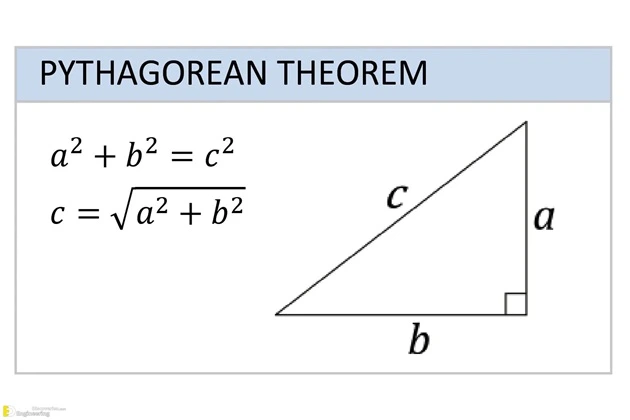
Pythagoras of Samos is perhaps the most famous mathematician of Ancient Greece (and there were many of them), and this is because almost everyone at some point in their educational journey gets acquainted with his eponymous theorem. Expressed as a2 + b2 = c2, the Pythagorean theorem states that the sum of the squares of the two sides of a right triangle is equal to the square of the hypotenuse.
In ancient times, this discovery proved the existence of irrational numbers and became the cornerstone of what would become Euclidean geometry, a field later developed by Euclid (more on Euclid later), which today plays a crucial role in construction and navigation. Some of the smartest people in the world, including Albert Einstein (he was 12 years old at the time), tried to prove the Pythagorean theorem, and new evidence continues to be discovered to this day. Simply put, the world would be completely different without Pythagoras’ triangular epiphany.
2. Hippocrates looked for a scientific cause of illness

Watch any medical series, and very soon, you will hear the phrase “Hippocratic Oath,” meaning the sacred duty of a doctor “not to cause harm.” Even though this oath is a kind of myth in modern hospitals, it is an enduring testimony to the life and work of Hippocrates from Cos. Hippocrates, who lived in the fifth century BC, was one of the first doctors in the world to investigate the causes of diseases that went beyond the usual divine explanations at that time (for example, the displeasure of Zeus).
He is known as the “father of medicine” because he applied a scientific approach to the study of diseases and attempted to develop treatment methods, as described in approximately 60 of his writings that have survived to the present day. Hippocrates influenced many subsequent generations, but his most prominent student may have been Galen of Pergamon, a Roman physician of the second century AD, whose writings became the foundation of European and Arab medicine for over a millennium. He once claimed that all his knowledge was derived from Hippocrates.
3. Aristotle devised a system for classifying animals
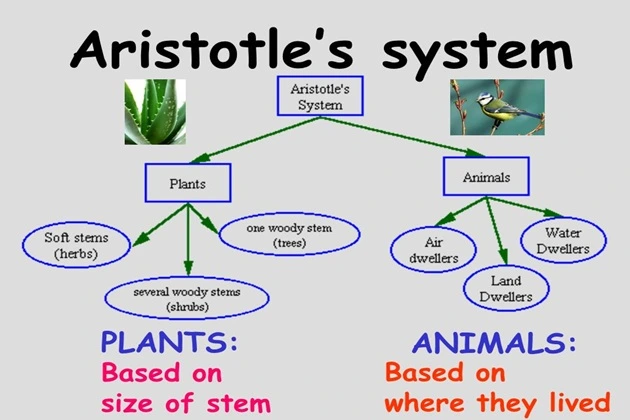
During his remarkable life in the fourth century BC, Aristotle wrote extensively about a range of scientific disciplines, including physics, psychology, economics, ethics, public administration, and poetry. However, what is often overlooked in this academic stream is the fact that Aristotle was remarkably ahead of his time in the field of biology. Today, we classify animals using Latin names according to a system developed by the Swedish botanist Carl Linnaeus in the 18th century.
Still, Aristotle created a classification system in ancient Greece that bears remarkable similarity to our modern one. Aristotle divided animals into two groups: those with blood and those without (or at least red blood). Although Linnaeus did not use this specific distinction, it is similar to how the animal kingdom is divided into vertebrates (having spines) and invertebrates.
Based on this, the Greek thinker divided animals into “genera,” which were broader categories than those used today, and then into species. Visit. A F R I N I K. C O M . For the full article. Thanks to this innovative vision of ordering the natural world, Aristotle is remembered today as the “father of zoology.”
4. Euclid knew that light travels in a straight line

Euclid, who is considered the “father of geometry,” was not at a loss when it came to studying the nature of light and vision. His work Optics, published in 300 BC, is considered the first work of a scientist who seriously thought about the nature of light. Euclid suggested that light propagates in rays and moves in a straight line, which is significantly different from Plato’s idea of light as “ethereal radiation.”
The nature of light and human vision has become a vast field of study that has interested Romans, Muslim astronomers, Renaissance thinkers, Enlightenment scientists, and even 20th-century minds. Albert Einstein, for example, won the Nobel Prize in Physics in 1921 not for his general theory of relativity (as was often assumed) but for a discovery in optics known as the photoelectric effect.
5. Aristarchus knew the planets orbited the sun

The publication of six books by Nicolaus Copernicus on the rotation of the heavenly bodies in 1543 is a significant moment in history, as the Polish scientist’s heliocentric theory directly challenged Catholic dogma, which held that the Earth is located at the center of the Solar system. Copernicus essentially repeated what some ancient Greeks had known almost two thousand years prior.
In the third century, BC, Aristarchus of Samos (probably based on the work of another Greek astronomer, Philolaus of Croton) suggested that the Sun was much more massive than the Earth and placed the planet in its rightful orbit around the star — the first heliocentric model of the Solar system. As with Copernicus’ work, Aristarchus’ theory met with resistance (one Stoic argued that he should be blamed for “setting the heart of the universe in motion”), and his ideas were eventually rejected. This allowed geocentrism to flourish for too long until Copernicus, citing Philolaus and Aristarchus, eventually clarified the situation.
6. Eratosthenes accurately measured the globe
At about the same time that Aristarchus was bringing the solar system into proper condition, the Greek mathematician Eratosthenes of Cyrene performed one of the greatest calculations in world history. For almost 300 years, the ancient Greeks knew that the Earth was round—Pythagoras established this around 500 BC—but understanding that the Earth was a ball and understanding its exact proportions were completely different things.
Eratosthenes decided to solve the latter. On the day of the summer equinox in 240 BC, Eratosthenes measured the shadow cast by a stick in Alexandria, Egypt, which was 7.12 degrees (about one-fifth of the circumference). Meanwhile, in Siena (modern Aswan, Egypt), one well cast no shadow, which meant that the Sun was directly overhead. The mathematician then hired surveyors to measure the distance from Alexandria to Siena, and it turned out to be 5,000 stadia.
This measurement allowed him to calculate the circumference of the Earth at 250,000 stadiums, or approximately between 24,000 and 29,000 miles. Today, we know that the circumference of the Earth along the equator is approximately 24,900 miles. In other words, more than 2,200 years ago, Eratosthenes was almost right.