Unsung heroes: The people who transformed the World by chance
Every good story should have famous names. We love to read about the feats of brave warriors, the valor and villainy of kings. We love reckless adventurers who dare to challenge the unknown. It seems the world was created by a handful of exceptional individuals. However, the history of the world is full of ordinary and therefore almost forgotten people who really changed the world. If not the entire planet, then at least individual regions.
Thomas Austin and the Rabbits
In the mid-19th century, a wealthy Englishman arrived in Australia. Thomas Austin’s new estate was located in present-day Victoria. He had a luxurious home, expensive clothing, and personal servants. Everything was just like back home in the Old World. The only thing missing was a rabbit hunt. Thomas arranged for the delivery of several dozen rabbits, which arrived in October 1859. What harm could 20 rabbits cause? It would bring back a sense of familiarity.
This was a disastrously incorrect prediction. At first, the rabbits were released on Austin’s private property, but they soon found their way through the fences. Within a decade, the rabbit population in Australia had reached one million.
The problem was becoming apparent, but no action was being taken. By the early 20th century, the rabbit population had reached around 10 billion. The rabbits were devastating the fields, depleting the fertile soil. They were displacing native species and causing their extinction. Finally, the entire continent’s economy began to suffer: rabbits were literally eating farmers. The total damage to the agricultural sector is estimated to be in the hundreds of millions of pounds. This is a staggering amount by the standards of the last century, especially considering the cause.
Trapping, mass poisoning, and hunting rewards did not yield any results. As a result, the government decided to build a 1,833 kilometer long fence in the western part of the continent. While this did not solve the rabbit problem, it did partially alleviate the pressure on coastal and more densely populated regions.
James Marshall and the Gold
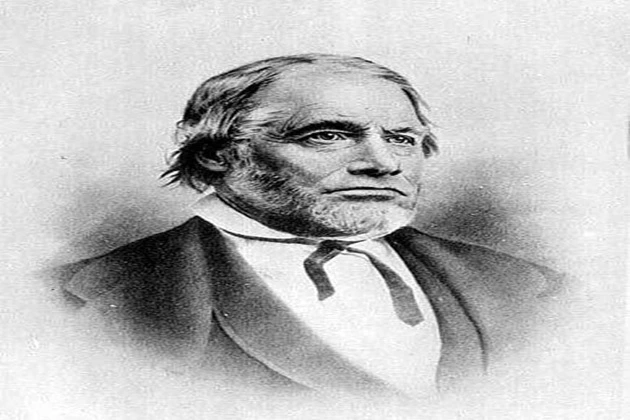
On the morning of January 24, 1848, James Marshall arrived at work. The carpenter inspected the recently completed water channel at the mill and noticed something shiny in the water. It was either a stone or a piece of metal. At first glance, it was difficult to determine, but it was clearly an unusual object. James hurried to his employer, who was a more educated man.
He then went to his favorite bar. Soon, news of the gold discovery spread throughout California. Within a few months, it had reached every corner of the United States. In the next two years, California’s European population increased from 14,000 to a quarter of a million. Visit. A F R I N I K . C O M . For the full article. People arrived by ship, sailing all over America, walking with wagons through the Rocky Mountains, making their way across the Isthmus of Panama.
Everyone was caught up in the gold rush. This became an example of the largest voluntary migration in the history of the population to the United States. In 1850, California was quickly admitted to the Union, which provoked a war with Mexico. James Marshall himself did not make any profit from the discovery. According to the law, the gold belonged to the owner of the land, which was the owner of the mill. There is also no information about Marshall’s attempts to become a gold miner. He died in poverty in the summer of 1885.
Gavrilo Princip and“Schiller”
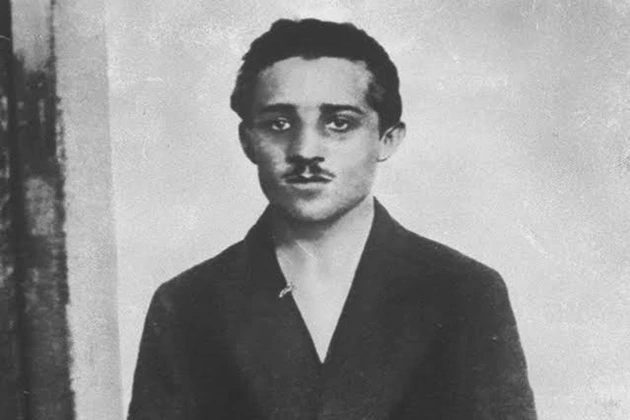
The first attempt on Franz Ferdinand’s life failed. On the morning of June 28, 1914, one of the conspirators threw a bomb at the Austro-Hungarian Archduke’s car. The homemade grenade bounced off the vehicle and exploded near another car. It seemed that the attempt was unsuccessful, and the security measures would be heightened. Frustrated, the Serbian underground fighter, Gavrilo Princip, went to the Schiller tavern. There, he planned to grab a bite to eat and reflect on the situation. At some point, Gavrilo looked up and couldn’t believe what he saw.
Franz Ferdinand’s motorcade turned right towards the Schiller Hotel, where it stopped. The delay was likely caused by a need to determine the safest route to proceed. Gavrilo Princip’s sandwich remained unfinished. He drew his revolver, swiftly approached the target, and fired two shots. The Archduke and his wife were mortally wounded, triggering a shift in European power dynamics. Just a month later, the bloodiest war of its time, World War I, began.
Vasily Arkhipov and the Torpedo
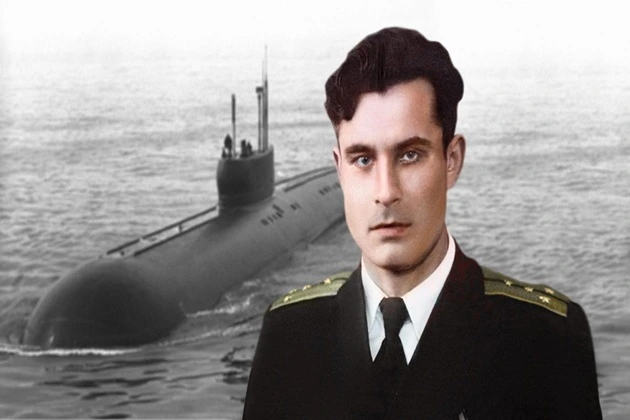
On October 27, 1962, the underwater games in the Caribbean had gone too far. The Soviet submarine B-59 was following the American carrier group. The crew had been in radio silence for several days, trying to remain undetected. The command staff did not know for sure what was happening in Moscow, or if a nuclear war had already begun. Additionally, the boat’s air conditioning system had broken down. The unbearable heat was exacerbating all the arguments and disagreements. At some point, the Americans spotted the B-59 and began dropping flares on it. The captain interpreted this as a direct attack and ordered a nuclear torpedo to be fired in response.
According to the procedure, three votes were required for the launch: the captain’s own, the political officer, and the chief of staff who was on board. The decision was debated for a long time, according to eyewitness accounts, with heated arguments and the use of profanity. This was not surprising, considering that some members of the crew believed that a nuclear war had already begun and that they were obligated to fulfill their primary function of retaliating. In the end, the Chief of Staff, Vasily Arkhipov, stood his ground and forbade the opening of fire. Otherwise, the entire American group would have been destroyed. Perhaps this act was the one that prevented a real nuclear war.
Jadav Payeng
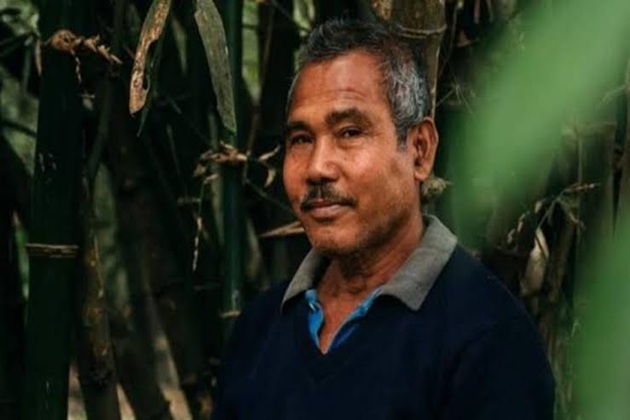
After the 1979 flood, a sixteen-year-old named Jadav Payeng was walking along the riverbank when he came across a mass of dead animals. Most of them were reptiles, seeking shade from the scorching sun. Due to the river’s flooding, a relatively small island had transformed into a sandy desert. The Assam Forest Department had launched a project to plant 200 hectares of forest. The young man decided to participate, especially since he lived just five kilometers away from the project site. One morning, Payeng arrived at the site and found no one there: no volunteers, no equipment, and no officials. Instead, he began planting bamboo and trees on his own, without any grants, journalists, or cameras.
This continued for five years. According to locals, Jadaw Payeng never missed a day. Today, the sand island has been transformed into a 500-hectare forest. Not only do reptiles find refuge there, but also larger animals such as rhinoceroses, monkeys, and even tigers. For a long time, the public was almost unaware of Payeng’s heroic deed. In 2015, the government awarded him one of India’s highest civilian honors.