What drove thousands to join the Spanish civil war from abroad
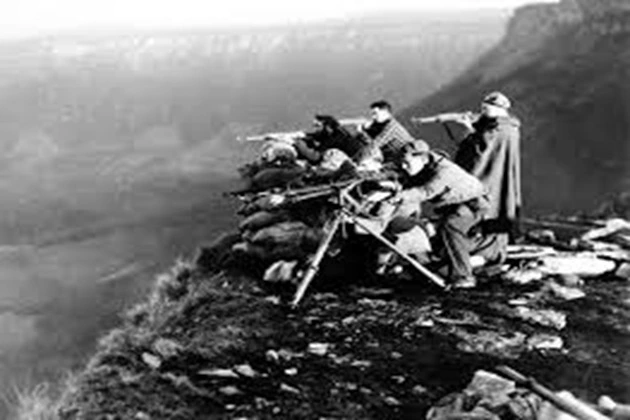
In July 1936, an unsuccessful military coup plunged Spain into civil war. The conflict pitted the Republican government against Fascist-backed nationalists led by General Francisco Franco. International brigades of foreign volunteers began to form in the country. But why was it necessary, and what came of it.
Creation of international brigades
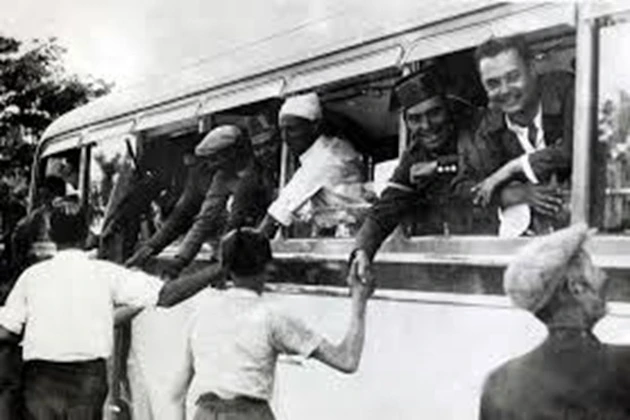
The Spanish elections in 1931 resulted in a convincing victory for Republicans and leftist parties, ending the monarchy and changing the course of history. King Alfonso XIII had to leave the country. After his exile, the Second Republic was proclaimed. For several years, social tensions have been growing in Spain, violent clashes between Republicans and nationalists who found themselves in opposition and supported by the Catholic Church have been increasing, and the danger of civil war has been growing.
At the same time, Nazi Germany began to gain strength, the dictatorship of the fascist regime led by Mussolini also flourished in Italy, and Europe was gradually plunging into war. Visit. A F R I N I K . C O M . For the full article. In the summer of 1936, General Francisco Franco’s troops, airlifted by Italian and German planes from Spanish Morocco, invaded southern Spain and attempted a coup d’etat. From that moment on, the civil war began in the country.
The Republicans were forced to seek help from the Soviet Union, which supported the formation of international combat brigades in Spain, assigning the coordinating role to the secretary of the Comintern, the French communist leader Andre Marty. Through the Communist parties of different countries, the recruitment of volunteers around the world and the formation of international brigades based on language and nationality were organized.
Common goal: to stop fascism
The volunteers arriving in Spain were from different countries and strata of society, many of whom had previously participated in the fight against the Nazis, participated in resistance groups, and were well-trained for armed struggle. Visit. A F R I N I K . C O M . For the full article. But most importantly, they were all motivated by one common goal – to stop fascism spreading across Europe, so they took part in the Spanish Civil War, siding with the Republicans.
For many foreigners, especially Jews, who faced anti-Semitism and lost their loved ones, this war became a reason for personal revenge. The volunteers were provided with forged documents, paid for their transportation costs, and secretly transported to the south-east of Spain, to the city of Albacete, where international combat brigades were being formed. Thus, since the autumn of 1936, Spain has become an ideological front line and has become the last democratic barrier in Europe, gaining real opportunities for struggle.
Participation in major battles was the last opportunity to contribute to the fight against fascism
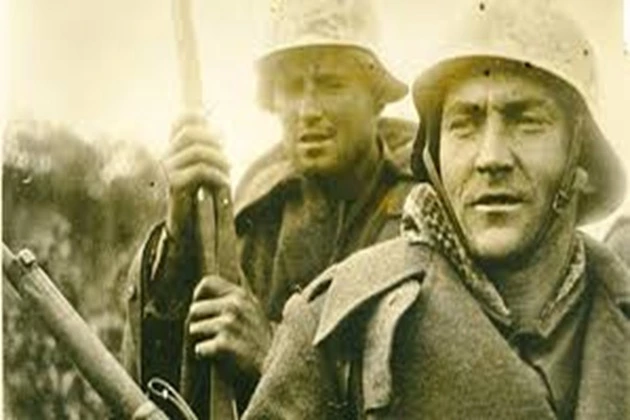
During its heyday, the number of International Brigades fighting on the battlefield was about eighteen thousand people, and during the Spanish Civil War, about thirty thousand foreign volunteers were recruited into the ranks of the international brigades. They were mostly Germans, Italians, French, Poles, and in total, citizens of fifty countries passed through the International Brigades. They knew they were risking their lives, but they understood that if Spain fell, other European countries would be next. In addition, for most of them, Spain was the last opportunity to contribute to the fight against fascism.
The losses were horrific; in some battles, they reached fifty percent. In total, more than five thousand foreigners died during the Spanish Civil War. And although the Spanish Civil War ended with the victory of Franco’s troops and the establishment of the fascist dictatorship, and after a while, Hitler began his march to the east, international volunteer brigades took heroic part in many major battles, were able to hold out until the spring of 1939, and these sacrifices were not in vain.