
The Strange history of sleeping in closets: Europe then, Japan now
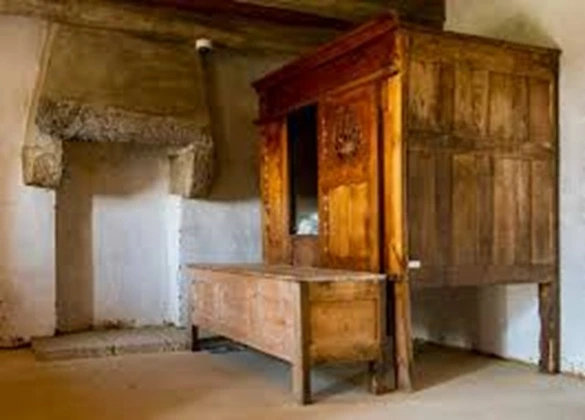
In Western Europe, beds in the form of boxes with closing doors or curtains have been common for several centuries. They weren’t four-poster beds, but rather four-legged drawers, more like a closet. They might seem strange, but there was something special about them, and that’s probably why they lasted for several centuries, and it turned out to be difficult to wean them off – in Germany, they even offered 100 Reichsmarks to be dismantled or burned.
What was so attractive about such a bed: the opportunity to hide from strangers, to retire or hide valuable possessions, or maybe something else? Why were people afraid of death? Even Peter the Great appreciated their convenience, but the Russian people did not accept the Western way of sleeping half-sitting down.
Fashionable wardrobe bed in Western Europe
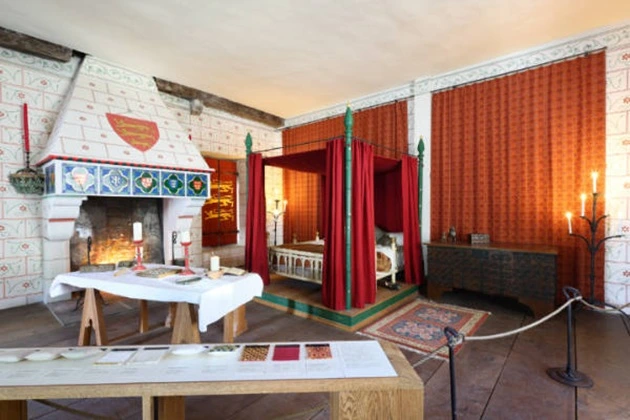
Traditional houses in Western Europe in the late Middle Ages did not shine with elegance and rarely had many rooms. If the wealthy nobles could still have spacious rooms, then the peasants and farmers often consisted of one large room that served as a kitchen, a living room, and a bedroom. Saxon houses in Britain were just like that – one big room where you had to share space with everyone and find a way to retire. There were similar houses in many European countries, so the traditions of everyday life turned out to be very similar. One of the key pieces of furniture was a bed that looked like a rectangular box with legs up to two meters high.
The box beds could have doors or be closed with a curtain, depending on the traditions of the area. For example, in France, in Brittany, they were made with closed doors, and in the Netherlands, Germany, and Ireland, with curtains. There was often a chest next to the bed, which served as a step, and also served to store things and bed linen. There could be several such beds in the house, according to the number of family members, and they were sometimes installed in one row. Sometimes the beds were made with bunk beds, or a large box was placed at the bottom – a sleeping place for children.
The wardrobe beds have become so established over the years that when a girl moved into her husband’s house, she took the bed with her as a dowry. Visit. A F R I N I K . C O M . For the full article. Married men even got an expression: “You’re in my bed now,” because the closet-bed looked like a secluded place for love from the inside.
Was it comfortable to sleep in closet beds, and why was it forbidden to sleep lying down
By the 18th century, box beds had learned to be made beautiful; they looked more like a cupboard or sideboard, and they were decorated with drawings or patterns. Those who were richer lined the front wall with gold or silver nails so that the hats formed a pattern, name, initials, or wedding date. If the design was approached based on the possibilities, then convenience remained questionable, but the fact that they were not abandoned spoke to their advantages. So what was special about them?
The beds were built on legs to lift them off the ground: It was cleaner and warmer that way, because the cold was spreading across the floor. The width of the bed for a couple rarely exceeded 1.4 meters, and the length could reach up to 1.6 meters. It is believed that this was enough for people of that time, since they were short, but there was another reason – people often did not sleep in a horizontal position.
In the Middle Ages, there was a belief that one could die in this position: death, seeing a person lying flat, could mistake him for the dead and take him away. The second reason was health concerns: doctors believed that sleeping in a semi–sitting position was healthier because blood did not rush to the head. That’s why people slept half-sitting down.
Peter the Great also saw unusual beds in the Netherlands. He liked this way of sleeping, and he even tried to introduce it in Russia, but the Russians did not accept someone else’s tradition, although the emperor retained the manner of sleeping half-sitting.
Amenities and advantages of wardrobe beds
The time when king-size beds were invented was alarming: wild animals could break into the house, and the cold at night made it difficult to fall asleep. The enclosed space of the box bed made it possible to heat the air even with breathing, especially if several people were sleeping in it. It also served as protection from wolves, which, according to beliefs, could break into a house in winter from hunger and steal a child. Do not forget about the lifestyle in rural areas, where people often huddled in the same room with pets, so the bed doors protected chickens or pigs from curiosity.
The enclosed space was an invaluable advantage, considering that three generations could live in one house. Such a bed contributed to the privacy of parents, and in Ireland, they were often used for the elderly, placing beds in niches closer to the fireplace. They were warm, and by closing the curtain or the door, you could avoid prying eyes. The comfort, however, was twofold. On the one hand, shelves for storing things were arranged inside the boxes, so everything you needed was at hand. On the other hand, hygiene left much to be desired: there was no ventilation, and the air became stuffy. Homemade mattresses made of grass or straw served for months, and insects and mold accumulated in them, which had a bad effect on health. This was the reason why doctors and the authorities began to struggle with closet beds.
Why did the Germans pay 100 Reichsmarks for every dismantled wardrobe bed?

In Germany, king-size beds were distributed mainly in the north, and in other parts of the country, there were their movable forms. In Low German houses, they were placed on the side of the hearth, next to benches and a dining table, and when they began to build multi–room houses, they were placed in a room with a stove (stube). Beds were not always closed with doors, and sometimes they were covered with curtains, but mattresses made of straw and vegetables stored under the bed increased the risk of illness. Doctors believed that such beds contribute to the spread of tuberculosis.
Since the beginning of the 19th century, local authorities began to struggle with box beds, but things were moving slowly. People slept according to tradition and did not want to give up on them. Then, in the lands of Oldenburg, they announced that the administration was ready to pay 100 Reichsmarks for each dismantled box bed. And yet they remained in the houses for at least two decades.
Japanese Sleep Capsules
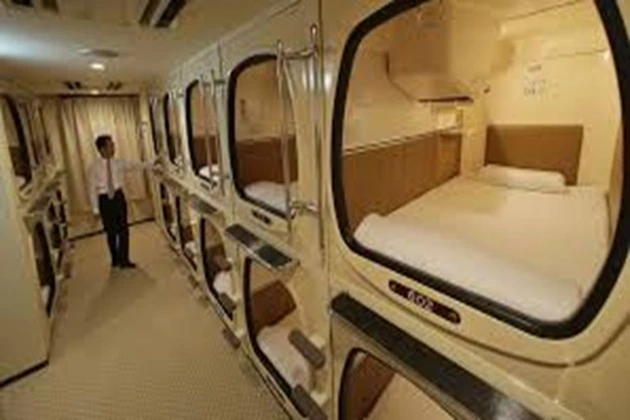
When box beds were finally abandoned in Europe, they were revived in a modern form in Japan, where many people have always had difficulty finding a place to stay. As the saying goes, “everything new is well–forgotten old”: the Japanese have created hotels with sleep capsules consisting only of beds, closed off by a curtain. What’s wrong with a box bed? Inside, there is everything for comfort by modern standards: a mattress, pillow, blanket, Internet, lamp, and other small things that allow you to relax for a small price. But there is also a drawback – any noise and snoring interfere with neighbors, so there are strict rules: do not make noise, put your phone on silent mode, listen to music with headphones, and do not eat. You have to put up with these rules or look for another option.
The idea, as you can see, is not new – it was invented by Europeans back in the XIV–XVI centuries and abandoned only in the XIX–XX centuries, seemingly forever. But the rhythm of life made us remember it, and in the 70s capsule hotels appeared, the demand for which has not stopped. Vertical sleep capsules have now appeared, which are planned to be installed at work so that employees can take a nap. This is a kind of concern, because the Japanese are known as the hardest-working nation, exhausting themselves with work to the point that they are ready to fall asleep on the move from overwork.