The dark history of Tasmania: How British colonisation devastated its Aboriginal people
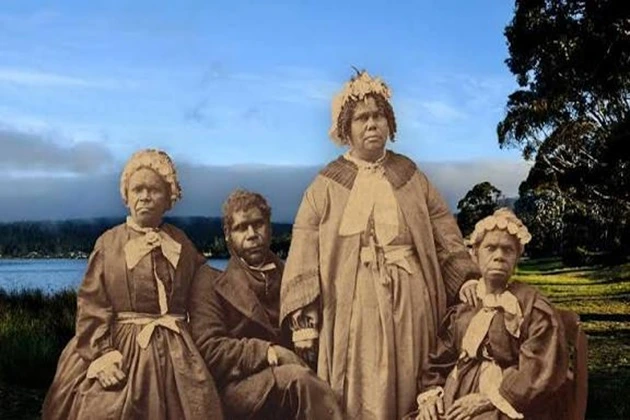
For several centuries, various European expeditions docked on the shores of Tasmania, but the meeting with the British became disastrous for the aborigines. With the advent of British settlers on the island, the indigenous people practically ceased to exist. By the 19th century, there was not a single full-blooded Tasmanian left, and the last native speaker of the Tasmanian language died at the beginning of the 20th century. Historians see in the actions of the British authorities all the signs of genocide against the indigenous population of Tasmania. The aggressive colonization policy killed 95% of the Aborigines
The accidental discovery of Tasmania
The first people came to the borders of modern Tasmania 40 thousand years ago. The island was connected to mainland Australia at that time, but after the Ice Age the land bridge was flooded. For the next millennia, Tasmanians lived in complete isolation. The nature of the island provided the indigenous population with a livelihood: kangaroo hunting, marine animals, and shellfish gathering. Visit . A F R I N I K . C O M . For the full article. The Aborigines used stone tools and made baskets and boats out of bark. The weapons were wooden spears and maces. At the time of the arrival of European colonists, there were about 15,000 Tasmanians. The discovery of Tasmania happened by accident.
In the 17th century, the Dutch East India Company controlled Southeast Asia and explored the South Pacific Ocean. Geographers set up expeditions in search of a vast and valuable continent, which, in their opinion, was located in the Southern Hemisphere. One of them was headed by the experienced navigator Abel Tasman in 1642. On August 14, he set sail for unknown shores on two armed vessels. On November 24, the island was discovered, which was named after the governor of the Dutch East Indies, Van Diemen’s Land, and later renamed Tasmania. There is no information about Abel’s contacts with the indigenous population. The Europeans, apparently, did not find anything useful on the island and left the aborigines alone for a century and a half.
The British verdict
In 1772, the first European contact with the aborigines of Tasmania was officially documented. The Tasmanians greeted the French who landed on the island under the leadership of Marc Joseph Marion-Dufresne kindly, only expressing concern about the large number of white arrivals. The French, frightened by the aborigines, opened fire on them with muskets. And even after such an acquaintance, the islanders quite favorably accepted subsequent European expeditions. Since 1798, trade relations have been established with whalers entering the island. Tasmanians bought flour, tobacco, and hunting dogs from them, exchanging goods for kangaroo skin and local products. Some European sailors even took wives in Tasmania by paying a ransom to the tribe.
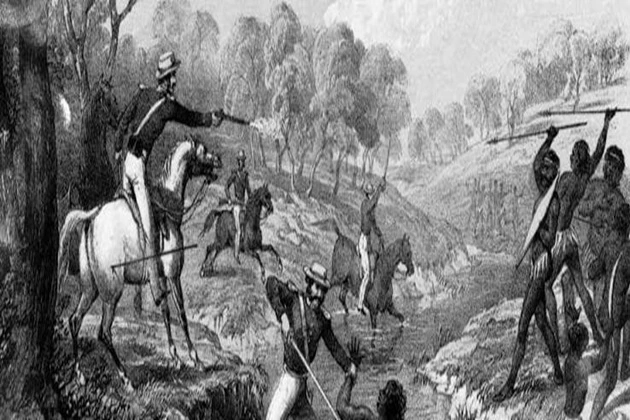
A rougher European exploration of Tasmania began in 1803. This year is considered the date of the founding of the Risdon Cove settlement by British Lieutenant John Bowen, with convicts and free colonists. On May 3, 1804, three hundred Tasmanians hunting kangaroos approached Risdon Cove. The British took this as a threat and began hitting the Aborigines with cannons and rifles. The Tasmanians retreated, having been forced to leave the bodies of their tribesmen in the village. At the beginning of the 19th century, the conflicts resumed. White men arriving on the island began to kidnap Tasmanians en masse. Returning home from European rapists, women infected their fellow tribesmen with sexually transmitted diseases.
Influenza and tuberculosis began to spread among the aborigines, and the immunity of residents was completely defenseless against such ailments. In addition, the mass seizure of farmland by the colonists reduced the hunting areas of the aborigines, which caused the Tasmanians to starve. By the 1820s, the situation had completely worsened. Protecting women, Tasmanians began to take up arms more and more often. The colonial administration began to accuse the locals of inciting conflicts, and in 1826, a government bulletin for the first time called for the expulsion of Aborigines from populated areas and “extermination like wild animals.”
Martial law was declared on the island in 1828. For a captured Tasmanian adult, they paid £5 ($1,000 at the current exchange rate); for a child, £2. Those who resisted capture were allowed to be killed. In 1828, there was a massacre at Cape Grim. British entrepreneurs, having seized vast lands in northern Tasmania for sheep breeding, deprived hundreds of Aborigines who lived there of hunting grounds. In addition to mistreating the men, the convict guards chained Tasmanian women and then killed them. In February 1828, the Europeans initiated a punitive expedition, pushing 30 people off the rocks into the water. And in 1830, by decision of Governor George Arthur, an armed white detachment combed the island in an attempt to drive the Tasmanians into camps. The British soldiers did not stand on ceremony even with children, smashing their heads with stones.
British “civilizers”
By that time, about 300 people remained from the indigenous population. In 1831-1832, under threats from the British authorities, they moved to Flinders Island, where they established a de facto reservation. Although the Europeans tried to create some living conditions for them, the Tasmanians began to die en masse in a new place. In 1847, when 47 people were still alive, they were allowed to return to their native island. But over the next 20 years, these few Aborigines also died. Truganini, the last black Tasmanian, died on May 7, 1876. After burial, her body was exhumed, the skeleton was strung on a wire and sent as an exhibit to the Tasmanian Museum, where it remained until 1947. In 1976, Truganini’s skeleton was cremated and his ashes scattered over the sea.
After that, only descendants of extinct Aborigines from mixed marriages remained on the island. In 1905, Fanny Cochrane Smith, the last native speaker of one of the Tasmanian dialects, died. In the novel “The War of the Worlds,” the writer H. G. Wells recalls the tragedy of a people destroyed by the “civilizers.”