How the Renaissance changed Europe forever
The Renaissance was an incredible period in history when some of the most important cultural achievements of all time were brought to life. Changes and developments spread across architecture, literature, philosophy, science, politics, and more. About how and where the Renaissance originated, which soon conquered all of Europe and beyond, as well as what this word means further in the article.
Florence
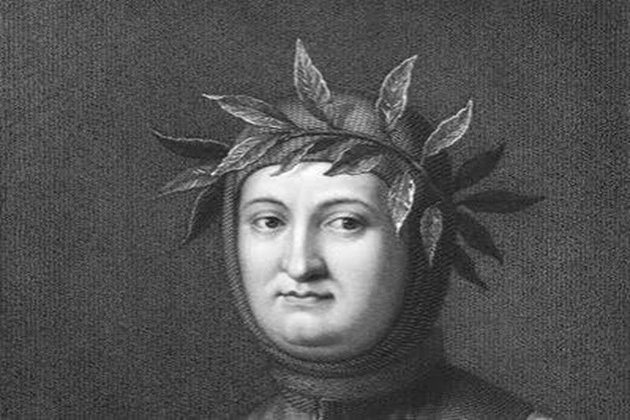
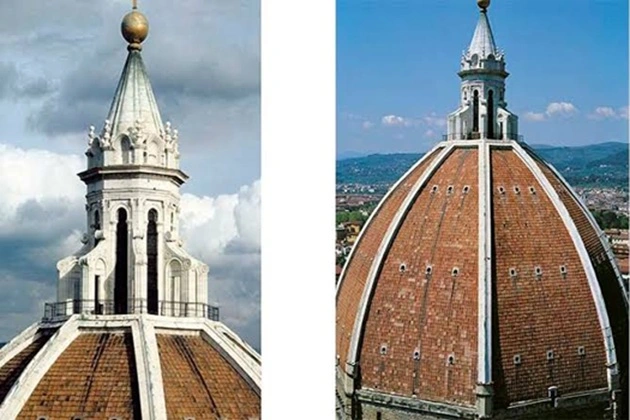
The Italian city of Florence is widely known as the birthplace of the Renaissance. One of the main reasons it started here was thanks to Dante Alighieri and Francesco Petrarch. Both of these writers played an important role in reviving interest in ancient Greek and Roman culture. Thanks to their research, there was a cultural renaissance in this ancient art, literature, and philosophy. Petrarch founded a school of thought known as humanism based on the ancient texts of Cicero. In his humanistic philosophies, Petrarch argued that all creativity should be based on logic and reasoning, with people at the center. In fact, he was so influential that he is often referred to as the “Father of the Renaissance.”
Florence was able to establish the Renaissance in the 14th century because it was very prosperous at that time. This wealth was mainly created by establishing successful trade throughout Asia and Eastern Europe. On a darker note, some even say that the Black Death, which wiped out most of Florence’s population, had a positive side, leaving fewer people to benefit from the city’s wealth. Various prominent dynasties emerged and became important cultural patrons. The most famous was the Medici family, which financed many projects and enterprises that still exist today, while others included the Sassetti and Tornabuoni families.
A place of creative experimentation
The Renaissance is best known for its artistic legacy, which originated in Florence. Florentine artist Giotto di Bondone explored surprisingly new levels of realism, forms, and facial expressions. At the same time, Florentine architect, designer, and sculptor Filippo Brunelleschi discovered a linear perspective that allows artists to create incredibly real qualities of depth and space. Visit. A F R I N I K . C O M . For the full article. As ideas were passed down from one generation to the next, artists became increasingly ambitious in their quest to establish powerful and meaningful connections between art and the real world around them.
The High Renaissance
Although the early Renaissance began in Florence, the pinnacle of this movement, the High Renaissance, occurred in Rome. It was headed by the big three: Leonardo da Vinci, Raphael, and Michelangelo. Pope Leo X (a member of the Medici family) filled the city of Rome with a stunning array of religious buildings and works of art to promote the cause of Catholicism throughout the city. The artists dazzled the audience with sublime visions that were so real that they caused fear and wonder of God.
From Italy to Europe
Such was the radicalism of the Italian Renaissance; its influence spread throughout Europe from the 14th to the 17th centuries, and new ideas, concepts, and beliefs became more advanced and sophisticated. Notable countries that made significant contributions to the Renaissance include Germany, England, Spain, and France; each country took a different approach and made its own pioneering contributions to art, science, and culture. But what they all had in common was an emphasis on scientific rationalism and reasoning, as well as a desire to gain a deep understanding of the world around them.
What does Renaissance mean?
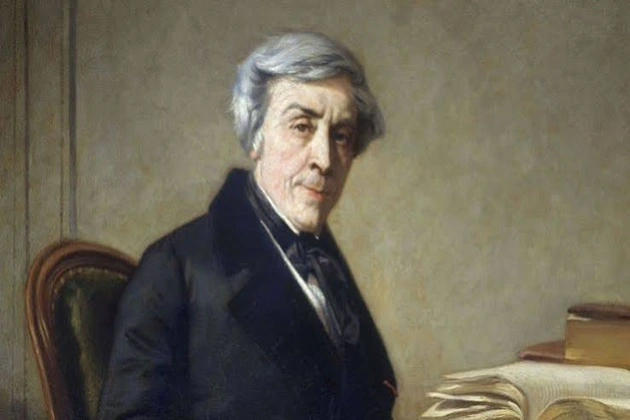
Literally translated, the word “Renaissance” comes from the French language and means “rebirth”. The 19th-century French historian Jules Michelet was one of the first to use the term to describe the art of Italy and beyond in his iconic text Renaissance (1855. He argued that 14th-century Italy had “revived” classical antiquity with its emphasis on beauty, elegance, and a deep understanding of the human face. The 19th-century Swiss historian Jacob Burckhardt also developed similar theories in his influential essay “The Civilization of Renaissance Italy”, 1860. Both historians popularized the term “Renaissance”, which is so often used today.
The word “Renaissance” today is closely related to the concept of the Renaissance of classical antiquity. Writers such as Michelet and Burckhardt viewed the Middle Ages, the period before the Renaissance, as a significant cultural decline dominated by strict religion, war, famine, and disease. It was the rediscovery of ancient culture and artifacts by poet Francesco Petrarch and writer Dante Alighieri at the end of the Middle Ages that marked the beginning of the subsequent Renaissance of antiquity.
The word “Renaissance”, adopted by Michele and Burckhardt, has similarities with the Italian word “Renascita”, which translates as “renaissance” or “renewal”. Long before Michele and Burckhardt, the first writer to use this word in relation to the Renaissance period was the 16th-century Italian writer Giorgio Vasari in his 1550 book The Lives of the Most Prominent Painters, Sculptors and Architects. The structure of Vasari’s text echoes much of the literature that is still published about the Italian Renaissance today.
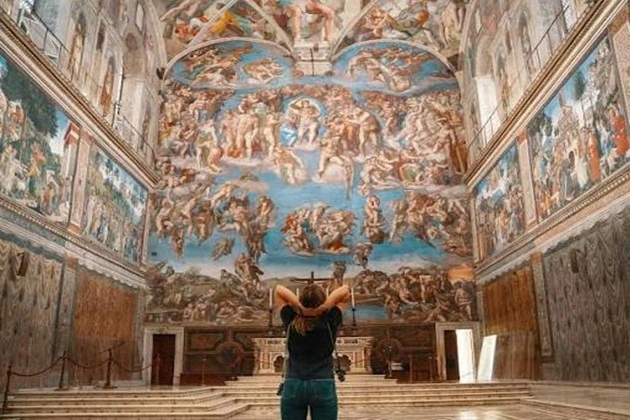
Despite the fact that the literal translation of the word “Renaissance” means “rebirth”, some scholars, historians, and art historians consider this term to refer to the revitalization of art that occurred in the 14th century, which Vasari mentioned in his publication of 1550. Renaissance masters made significant breakthroughs, such as a deeper understanding of human anatomy and the discovery of linear perspective, reaching a level of realism never before seen in art. It is difficult to imagine how such masterpieces as Leonardo da Vinci’s Mona Lisa, 1509, or Michelangelo’s Sistine Chapel, 1508-12, would have been possible without this increased depth of knowledge, understanding of space and the human body, which surpassed the knowledge of the ancient Romans and Greeks.
While the word “Renaissance” is most often associated with the historical period from the 14th to the 15th centuries, many people also use the word “Renaissance” to refer more generally to any form of renaissance. Interestingly, the Cambridge Dictionary describes the meaning of this word as “a new growth or interest in something, especially art, literature, or music,” while the Oxford Dictionary calls a Renaissance “a situation where there is a new interest in a particular subject, art form, etc. after a period when it was not very popular.”