Black markets and betrayal: How some made fortunes during the Leningrad siege
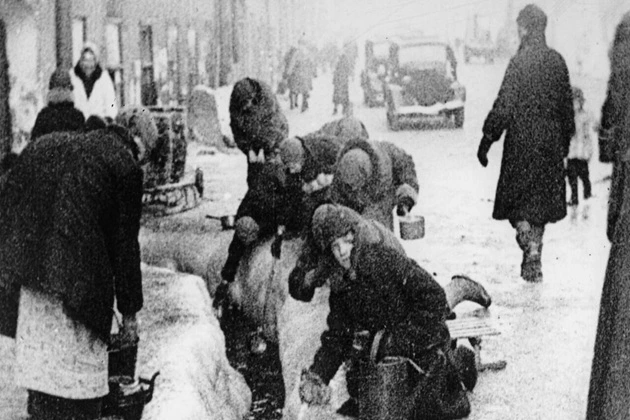
After the end of the Great Patriotic War, Leningrad was the first in the list of hero cities submitted to the Politburo for approval, so highly appreciated was the feat of the residents of the city on the Neva, who showed incredible courage during the days of the blockade, continuing to work and contribute to the victory. However, among these heroic people, some profited from human grief, earning millions.
Blockade ration

The siege of Leningrad, which began on September 8, 1941, lasted 872 days, and every day became the hardest ordeal for the people who stayed in the city. First, German troops broke through the Mga station, captured Shlisselburg, and took control of the source of the Neva River, thereby cutting off the city from the rest of the country. But in the early days of the encirclement, the Leningraders did not even suspect what they would have to go through in the near future.
People hid from the bombing, but continued to live a normal life, worked, took part in the construction of defensive fortifications, and even visited theaters in the early days of the blockade. The scale of the tragedy became clear when, on the eve of the impending winter, the Germans bombed the Badaevsky warehouses, destroying all food supplies, and cut the railway leading to Leningrad. The only “road to life” remained the path across the ice of the southern part of Lake Ladoga, along which trucks were carrying food and trying to evacuate people. But this path was very dangerous – at any moment, heavy trucks could go under the ice, and people would die.
The food card system was introduced in Leningrad at the very beginning of the war, but at first, there were still products in stores. Since the beginning of autumn, their free sale was prohibited, and the bread distribution rates decreased almost every month. There was a real famine in the city. According to official data, 630,000 people died of starvation during the siege in Leningrad, although historians are now confident that there were significantly more victims – up to one and a half million, because many people who survived the famine could not overcome the effects of nutritional dystrophy and died later. But such statistics were not available at that time.
By the beginning of winter, the bread ration was already 250 grams per day for workers, and 125 grams for everyone else. During the most difficult days, this was the only food for residents of besieged Leningrad; the rest of the products had completely disappeared from the issue. Visit. A F R I N I K . C O M . For the full Article. At the same time, the bread was raw, with a high content of various impurities.
“Black market” prices
This difficult time became favorable for the appearance of various kinds of scammers who profited from human grief. “Black markets” began to flourish in the city, where stolen food was sold. They were stolen wherever possible – in queues at counters, in canteens, at bread receipt points on cards, “by mistake” cutting out more coupons, so that people often discovered this only at home, when it was no longer possible to prove something.
The scale of the theft, according to eyewitnesses, exceeded all reasonable limits and basic humanity. It was not only ordinary sellers who had access to products who stole, but also the bosses. They sold food on the “black” markets mainly through intermediaries. Prices on the “black market” of besieged Leningrad were rising every day. Before the war, it was a rich city with a great cultural heritage, where a large number of wealthy people lived, who kept ancient relics, jewelry, gold coins, and works of art hidden for a rainy day. And now this “black day” has come, and to save their loved ones from starvation, the Leningraders did not stand for the price.
In exchange for a gold ring, you could buy a whole loaf of black bread, and 200 grams of butter was given for a gold watch. The original painting by Aivazovsky or Levitan could have been sold for a fortune – a bag of flour and even several cans of stew into the bargain. Most Leningraders were sympathetic to the difficulties of wartime, understood why food was so scarce, and behaved with great dignity, but they despised those who profited from human misery; however, in order not to starve, they had to use their “services.
Fake cards

The real tragedy began in the late autumn of 1941, when the temperature dropped to minus 15 degrees, fuel supplies ran out, frozen pipes burst and destroyed the water supply, and the remaining electricity was redirected to the military industry, which still supplied weapons to the front. The city was on the verge of extinction. Some thought that the cold and snow would help defeat the Germans, as it once was with the Napoleonic army, but they did not take into account that in such conditions, the city could die sooner. Thousands of people starved to death every day, and many were capable of unthinkable acts to survive. Fake ration cards began to spread in the city, and human meat appeared on the black market.
The ration card was the most valuable item in besieged Leningrad. Its absence or loss was actually a death sentence for a person. During a special operation in the winter of 1941, the investigative authorities seized about three hundred fake cards. The authorities tightened control over their distribution, putting trusted people in the most responsible places, but the temptation for the starving population was too great. It was soon discovered that some responsible persons had appropriated the cards of dying people, or those who were leaving for evacuation.
The criminal situation in besieged Leningrad was harsh and tense; there were not only many individual scammers in the city who were engaged in theft, robbery, speculation, and the sale of fake food cards, but also entire criminal gangs profiting from the misfortune of people and condemning them to starvation. Many of them were subsequently uncovered and punished as they deserved, but some remained unknown forever.
Gangs of besieged Leningrad

One of the most notorious criminal groups in the besieged Leningrad was a gang called “Zig-Zag”, led by a native of Novgorod, Vitaly Kosharny. Even before the war, he was involved in the manufacture of forged documents, and during the siege of Leningrad, he quickly realized that it was possible to make good money by forging food cards. After the first artisanal attempts at card forgery proved successful, Kosharny decided to put the case on stream. He formed a gang of former convicts, several sales workers, and even one shop supervisor at the city printing plant, through whom he received ink and paper.
Soon, an underground printing plant started operating in the city, and business was on such a large scale that just a couple of months later, the bandits acquired a large apartment on Fontanka, where more than ten people worked around the clock to produce fake cards. Money was flowing freely to the bandits; no doubt that the Germans would soon capture the city, they even established contact with them and produced leaflets calling on the residents of Leningrad to surrender to the Germans, but they were in no hurry to distribute them. In March 1942, members of the Kosharny gang were arrested. During the investigation, it was established that the gang had bought cards for 17 tons of various products.
Another gang for the production of food cards, but on a slightly smaller scale, was created by two employees of the defense plant, Zenkevich and Zalomaev, who were considered quite respectable citizens. They took a cleaner from the printing shop as their accomplice, who supplied them with paper and was even able to take out special letters through the entrance. In three months, they “earned” about a million rubles. In addition, during a search of their apartments, many jewels and works of art were found, which they bought for pennies from starving Leningraders.

The exposure of the speculator Dalevsky, the head of a small grocery stall, who organized a whole network of outlets through which he was engaged in pumping products to the “black markets” of the city, where they were sold at high prices, also caused a great resonance in the city. During the search, gold, jewelry, and a large amount of not only rubles, but also currency were found in his possession.
No less resonant was the case of the supplier Semyon Kazhdan, who was able to bring an entire railway wagon of Afghan rice to besieged Leningrad and successfully sold it for several months through his friend’s photo studio. During the search, a huge amount of money was seized from him, and his apartment, filled with antiques, jewelry, and works of art, resembled a museum.