How, 200 years ago, the British themselves with rats and dogs became the champions
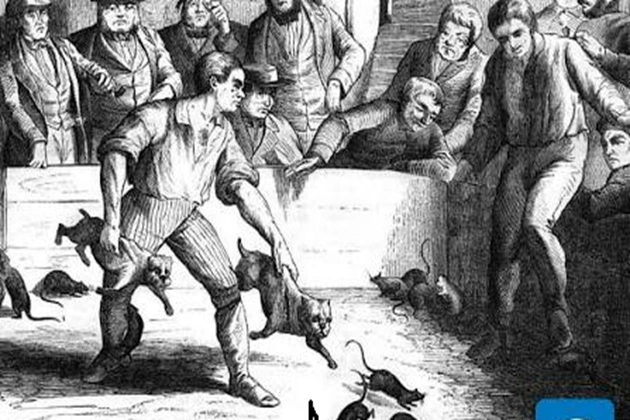
In the 19th century, the British became addicted to gambling rat baiting, which needed only rodents and a dog hunting them. Gentlemen and onlookers gathered near the makeshift pits in anticipation of a lightning battle, provided by terrier dogs that destroyed dozens or even hundreds of rats in minutes. Demand generated supply, and there was a need for rat suppliers. One of them, named Jack Black, became famous, considering himself not just an ordinary pied piper, but the pied piper of Queen Victoria.
Rats have turned from a problem into a subject for entertainment: dog-baiting of rats
In the Victorian era, bloody entertainment was popular in England, when cockfights were staged in pits, dogs were set on bears, monkeys, or fights between dogs were encouraged. It was a time when cruelty seemed attractive, and it was in England that it manifested itself most of all. For people, even the execution was perceived as entertainment, and a crowd gathered in the square to watch the bloody spectacle. In this light, there is no need to talk about pity for torn animals, but the authorities decided to put an end to this by introducing a ban on bloody fighting in 1835. That’s how the animal baiting ended, but the rats were not included in this list and became a loophole that allowed the entertainment to continue.
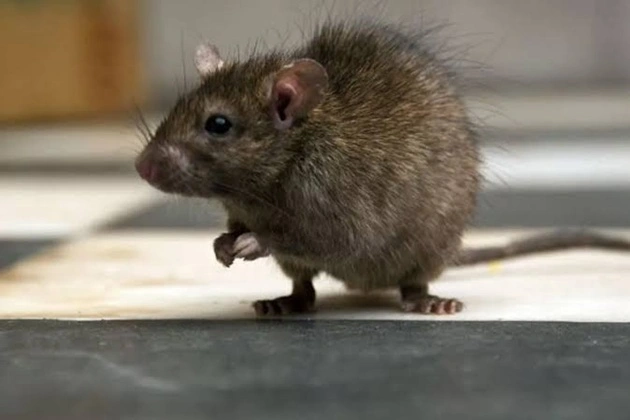
Rats were considered a problem; they were disliked and despised, so no one resisted being mistreated. The fighting pits were filled with rats, and the terrier dogs became the fighters. They only needed one grip to get rid of the rat. This is how a gambling form of entertainment appeared: rat baiting, which reduced their numbers in the city and villages. Brown barn rats, which were larger than the black urban rats living in landfills, were especially appreciated. Visit. A F R I N I K . C O M . For the full article. The latter were treated with such contempt that they were caught for fighting when there were no others.
Entertainment in houses with rat pits: a fighting ring
The so-called dog fighting rings with rats were an elementary structure; it was an ordinary pit 2-3 feet high, which in addition could be blocked with a net so that the rats would not escape. Sometimes it was made square, and then the corners had to be sheathed as well, because it was easier for rats to climb on them. In such pits, they huddled into corners, and in round pits, they split into groups, which in principle reduced the rate of their extermination. The rats were placed in the pit, and then the dog was lowered, which was supposed to kill everyone, and then the fight was considered over. The judges timed it, and then compared who was the best dog at this task. Later, the rules changed due to the shortage of rats, and as many rats as the dog weighed were allowed into the ring. This, in turn, created a demand for small terriers, which, despite their small weight, easily dealt with rodents.
Record breaking dogs: Hundred rats in six minutes
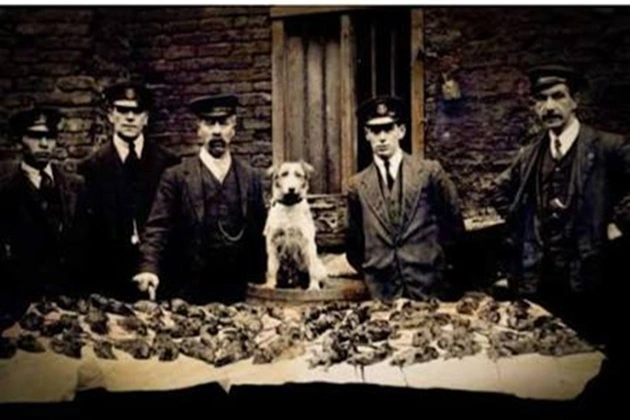
Gambling meant that bets would be placed, and some bred terrier dogs specifically to participate in the fights. Record holders appeared among the dogs, who killed hundreds of rodents with lightning speed in a few minutes. In rat baiting, it was considered the norm if a dog spent 5 seconds on one rat, and in a minute could deal with 15 rodents. But there were some who did it even faster. Such a record holder was 12-kilogram Billy, who once destroyed a hundred rats in more than 6 minutes, although he was given 12 minutes to do it. It was his owner’s 20-pound bet, and Billy not only lived up to expectations, but also gained fame. The fight wasn’t just terribly bloody. The dog had to be lifted up and pulled out from under the rats, which he threw at himself. One bite was enough for him to immobilize or kill a rat, and after cornering them, he dealt with the one that left the crowd. In his old age, he was left with one eye because in battle, rats also attack, and a large number could severely scratch and bite. Billy later improved his record to 5.5 minutes.
The structure of the terriers made their eyes and ears protected from bites, and the location of the jaws represented a deadly grip. The rats flew up to the audience, and in order not to be thrown out of the pit, it was sometimes covered with a net. At the end of the fight, the dog’s owner took out his pet, and the judge counted the rats and checked that they were really all dead. If any showed signs of life, they put it in a circle drawn with chalk and hit its tail to make it crawl. In the case when she could not leave the circle, she was not counted and lowered back into the pit, and the dog was given extra time, and only after that everything was summed up. At such moments, heated discussions broke out in the rooms with pits about who was the best and who won.
In the 19th century, a black and tan bull terrier named Jacko, weighing only 6 kg, became famous for rat baiting. In 1862, he killed 1,000 rats in 100 minutes, taking an average of six seconds each, and set a world record. The list of record holders included baby Miracle, who killed 300 rats in 55 minutes. But in his case, his weight is surprising, at only two kilograms. So in dark rooms lit only by candles or torches, excitement reigned, and record-breaking dogs were born, gaining fame for the terrier breed.
Jack Black the Pied Piper at the court of Queen Victoria

If dogs were bred by humans, then rats had to be captured for fighting, and special people did this. History has preserved the memory of Jack Black, who was considered not just a pied piper, but a professional in this business. To make himself important, he sewed a suit, a red caftan and short trousers, and also wore a ribbon across his chest, on which two initials of Queen Victoria were embroidered, and two tin rats were attached at the edges. Black always walked with live rats, holding them in his bosom, and when they came across unusual colors, he left them to breed a new species. Indeed, in the Victorian era, rats were not only used for fighting, but they also became unusual pets. Queen Victoria kept a similar one in a gilded cage, and other aristocrats began to imitate her.
Rat-baiting, having moved to the city streets of London, eventually became associated with the base vices that are inherent in the lower class. The nobles became less interested in gambling with rats, and in order to demonstrate the beauty and agility of their dogs, they began to organize exhibitions, which were better than a brutal massacre. The last rat-baiting took place in 1912, but the organizer received a heavy fine for this entertainment and promised that it would not happen again.